This 567-HP Luxury SUV Delivers More Than Rivals Costing Twice As Much
9 minutes reading
Thursday, 8 Oct 2026 20:00 0 7 autotech
In 2015, a high-performance family SUV with a twin-turbocharged V8 and more than 560 horsepower was among the most outrageous things you could park in a suburban driveway. It carried a six-figure price tag, sprinted like a supercar, and seated five adults in leather-lined comfort. Today, that same machine can be bought for the price of a mid-range crossover. Depreciation has done the heavy lifting, and bargain hunters have noticed. But a cheap purchase price is not the same as cheap ownership. Here is what a decade has done to this brute, and whether it deserves a place in your garage.
When this SUV landed in 2015, it carried a base price of roughly $100,000 before destination charges, and most buyers ticked plenty of option boxes on top of that. Today, clean, well-kept examples with average mileage change hands for roughly $30,000 to $45,000, depending on condition, options and region. That means a typical car has kept somewhere between 30 and 45 percent of its original sticker price, and higher-mileage examples sit even lower. The first owner absorbed a loss large enough to buy a very nice new compact car.
Several forces conspire to push prices down. Big-engined performance SUVs are a niche within a niche, so the pool of buyers who want one at any price is small. Fuel consumption scares off casual shoppers, and the factory warranty expired years ago, which changes the question from “can I afford the payments?” to “can I afford the repairs?” A newer generation with even more power has also arrived, pulling attention away from the older model and pushing its values down further.
Red 2019 Jeep Grand Cherokee Trackhawk Posed At SunsetJeep
That shift in perception is where the opportunity lies. Depreciation on this kind of car is steepest in the first five years and flattens considerably afterward. Buyers stepping in today are entering near the bottom of the curve, so a well-kept car is unlikely to shed another huge chunk of value. You are paying mid-range crossover money for something that still out-accelerates most sports cars on the road, and that is a remarkable proposition on paper. The question is not whether the discount is real. It is whether the price of admission covers everything that comes afterward.
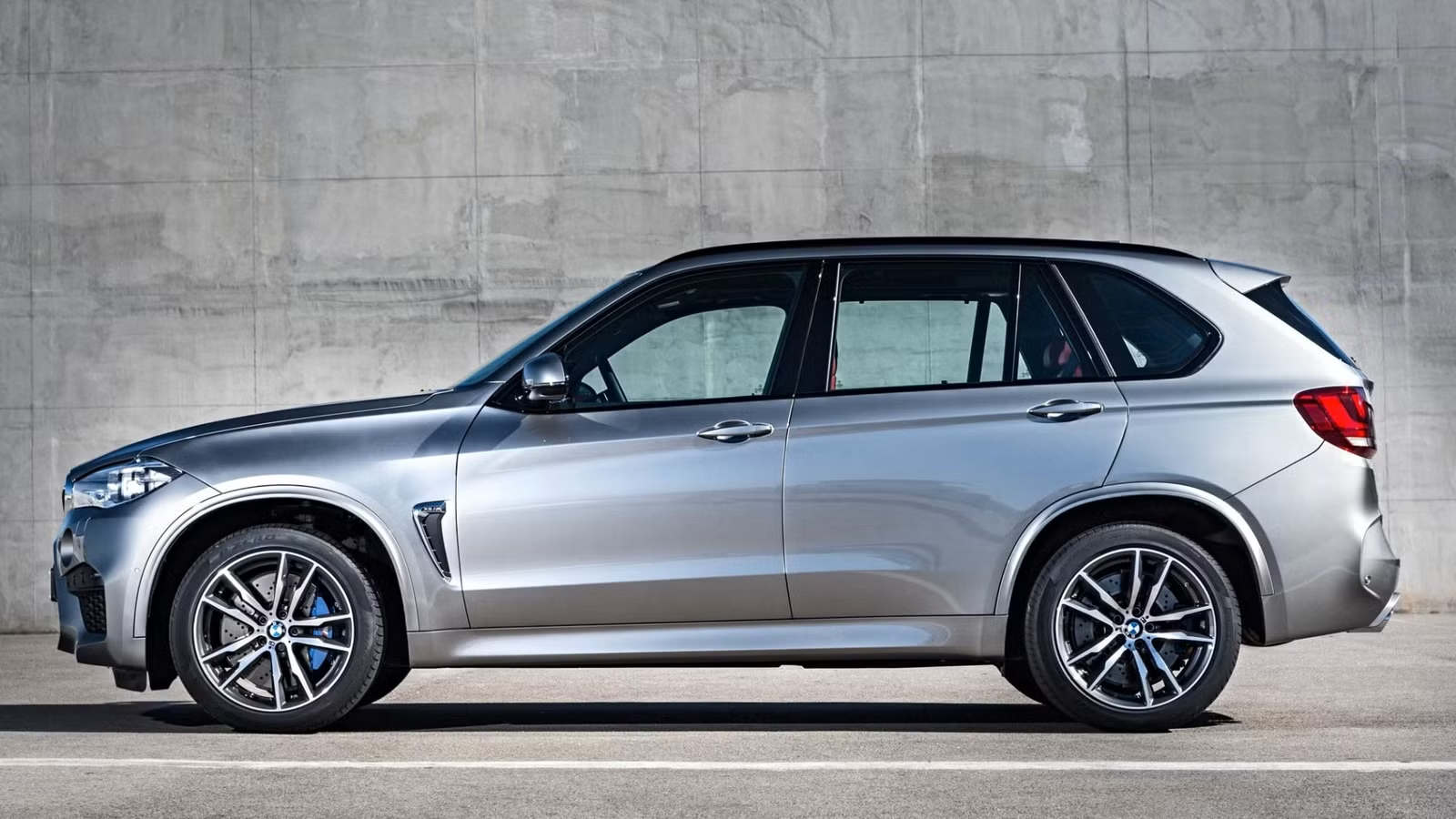
The car in question is the F85 generation BMW X5 M, built from 2015 to 2018 as the more focused sibling of the standard X5. Its heart is the 4.4-liter twin-turbocharged V8 known internally as the S63. It produces 567 horsepower and 553 pound-feet of torque, available from just 2,200 rpm and held to nearly 6,000 rpm.
That is a serious step up from the previous E70 X5 M, and the flat torque curve is why the car feels effortless at any speed, in any gear, and at any moment. The engine layout is unusual. Both turbochargers sit inside the V of the engine, fed by a cross-bank exhaust manifold. This “hot-vee” design shortens the path between exhaust and turbo for sharper response, but it also bakes everything nearby, which matters when discussing reliability.
2016 BMW X5 M taillightBMW
Power reaches all four wheels through an eight-speed automatic and a rear-biased xDrive system, with an active M differential at the back to help put the power down out of corners. BMW claimed zero to 60 mph in 3.8 seconds, and independent testers regularly matched or beat that figure. Top speed is limited to 155 mph, or 174 mph with the optional M Driver’s Package.
To keep roughly 5,300 pounds of SUV composed, the X5 M rides on adaptive dampers with active roll stabilization, while large compound brakes haul it down again. Staggered 20-inch or 21-inch wheels fill the arches, wrapped in wide, sticky rubber. It wears its size well, but it is also a lot of expensive hardware packed into a tight engine bay, and that packaging shapes both the driving experience and the repair bills.
Brutal Acceleration Meets Everyday Luxury From The Driver’s Seat
2016 BMW X5 M dashBMW
Press the start button and the V8 barks awake with a rasp that is never subtle. Left in comfort settings, though, the BMW X5 M is genuinely relaxed. The eight-speed shifts smoothly, the adaptive dampers soften the worst of the road’s imperfections, and the cabin isolates you from wind and tire noise like a proper luxury car. The seats are supportive over long distances, the driving position is commanding, and the rear bench comfortably accommodates adults, which is more than most performance cars can say.
Then you flatten the throttle. The torque arrives in a single enormous wave, the nose lifts slightly, and the horizon rushes toward you with an intensity that still feels remarkable a decade later. Overtaking becomes a matter of deciding to do it, not planning it. Sport Plus sharpens the steering and dampers, and the exhaust adds a hint of crackle on the overrun. The X5 M never hides its weight in tight corners, but grip and body control are seriously impressive for something this tall and this heavy. It is a car that shrinks around you at speed, even if physics keeps reminding you what you are driving.
2016 BMW X5 M front 3/4 shotBMW
The interior has aged gracefully. The iDrive system is still easy to use, the materials feel expensive, and the head-up display remains genuinely useful. Cargo space is generous, and the tailgate split makes loading easy. It lacks the driver-assistance sophistication of newer cars, but it also avoids their touchscreen overload, and many buyers will count that as a plus.
The cost of all that performance shows at the pump. The EPA rates the X5 M at 14 mpg in the city, 19 on the highway, and 16 combined, and real-world figures in enthusiastic use often dip into the low double digits. Premium fuel is mandatory. That is not a fault, but it is a running cost that belongs in your budget alongside insurance and tires.
Ownership Reality: Running Costs, Known Faults, And What To Inspect
2016 BMW X5 M rear shotBMW
This is where the bargain gets tested. The S63 is a strong engine when maintained, but ten years and a hot-vee layout take their toll, and the things that go wrong are rarely cheap. Start with the cooling system, because heat concentrated in the engine’s valley is hard on plastic parts. Coolant pipes, the expansion tank, and hoses can crack or weep, and the electric auxiliary water pump is a known failure item. Look for dried coolant residue at the front of the engine, a low reservoir level, and any history of overheating warnings, and ask whether the cooling components have already been replaced. A pre-emptive refresh is a good sign, not a red flag.
The xDrive transfer case deserves equal attention. It can develop leaks and a worn actuator or clutch, and repair bills climb quickly once a failure occurs. Listen for whining or shuddering during low-speed turns, and watch for drivetrain warnings on the dash. Ask for proof of a transfer case fluid change, because that service often gets skipped. A car with no record of it is a car with an unknown risk attached.
2016 BMW X5 M front shotBMW
Brakes and tires are the next wallet-drainers. The big brakes stop the car brilliantly but wear quickly with enthusiastic use, and a full set of pads and rotors can run into the thousands of dollars. Check for a pronounced lip on the rotor edge and steering-wheel vibration under braking. The wide, staggered tires are also expensive, so uneven wear is worth investigating for alignment or suspension problems. Mismatched or cheap tires on a car that makes this much power should also make you cautious about how the previous owner treated it.
Oil leaks round out the usual suspects. Valve cover gaskets, the oil filter housing seal, and oil feed lines are typical culprits, so inspect the engine bay and underside for wet patches. Confirm regular oil changes with the correct oil, since these engines can consume some between services, and make sure the level is checked regularly. Finally, run a full diagnostic scan and insist on an independent pre-purchase inspection by a BMW M specialist rather than trusting a general shop. Then budget for running costs on top of the purchase price. A sensible owner sets aside a repair reserve of several thousand dollars a year for consumables and surprises, and treats that money as part of the car’s real price.
Is A Used X5 M Still A Smart Buy Today?
BMW F15 X5 MBMW USA
A car that cost around $100,000 new can now be had for roughly a third of that, and it still delivers 567 horsepower of usable performance, a properly luxurious cabin and a practicality that no sports car can match. Set against a new performance crossover at a similar price, there is no comparison for raw speed. You are effectively buying back most of the original price in depreciation savings, which is the concrete payoff the numbers promise.
The catch is that you are buying the risk the original owner sold on. The purchase price is only the first cost. Fuel, tires, brakes and eventual repairs add up quickly, and if you cannot absorb an unexpected bill of several thousand dollars, this is not the car for you. If you have a cushion, a good independent specialist and a genuinely well-maintained example, the ownership math can work. Over several years, a careful owner can still spend far less than the first owner lost in depreciation alone.
2016 BMW X5 M rear 3/4 shotBMW
The smartest approach is to spend more upfront. Pay extra for a car with a comprehensive service history, evidence that the cooling and transfer case items have been addressed, and a clean pre-purchase inspection report. A cheap, neglected example is how this bargain becomes a money pit, and the savings on the sticker will vanish within a year or two. Do not expect collector status in the near term, but rarity works in its favor. A fast, practical, properly luxurious SUV with a hot-vee V8 is not something you will find cheaply forever. Buy the best one you can find, keep a repair fund, and this ten-year-old bargain will deliver a level of performance that once cost a fortune.
Base Trim Engine
4.4L Twin-Turbo V8 Gas
Base Trim Transmission
8-Speed Automatic
Base Trim Drivetrain
All-Wheel Drive
Base Trim Horsepower
567 hp
Base Trim Torque
553 lb-ft @ 2200 rpm
Fuel Economy
14/19 MPG
Make
BMW
Model
X5 M
Segment
Midsize Luxury SUV
Infotainment & Features
10 /10
Sources: BMW U.S., Bimmerpost, RepairPal, The EPA, Cars and Bids












No Comments