
This 493-HP Mercedes AMG Is Cheap To Buy—Here’s How To Avoid An Expensive Mistake
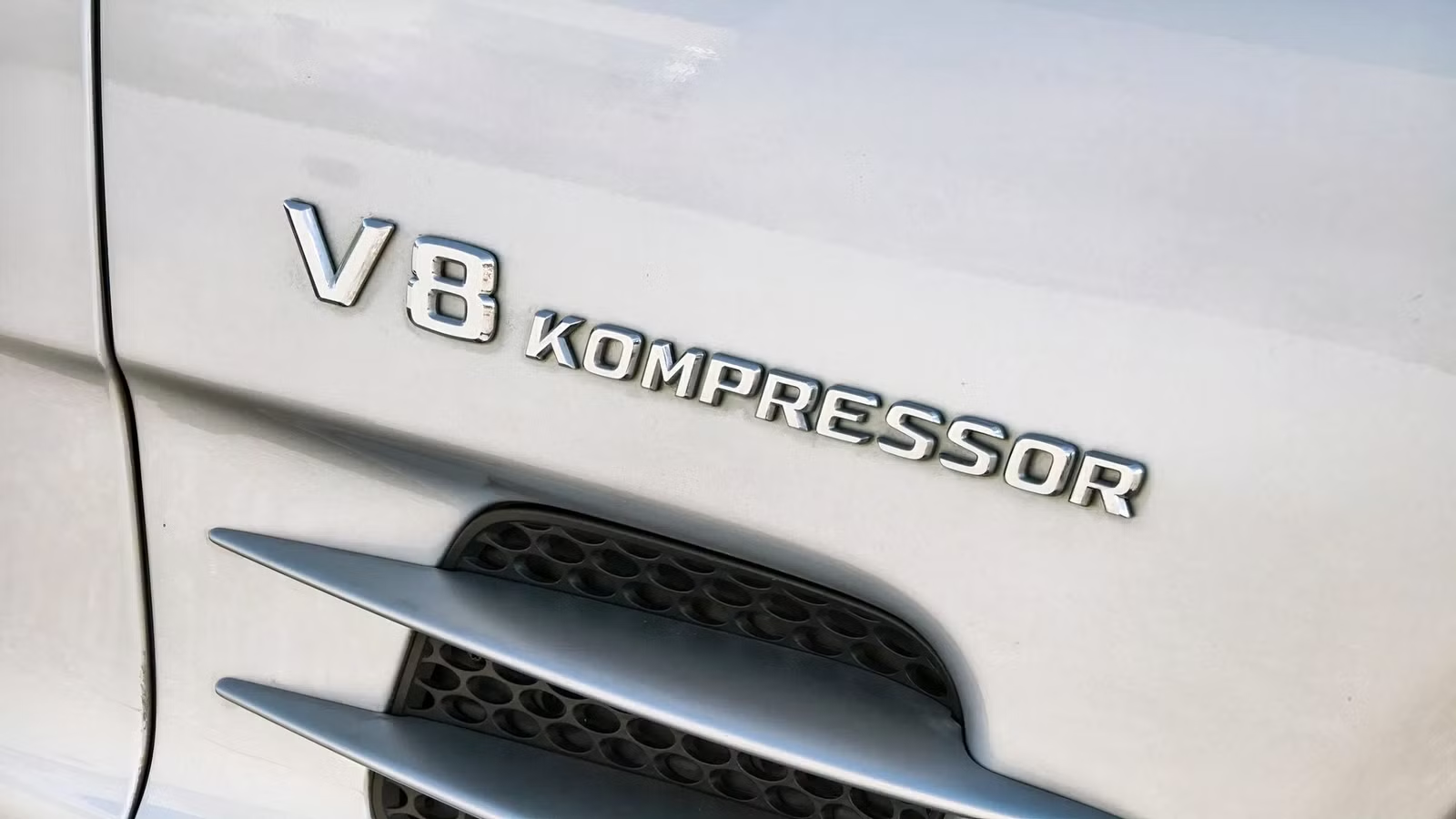
493 horsepower. A supercharged V8. A folding metal roof. And prices that now overlap with ordinary used cars. That combination sounds like the sort of bargain that makes sensible people do stupid math. U.S.-spec cars from 2003–2006 made 493 hp and 516 lb-ft, could hit 60 mph in about 4.5 seconds, and carried a six-figure sticker when new. Mercedes-Benz has never been shy about ambitious technology—the recent Vision Iconic concept shows that instinct is still alive. Here, though, the engine is the reassuring part. The aging systems wrapped around it are where a cheap car gets expensive.
The Cheapest 493-HP Bargain Is Usually The Wrong One
The price is what gets you. Current market data puts the benchmark at about $25,000, with the average sale price sitting just under $25,800. Recent individual transactions have landed well outside that band: a 2003 sold for $17,850 in September 2026, while a 2004 brought $36,750 and a 2005 sold for $29,983 that same month. Seeing one advertised around $20,000 isn’t automatically a red flag, but it does mean you should find out why that particular car is cheap.
And this is where normal used-performance-car logic can get you in trouble. A 493-hp luxury roadster around $20,000 looks almost absurd, but it came from the same six-figure, tech-heavy world that still produces ultra-luxury coupes. Hydraulic suspension, electrohydraulic brakes, a folding metal roof, and layers of electronics are still along for the ride. The purchase price depreciated. The complexity didn’t.

Before getting excited about low mileage or shiny paint, start reading the receipts. You want evidence of work on the suspension, brakes, retractable roof, cooling system, and electrical equipment, plus routine engine and transmission service. A thick history showing somebody else already spent the money is more useful here than a suspiciously clean odometer with long gaps in its past.

Then pay a Mercedes specialist for a proper pre-purchase inspection and diagnostic scan. Not a quick walk around the car, not a generic code reader in a parking lot, and definitely not the seller’s assurance that “the engine is bulletproof.” The specialist needs to evaluate the expensive systems around the engine as well as the V8 itself, because deferred maintenance can hide behind a car that starts, idles and drives perfectly well for 20 minutes. A $20,000 example that immediately needs suspension, roof and brake work did not beat the $30,000 car on price. It merely financed the difference through your repair bills.
The R230 SL55 AMG’s ABC And SBC Need Proof, Not Promises

Now we can put a name to it. The car is the 2003–2006 U.S.-spec Mercedes-Benz SL55 AMG, the R230 roadster whose supercharged 5.4-liter M113K V8 makes 493 hp and 516 lb-ft. ABC is one of the first places that tempting price can start looking expensive. Mercedes’ Active Body Control uses hydraulic pressure to manage ride height and body movement, so inspect the car before you even drive it. If one corner is sagging after the car has been parked, the body is sitting unevenly, fluid is leaking, or an ABC warning is showing, do not brush it off. Mercedes’ own manual tells drivers to stop for certain low-ride-height or hydraulic-fluid warnings. On an old SL55, that light deserves your attention.

The brakes need the same level of suspicion. Early R230s used Sensotronic Brake Control (SBC), and Mercedes recalled 2003–2005 Model 230 cars, including the SL55’s 230.474 chassis code, because an SBC pump motor could fall outside tolerance and trigger hydraulic backup mode. Braking still worked, but Mercedes warned that the driver might need more pedal pressure and pedal travel. A later campaign covered other SBC hydraulic-unit concerns. Do not guess whether a particular car was affected or repaired. Run its 17-digit VIN through Mercedes’ recall lookup.

There is some reassurance here, but it needs checking too. A 2018 Mercedes-Benz USA parts update extended the SBC hydraulic-unit warranty for Model Year 2003–2012 Model 230/231 vehicles to 25 years with no mileage limitation, subject to the program’s terms and covered components. That is not a promise that every brake problem will be paid for. Have a dealer or Mercedes specialist confirm the car’s eligibility, scan the systems, check the hydraulic hardware, and verify its campaign history before you buy. A warning-free dashboard is reassuring. It still isn’t proof.
The R230 SL55 AMG’s M113K V8 Is The Unexpected Good News

Now we get to the part that makes this whole car so difficult to resist. The 2003–2006 U.S.-spec SL55 AMG used Mercedes’ supercharged 5.4-liter M113K V8, and the factory figures are ridiculous even now: 493 hp at 6,100 rpm and 516 lb-ft from 2,750 to 4,000 rpm. Mercedes paired it with a five-speed automatic, and the result was roughly 4.5 seconds to 60 mph in a heavy retractable-hardtop grand tourer more than two decades ago. Modern 1,600-hp hypercars have moved the goalposts, but 493 hp still feels serious in a two-decade-old luxury roadster. More important for a buyer, the engine making that power is not the obvious weak link.
There is an important model-year distinction, though. Those 493-hp figures belong to the 2003–2006 U.S. cars this article is built around. The 2007–2008 U.S.-spec SL55s were uprated to 510 hp, so do not mix that later figure into an earlier car when comparing ads or specifications. Different year, different output.
The M113K has earned a strong reputation because its basic architecture is relatively straightforward for something making this much power, but “good engine” does not mean “ignore everything under the hood.” Pay particular attention to the charge-cooling system. The M113K cooling circuit uses an intercooler pump to move coolant through a front heat exchanger and the charge-air cooler beneath the supercharger; inadequate flow raises intake temperatures and can reduce power. Check the pump’s history, coolant condition, belts and pulleys, fluid leaks, and general cooling-system health, and make sure the supercharger delivers power cleanly rather than assuming every weak-feeling car simply needs a tune. This is the central SL55 contradiction in miniature: the V8 is often the part buyers fear most, while the expensive trouble may be waiting elsewhere.
Why Roof Hydraulics And Water Leaks Decide The Real Bargain

The Vario Roof is one of the R230’s best tricks, but after 20-plus years, it needs to prove it still works. Cycle it several times during the inspection. Watch the windows, decklid, and roof move through the full sequence, listen for struggling or interrupted operation, and check the headliner, mechanism, and trunk for hydraulic fluid or signs of previous repairs. One clean cycle proves exactly one thing: it worked once.
Then look for water. Mercedes issued a January 2006 technical service bulletin covering 2003-on Model 230 cars for water entering the Vario Roof, with a diagnostic rain test covering 14 different positions depending on where the leak appeared. Check the seals, carpets, trim, and luggage area for dampness, stains, or musty smells. Musty carpet is not patina. Water can also reach connectors and control modules, turning a roof leak into a much more expensive electrical problem.

The SL55 still has everything that makes a cheap old AMG hard to ignore: huge performance, a supercharged V8, a six-figure original price, and genuine early-2000s engineering ambition. None of that makes a neglected car worth rescuing. If it sits low, flashes brake or suspension warnings, struggles with its roof, shows water damage, or comes with a mystery service history, walk away unless you actually want a project. Paying $30,000 for the well-documented car can be much cheaper than saving $10,000 on the one that’s already preparing its first invoice.
Sources: Mercedes

Related posts





Latest Post


No Comments