
The Yamaha Built For Riders Who Only Want One Motorcycle
There is no dearth of do-it-all motorcycles today. Adventure bikes like the BMW R 1300 GS and the Honda Africa Twin DCT offer the best of all worlds. Even sportbikes like the Honda CBR650R E-Clutch and naked bikes like the Honda CB1000 Hornet SP offer commendable packaging that can replace more than one motorcycle in your garage.

But nothing beats a sport-tourer for balancing on-road performance and practicality. As a result, a rapid surge of new sport-tourers is on the horizon, including the new Suzuki SV-7GX and the upcoming Honda CB1000GT. But Yamaha foresaw all of this and introduced its most versatile sport-tourer in 2021. Today, this do-it-all Yamaha leads the segment, and rivals are still playing catch-up.
Yamaha Offers A Vibrant Line-Up Of Desirable Motorcycles
Yamaha offers a motorcycle for everyone, and none of them are boring. For adrenaline-pumping racetrack experiences, Team Blue has one of the most iconic lineups, including the flagship Yamaha R1/R1M and the YZF-R9. As for streetfighters, Yamaha offers the mighty MT-10/SP for enthusiasts, with the MT-03, MT-07, and MT-09 being more suitable for the masses.

Yamaha also blends heritage and old-school charm well into its portfolio. The XSR900 and XSR700 are gorgeous neo-retro motorcycles with modern, sporty underpinnings. The V-Star 250 is the most affordable old-school V-twin cruiser bike on sale today. And the Bolt R-Spec is a gorgeous cruiser that fuses Harley Sportster Iron 883 charm with proven Japanese refinement and reliability.
There’s A Sweet Selection Of Do-It-All Motorcycles

Most of its do-it-all offerings are confined to the midweight segment. The most popular is the Tenere 700 ADV, the benchmark for adventure riding. The souped-up Tenere 700 World Raid further proves you don’t need more power to excel. It is a bummer that Yamaha discontinued the FJR1300ES. But as a used model, it remains the pinnacle of sport-tourers, offering a potent blend of performance, comfort, and advanced technology that still meets 2026 standards. Besides this, Yamaha also has an ace up its sleeve that outclasses the FJR in do-it-all appeal, and at a much more affordable price.
The Yamaha Tracer 9 Impresses By Doing Everything Well
Priced At $12,599

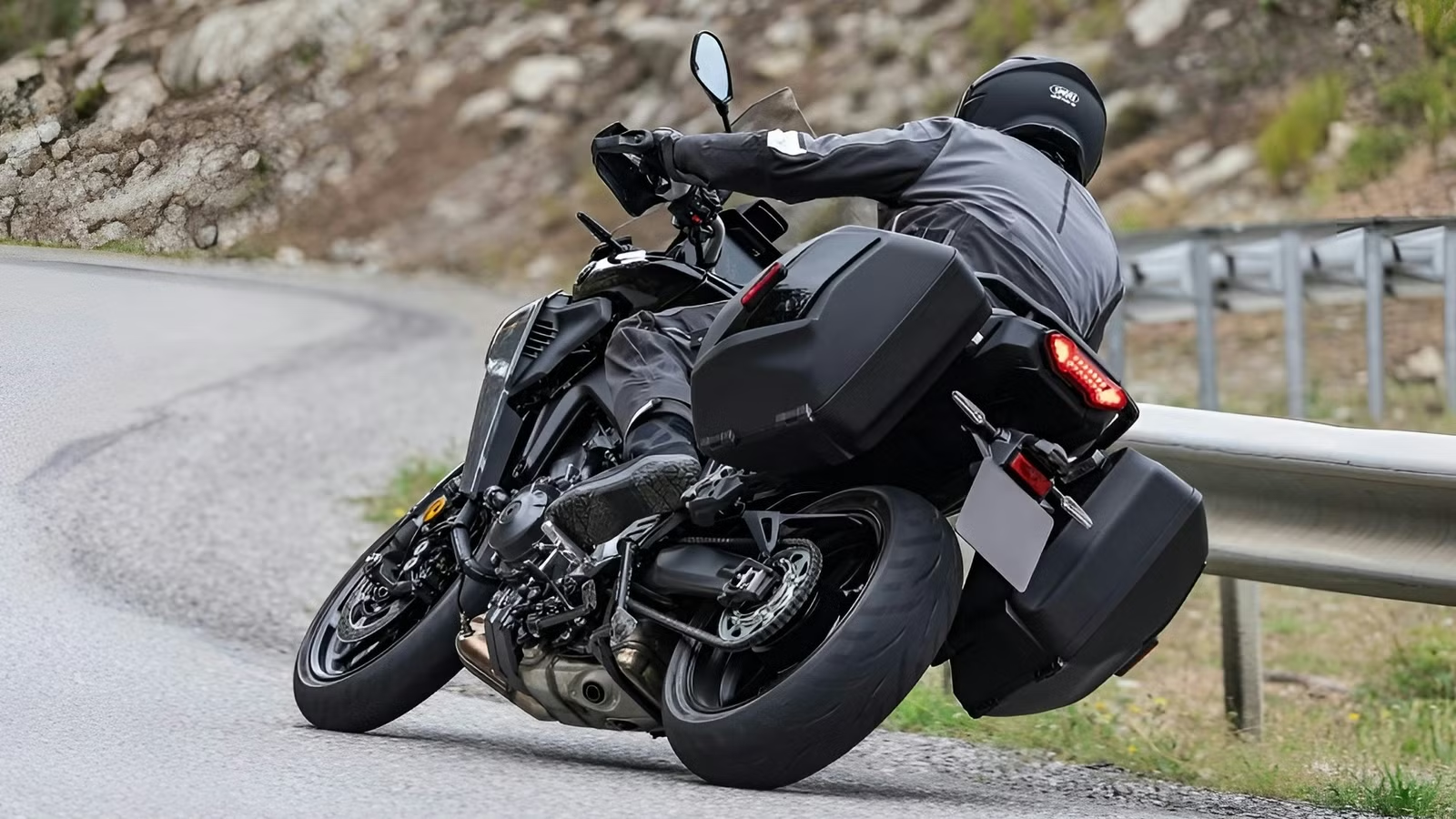
The Tracer 9 is Yamaha’s most complete motorcycle, and it doesn’t get enough praise for its balanced character. The secret lies in its well-executed crossover bike design. It offers an ADV-like stance with upright and relaxed ergonomics for the rider. This is optimal for superior touring comfort. Furthermore, the pillion seat is also comfortable. Its touring credentials are further strengthened by standard side cases, a tall windscreen, a sizable fuel tank, and a solid electronics suite that stitches together the Tracer 9’s do-it-all capabilities. Its popular engine offers a sweet spot between sportiness, touring, and everyday tractability. Last but not least, its sub-$13,000 price makes the Tracer 9 excellent value.
Packs The Famed And Versatile CP3 Engine

The Yamaha Tracer 9 runs on the tried-and-tested CP3 inline-three engine. This 890cc mill is versatile, as shown by its use in other Yamaha motorcycles. On the Tracer 9, Yamaha tuned this engine for meaty mid-range torque, a linear power curve, and better fuel efficiency (48 MPG) to produce 117 horsepower at 10,000 RPM and 68.6 pound-feet of torque at 7,000 RPM. It makes about 70 percent of its peak torque at just 3,000 RPM, in case you’re wondering. Power is sent to the rear wheel via a six-speed manual gearbox and a final chain drive. The total riding range isaround 240 miles on a full tank, meanwhile.
Sporty Underpinnings Offer Engaging Dynamics On All Types Of Roads

The Yamaha Tracer 9 sits on a lightweight aluminum diamond frame attached to a bold sub-frame. The latter is designed to take the load of an adult pillion and loaded side cases. Moving on, its well-tuned suspension further cements riding stability. The 41 mm KYB front forks with 5.1 inches of travel offer preload and rebound damping adjustability, in addition to the rear setup’s preload- and rebound-adjustable monoshock with 5.2 inches of travel. Dual 298-mm discs with radially mounted four-piston fixed calipers handle the front braking.
A Slim Form Factor, Comfortable Ergonomics, And Manageable Weight Make It Daily-Ridable

The Tracer 9 hits its upper-middleweight tag quite well thanks to a slim form factor and manageable heft. It has a compact wheelbase of 59.1 inches, an adjustable seat height of 33.3 to 33.9 inches, and a curb weight of 483 pounds. The rider is said to sit relaxed and upright, with ample wind protection from a sizable windscreen and support from a seat that is wide and comfortable. The side cases are also quick-release.
MotoGP-Derived Slide Control And A Six-Axis IMU Come Standard — Not Optional

The cockpit features a sizable seven-inch TFT with smartphone connectivity via the Yamaha MyRide app. Ride-enhancing features include five ride modes (Sport, Street, Rain, and two user-defined modes), a ride-by-wire throttle, and a variable speed limiter. In addition to these, a six-axis IMU seamlessly integrates various features like ABS, lean-sensitive traction control, slide control, a slip regulator, and even wheelie control. A quickshifter is optional, however.
The Yamaha Tracer 9 Gives Its Competition A Tough Time

None of its rivals can match the Tracer 9’s value-for-money appeal. The Honda NT1100 DCT, while cheaper at $11,999, is weaker in sporty dynamics and performance ratings. Furthermore, the Honda is heavier, which limits its nimbleness. Although it’s the only sport-tourer with a standard automatic transmission, the NT1100 doesn’t quite edge out the seasoned, more fun-inducing Tracer 9.
The BMW F 900 XR, priced at $12,695, is a commendable rival, but things quickly fall apart when we look at the Beamer’s feature list. Most of the Tracer 9’s standard features are optional on the F 900 XR. Another close rival is the Triumph Tiger Sport 800 Tour. It edges ahead with a standard top box, apart from weatherproof side cases. But its premium price tag of $14,695 robs it of the edge it has over the Yamaha. For now, the Tracer 9 remains the undisputed value pick. But we think the battlefield will heat up once Honda launches its much-anticipated CB1000GT crossover.
Source: Yamaha Motorsports

Related posts
Latest Post


No Comments