
The Two-Seater That Officially Set 106 Speed Records Ended Up As A Hornet Trim Package
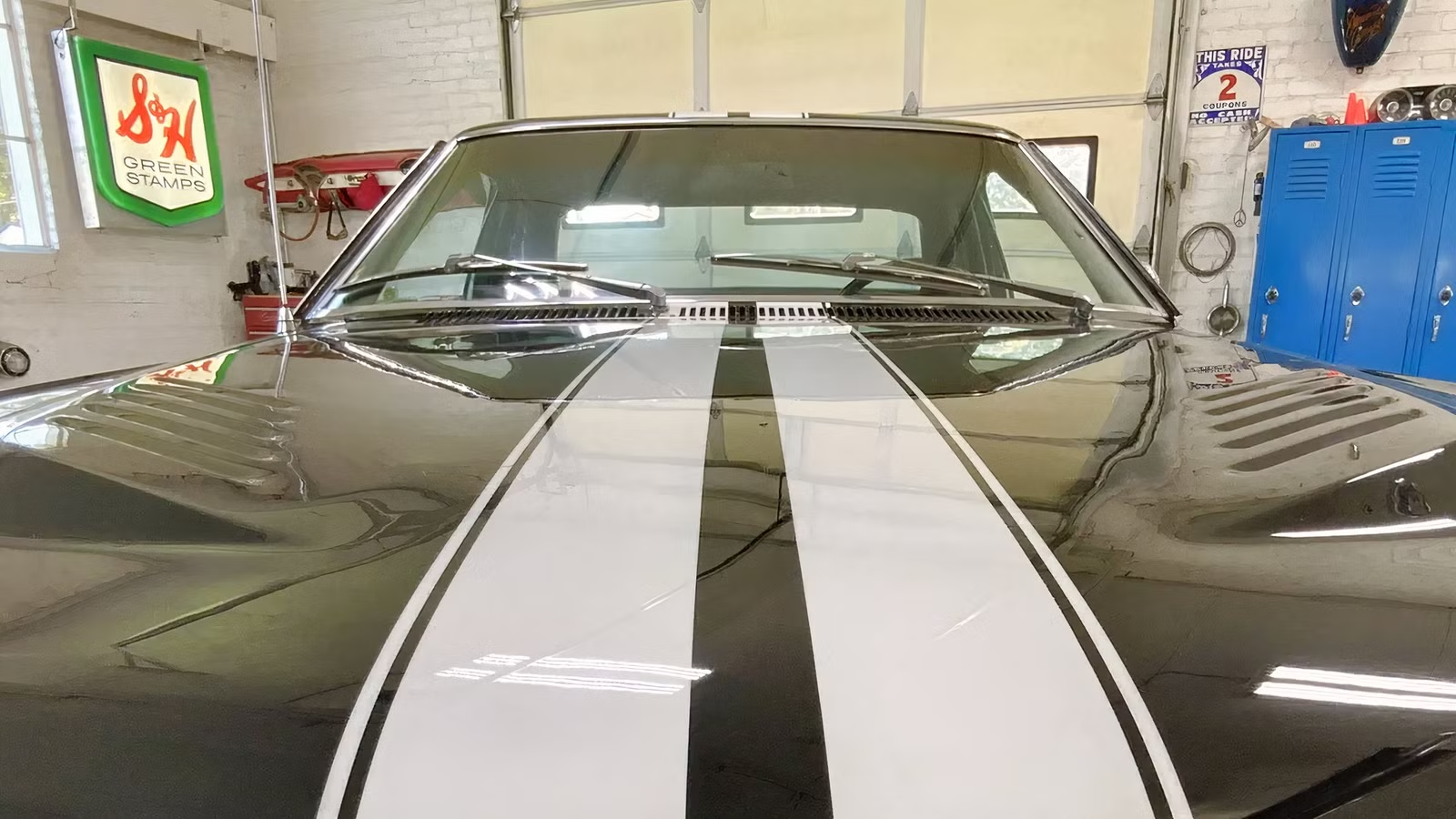
Before anyone could buy it, a two-seater shorter than the C3 Corvette had already racked up 106 speed and endurance records. AMC used specially prepared cars for that 1968 run, but what an entrance for a company known for Ramblers.

Then came the twist. The two-seater lasted just three model years; its badge kept going. By 1977, it was on a Hornet hatchback with a folding rear seat. In American car culture, that’s one strange journey: from setting speed records to making room for groceries.
The 24-Hour Run That Put A New Two-Seater On The Map
January 1968. AMC sent two specially prepared coupes to Goodyear’s five-mile banked test track in Texas to chase records. AMC hired land-speed legend Craig Breedlove; Lee Breedlove and Ron Dykes also drove. The cars ran in separate engine classes, giving both a shot at speed and endurance marks.

The AMC Rambler Club’s account credits the smaller-engined car with averaging 140.79 mph over 24 hours. That’s not a flying lap; that’s the average for a whole day, with pit stops included. Imagine charging around the banking again and again while the clock keeps running, even when the car is stopped. Every minute in the pits hurts that number. At that pace, keeping the engine and car going matters as much as outright speed.

The four-speed manual car carried a 290-cubic-inch V8 bored to 304, while its three-speed automatic partner used a 390 enlarged to 397. The bigger-engined car averaged 174.295 mph over 75 miles from a flying start, so it was already moving when timing began. Between them, the record cars gave AMC 106 national and international speed and endurance marks. All before the production coupe went on sale.

Meet the 1968 AMC AMX. AMC didn’t just rebadge a Javelin. Dick Teague’s team sliced 12 inches out of its wheelbase, removed the rear seat, and created a 97-inch two-seater—an inch shorter between the axles than a Corvette and nearly five inches shorter overall. The idea began with a 1966 Vignale-built concept and its pop-up Rambleseat. Jim Jeffords later tried the seat on the one-off AMX-R, but AMC’s safety concerns kept it out of showrooms.
At $3,245 in 1968, the AMX cost over $1,000 less than the Corvette, yet every 1968–70 example packed a V8. The early base engine was a 290, but the optional 390 pumped out 315 gross hp in 1968–69, rising to 325 gross hp for 1970. Old Cars Weekly lists an early 390 car at 3,205 pounds.
And this little coupe could move. Car Life’s April 1968 test of a 390 automatic recorded a 14.59-second quarter-mile. Order the Go Package and you’d get heavier-duty cooling, power front disc brakes, handling upgrades, and a Twin-Grip limited-slip differential to help put that V8’s power to the road.
AMC Built 19,134 Two-Seaters Before Dropping The Body

AMC built 6,725 AMXs in the abbreviated 1968 model year and 8,293 in 1969. Production fell to 4,116 in 1970, even after AMC refreshed the nose, replaced upper trunnion suspension pivots with ball joints, and gave the 390 V8 another 10 hp. After just 19,134 two-seaters, AMC pulled the plug.
The car wasn’t slow. A 390-powered 1970 AMX ran a 14.7-second quarter-mile in Motor Trend’s test, close to the 14.59 seconds Car Life recorded with the 1968 AMC AMX. Yet some shortening the Javelin made the car front-heavy and twitchy, while development money might have been better spent on more popular models.
AMC’s numbered dash plaques weren’t exactly birth certificates. Barn Finds commenters disagree about whether they tracked build order, and their relationship to VINs remains disputed. Factory records matter more for rare options: Barn Finds reports just 98 black-leather 1970 cars. Hagerty’s March 2026 report valued an excellent 1968 390 at $42,000 before adjustments, while a Big Bad Orange 1970 Go Pack sold for $115,500 at Mecum Kissimmee that January.
The AMX Badge Went From Javelin V8 To Spirit Straight-Six

AMC didn’t retire the AMX badge when the two-seater disappeared. It moved onto the four-seat 1971–74 Javelin, where the optional 401 V8 made 330 gross hp and 430 lb-ft of gross torque in 1971. Not a bad consolation prize.
After sitting out two model years in the U.S., the name returned on the 1977 Hornet hatchback. Buyers could choose a 258 straight-six or 304 V8, plus a front air dam and rear-window louvers. AMC advertised 30.5 cubic feet of cargo room with the rear seat folded. The badge that once meant no back seat now had room for groceries.
AMC carried the package to the 1978 Concord, then the smaller 1979 Spirit AMX. The Spirit still offered a 304 V8 with a four-speed manual and came with its own sport-tuned suspension. At 96 inches, its wheelbase was an inch shorter than the original two-seater’s, despite having a back seat.
For 1980, the Spirit kept its flares and sport suspension. The V8 was gone, leaving the 258 straight-six as its only engine. AMC kept the AMX badge alive. As for me, I’d clear garage space for the original two-seater.
Sources: AMC Rambler Club, American Motors factory literature, Old Motors, AMX/3, AMC American Motors Costa Rica, Old Cars Weekly, Muscle Car Facts,Hagerty, CLASSIC.COM, Hooniverse, American Muscle Car Facts.

Related posts

Latest Post


No Comments