
The Turbo Buick That Skipped Half Of 1982 Is Estimated At Under 1,000 Units
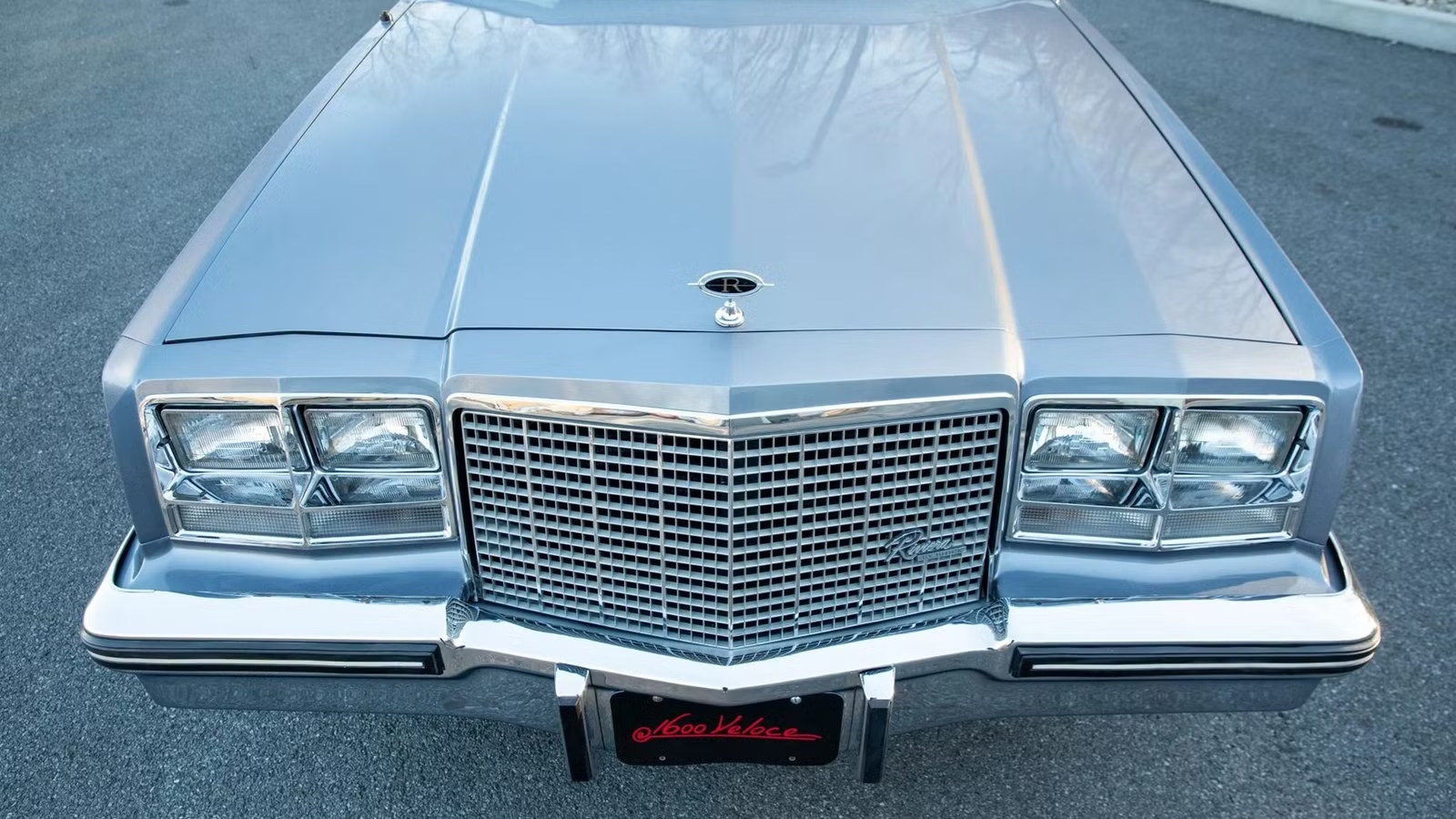
The early 1980s were a difficult time for American performance cars. Horsepower figures were shrinking, fuel economy mattered more than ever, and even luxury brands struggled to deliver exciting engines. Buick had an unusual answer: a turbocharged V6 that could outperform much larger V8s. However, one of its most interesting applications missed roughly half of the 1982 model year. When it finally arrived, relatively few buyers took one home.
GM’s Engine-Sharing Era Created An Unusual Power Struggle

General Motors entered the 1980s with a complicated engine strategy. Buick, Oldsmobile, and Cadillac increasingly shared platforms, transmissions, and powerplants as emissions rules, fuel economy concerns, and changing consumer demands reshaped the industry. Smaller engines became more important, even in expensive luxury cars. GM needed to maintain comfort and performance while controlling costs, but its corporate engine-sharing strategy sometimes produced strange combinations.
One Buick personal luxury coupe illustrated the problem perfectly. Its engine lineup included a 105-horsepower Oldsmobile 350-cubic-inch (5.7-liter) diesel V8, a 125-horsepower Buick 252-cubic-inch (4.1-liter) V6, and a 140-horsepower Oldsmobile 307-cubic-inch (5.0-liter) gasoline V8. However, the strongest option was Buick’s turbocharged 231-cubic-inch (3.8-liter) V6, producing 180 horsepower. The smallest engine delivered the most power, turning the traditional horsepower hierarchy upside down.
The Most Powerful Engine Was Missing When Buyers Needed It

Unfortunately, buyers couldn’t get that turbocharged V6 in one particular coupe for roughly the first six months of the 1982 model year. Buick‘s original sales literature indicated that the performance model would arrive after January 1982. Meanwhile, customers could order the less powerful naturally aspirated V6, gasoline V8, or diesel V8. Anyone seeking the strongest engine had to wait or shop elsewhere.
The delay coincided with a difficult period for Buick’s turbo program. Early turbocharged engines faced reliability concerns and production challenges, while buyers remained cautious about the technology. Even the original 1982 Regal Grand National generally used a naturally aspirated 4.1-liter V6 rather than the turbocharged engine that later defined the badge. Meanwhile, Regal Turbo Sport Coupe production fell to just 2,022 units in 1982, compared with 21,389 in 1979. Buick clearly hadn’t perfected its performance formula.
The 1982 Buick Riviera T-Type Was The Overlooked 180-HP Turbo Coupe

The mystery car was the 1982 Buick Riviera T-Type, the performance-oriented version of Buick’s front-wheel-drive personal luxury coupe. The Riviera had switched to GM’s front-wheel-drive E-body platform in 1979, sharing its basic architecture with the Oldsmobile Toronado and Cadillac Eldorado. Turbocharging wasn’t new to the model, either. Buick introduced the turbocharged Riviera S-Type in 1979 before adopting the T-Type designation for 1981. By 1982, the formula was familiar, but the delayed introduction gave that year’s model an unusually short selling window.
Production figures make it even more interesting. Buick built 44,071 Rivieras for 1982, yet estimates place T-Type production below 1,000 examples. Enthusiast references, including material associated with the Standard Catalog of Buick and the Riviera Owners Association, report a more specific figure of 529 T-Types. That represents approximately 1.2% of total Riviera production, or roughly one T-Type for every 83 Rivieras.

Its greatest attraction sat under the hood. The turbocharged 231-cubic-inch V6 produced 180 horsepower and approximately 275 lb-ft of torque. That gave it 40 more horsepower than the Oldsmobile 307 gasoline V8 and 75 more than the Oldsmobile diesel V8, despite having considerably less displacement. The turbo engine also outpowered Buick’s naturally aspirated 4.1-liter V6 by 55 horsepower.
A four-barrel carburetor fed the turbocharged engine, long before fuel injection became central to Buick’s better-known performance cars. The T-Type also offered Gran Touring suspension, four-wheel power disc brakes, and distinctive trim. Still, its purpose wasn’t to challenge dedicated sports cars. Buick wanted a comfortable luxury coupe with enough muscle to make highway passing effortless, and the turbocharged V6 delivered a meaningful performance advantage.
The Front-Wheel-Drive T-Type Helped Establish Buick’s Turbo Identity

Buick’s turbocharged V6 experiments began in the late 1970s, well before the blacked-out Grand National became a performance icon. The Riviera S-Type and T-Type were important parts of that development. Unlike the rear-wheel-drive Regal, the Riviera combined front-wheel drive, upscale equipment, and discreet styling with turbocharged power. It targeted buyers who wanted stronger performance without sacrificing comfort or attracting unnecessary attention.
Buick continued refining its turbo engines throughout the decade. Improved engine management, fuel delivery, ignition systems, and turbocharger technology increased performance and drivability. The revived 1984 Grand National produced 200 horsepower, while intercooling helped later models deliver considerably more. By 1987, the Grand National reached 245 horsepower, and the limited-production GNX carried an official 276-horsepower rating. The Riviera wasn’t a direct mechanical predecessor to the GNX, but it demonstrated the same central idea years earlier: a smaller turbocharged V6 could outperform larger engines without sacrificing everyday usability.
The Rare 1982 Riviera T-Type Deserves More Recognition

The 1982 Riviera’s engine choices still seem strange. Buyers could choose a 105-horsepower diesel V8 or a 180-horsepower turbocharged V6 in essentially the same luxury coupe. Yet the strongest version missed roughly half the model year, and the reported production figure of 529 examples left relatively few cars for enthusiasts to discover. Those circumstances help explain why the T-Type rarely appears in discussions about Buick’s performance history.
However, rarity is only part of its appeal. The Riviera T-Type showed that turbocharging could deliver meaningful performance in a refined front-wheel-drive luxury car during an era of declining horsepower. Later Grand Nationals and the legendary GNX became the stars of Buick’s turbo era, but the Riviera helped demonstrate the technology’s potential in a very different package. Its unusual engine lineup, shortened availability, and low reported production make the 1982 T-Type one of Buick’s more interesting overlooked performance cars.
Source: Buick

Related posts



Latest Post


No Comments