The Toyota Powertrain That Quietly Outlasts Every Gas Engine It Shares A Showroom With
10 minutes reading
Wednesday, 26 Aug 2026 15:00 0 93 autotech
Fuel economy has always been the headline benefit of a hybrid, but saving gas might not be the best reason to own one. One Toyota hybrid traveled more than 500,000 miles before a hurricane, not mechanical failure, finally ended its time on the road. That remarkable achievement becomes even more meaningful when compared with broader longevity data. Toyota’s Hybrid Synergy Drive does not merely stretch a gallon of gas; it reduces several of the stresses and mechanical failure points that eventually send conventional vehicles to the scrapyard.
Vehicles that reach 500,000 miles are usually commercial trucks, body-on-frame SUVs, or diesel-powered workhorses. This one was none of those. It was a 2006 Toyota Highlander Hybrid owned by Mark Miller, who used it extensively while working as a mobile electronics technician in southwest Florida.
According to Toyota’s account of the vehicle, the Highlander had already passed 500,000 miles when Hurricane Ian struck Florida in 2022. Storm surge flooded the SUV, ultimately ending its run. Miller reportedly used the Highlander for work throughout the region, accumulating the kind of highway-heavy mileage that generally gives a vehicle its best chance of lasting.
A front end shot of a Dark Blue 2024 Toyota Highlander Hybrid ParkedToyota
There is an important limitation to this story. Toyota confirmed the vehicle and its mileage, but did not publish complete maintenance records. There is no reliable way to determine which major components were original or how many repairs it required. What we know is still impressive: the Highlander Hybrid remained useful beyond half a million miles and was retired by a natural disaster rather than an acknowledged powertrain failure.
Toyota Highlander Hybrid Infotainment ScreenToyota
A single high-mileage vehicle can result from obsessive maintenance, favorable driving conditions, or an owner willing to approve repairs that would cause someone else to trade it. The iSeeCars reliability analysis for the Toyota Highlander Hybrid estimates that the model has a 42.1 percent chance of reaching 200,000 miles and a 31 percent chance of reaching 250,000 miles, placing it third on the list of vehicles most likely to reach a quarter-million miles.
While not every model, or even half of all models, will reach that mark with the original owner, that is an impressive figure. The average lifespan of a hybrid Highlander is 186,700 miles or 14 years, which is still a strong result. The half-million-mile Highlander is an extreme example, but it is not an outlier for this SUV; rather, it helps pull the average figures upward. While most vehicles will not reach 500,000 miles, it adds to the longevity pattern that repeatedly favors Toyota hybrids.
Hybrid Synergy Drive Removes Familiar Sources Of Wear
The Gas Engine Does Not Have To Handle Every Part Of The Drive
Toyota Highlander Hybrid Driver Side ShotToyota
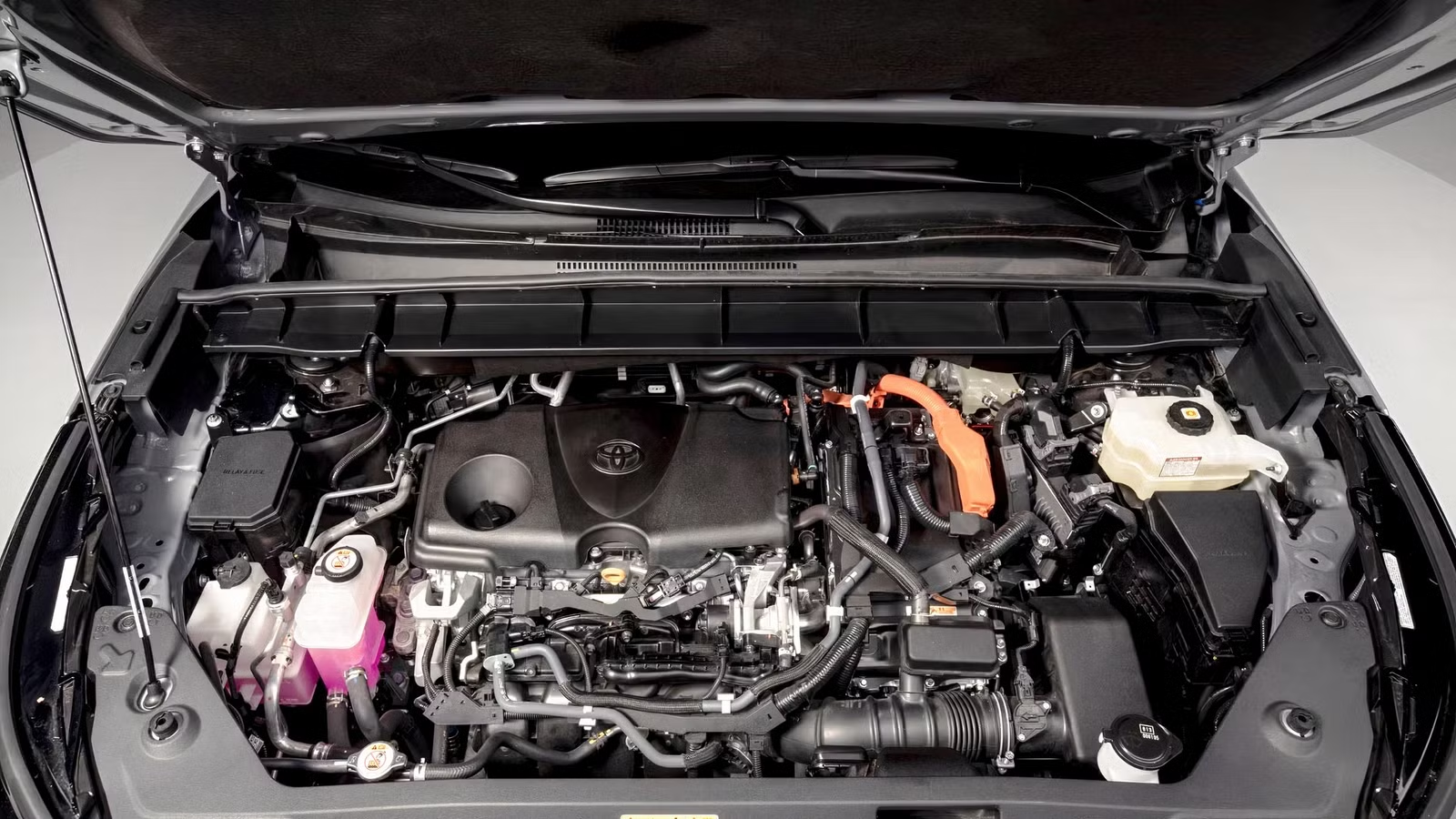
A conventional gasoline engine must launch the vehicle, maintain speed, power accessories, and respond to every acceleration demand. Toyota’s Hybrid Synergy Drive distributes those jobs between an Atkinson-cycle gasoline engine and electric motor-generators.
The electric motors can move the vehicle from a stop, assist the engine under acceleration, and propel it for short periods when conditions permit. The gas engine can also shut down while the vehicle is stationary or operating under light loads. How frequently that happens depends on temperature, speed, terrain, battery charge, and driver behavior, so there is no universal engine-off percentage.
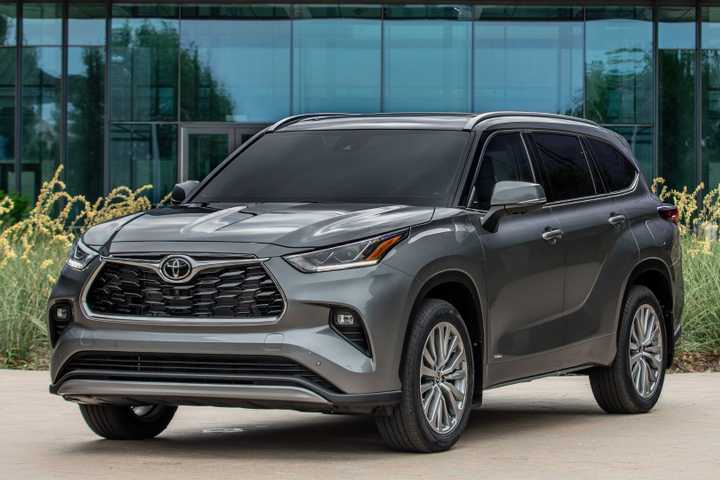
The front of a gray 2022 Toyota Highlander Hybrid.Toyota
The important point is that the engine does not have to provide all the vehicle’s propulsion by itself. Electric assistance can reduce the load on it during acceleration, while the hybrid control system can operate it within an efficient portion of its power band.
That does not eliminate engine wear or thermal cycling. Oil changes, coolant service, spark plugs, and other conventional maintenance still matter. However, reducing accumulated engine operation and avoiding some of the least efficient operating conditions can pay dividends when the odometer reaches high mileage figures.
Toyota’s Planetary Transaxle Does More With Fewer Wear Components
Front 3/4 action shot of 2025 Toyota Highlander Hybrid in green being drivenToyota
The transmission might be the most misunderstood part of Toyota’s hybrid system. It is commonly called an electronically controlled continuously variable transmission, but it does not use the belts and variable-diameter pulleys found inside a conventional CVT.
Instead, Toyota combines the gasoline engine and two motor-generators through a planetary-type transaxle. The system varies engine speed relative to road speed by controlling the motor-generators. It avoids the torque converter, numerous hydraulic clutch packs, and repeated gear changes found in a traditional automatic.
A rear view shot of a Gray 2024 Toyota Highlander Hybrid ParkedToyota
That does not make the transaxle indestructible. It still contains gears, bearings, seals, electronics, and fluid. However, it removes several friction-based components that can become expensive failure points in high-mileage conventional transmissions.
Regenerative braking applies the same philosophy at the wheels. The motor-generator recovers energy while slowing the vehicle, reducing how frequently the traditional brakes must be utilized during driving. The brake pads and rotors remain essential, but they do less work during ordinary deceleration, which is one of the key benefits of any hybrid vehicle.
The Longevity Numbers Favor Toyota’s Hybrids
The Hybrid Highlander Is 2.4x More Likely To Reach 250,000 Miles Than Its Gas Twin
Front three-quarters shot of a 2025 Toyota Highlander HybridToyota
The gas-only Toyota Highlander has a 12.7 percent chance of reaching 250,000 miles. That gap is the strongest evidence of the Highlander Hybrid’s longevity potential. That gives the hybrid approximately 2.4 times the probability of reaching a quarter-million miles compared with its gas counterpart. It does not prove that the hybrid powertrain alone created the difference.
Vehicle age, owner demographics, maintenance habits, and driving patterns can influence which examples remain on the road. Still, this is not a comparison between an unreliable gas SUV and a durable hybrid. The conventional Highlander has one of the better results in its class. The hybrid simply performs much better.
Toyota has produced some famously durable gas engines, including those found in the 4Runner, Sequoia, and Tundra. Hybrid Synergy Drive does not erase those achievements. It shows that adding electrification does not automatically reduce longevity, and may substantially improve it in comparable vehicles.
Toyota And Lexus Claim Every Top Spot In The Hybrid Longevity Rankings
Blue 2026 Toyota Highlander Hybrid Driving ShotToyota
Toyota and Lexus occupied the first nine positions in iSeeCars’ 2025 hybrid longevity ranking. The Toyota Sequoia led at 39.1 percent, the 4Runner came in second at 32.9 percent, and the Highlander Hybrid occupied the third spot. Fourth goes to the Toyota Tundra at 30.0 percent, with the Lexus IS rounding out the top five at 27.5 percent. The second hybrid on the list is the Lexus RX, which has a 17.0 percent chance of reaching 250,000 miles, well above the industry average.
The average hybrid had a 9.6 percent chance of reaching 250,000 miles, roughly twice the industry average of 4.8 percent. That distinction matters because it moves the argument beyond a single model or an extremely impressive odometer reading. Toyota’s dominance also means hybrid architecture cannot receive all the credit.
Manufacturing quality, conservative engineering, and decades of experience building electrified powertrains are part of the equation. Even so, the results challenge the lingering belief that a battery and electric motors automatically make a car less dependable than a simpler gas model.
Toyota Hybrids Have Weak Points—Just Not The Ones Buyers Expect
The Battery Is A Wear Item, Not An Automatic Deal-Breaker
Profile action shot of 2026 Toyota Highlander Hybrid Pulling A BoatToyota
No hybrid battery lasts forever. Its condition depends on age, temperature, mileage, charging cycles, cooling, and how the vehicle was used. Eventually, degradation or individual cell failure can necessitate repair or replacement.
Toyota backs current hybrid batteries with a 10-year/150,000-mile limited warranty, whichever comes first. Other designated hybrid components generally receive eight years/100,000 miles of warranty coverage. That warranty does not guarantee that every battery will reach 150,000 miles without degradation, but it shows Toyota’s confidence in its hybrid vehicles, especially given that the federal minimum hybrid battery warranty requirement is only eight years/100,000 miles.
2022 Toyota Highlander Platinum Hybrid Exterior/Interior Trunk SpaceToyota
Used buyers should pay particular attention to the battery’s cooling airflow. Toyota’s maintenance guidance for applicable models calls for frequent inspection of the battery cooling intake or filter. Pet hair, dust, luggage, and debris can restrict that airflow and increase battery temperature. A proper pre-purchase inspection should include a hybrid-system scan and battery-health evaluation. Dashboard fuel economy can offer clues, but it is not a substitute for checking individual battery blocks and stored trouble codes.
Water Pumps, Inverters, And Brake Boosters Still Deserve Attention
2026 Toyota Highlander Hybrid Front 3/4Toyota
The half-million-mile Highlander demonstrates what Toyota’s hybrid system can accomplish, but older examples have known vulnerabilities. The water pump deserves particular attention because it keeps the hybrid electronics cool, and because Toyota has previously recalled hybrid water pumps. Approximately 350,000 2004–2009 Prius models were included in a Toyota safety recall addressing the hybrid-system water pump. Affected pumps could stop working, triggering warning lights and potentially causing the hybrid system to shut down.
Certain 2010–2014 Prius and 2012–2014 Prius V models were also recalled because excessive voltage could damage the inverter’s Intelligent Power Module. This recall potentially affected more than 807,000 vehicles and addressed a condition that could cause the hybrid system to stall. Some third-generation Prius-family vehicles also received Toyota service guidance for oil consumption, while brake-booster problems led to additional customer-support coverage on certain models.
A front end action shot of Two 2024 Toyota Highlander Hybrids DrivingToyota
These are serious concerns, but they are generation-specific, not proof that every Toyota hybrid suffers the same failures. Buyers should check the VIN, review service records, and research the exact model year rather than treating every version of Hybrid Synergy Drive as mechanically identical.
The Best Used Toyota Powertrain May Be The One Buyers Once Feared
Maintenance History Matters More Than An Arbitrary Mileage Limit
Toyota Highlander Hybrid Rear ShotToyota
A high-mileage Toyota hybrid should not automatically be rejected, just as a neglected low-mileage example should not automatically be trusted. Condition, maintenance, climate, and model-specific trouble spots matter more than miles driven.
Before buying, enter the VIN into the NHTSA recall lookup tool and confirm that all applicable campaigns have been completed. Have a hybrid-qualified technician scan all control modules, evaluate battery balance, inspect the battery-cooling system, and verify proper engine and inverter coolant circulation.
An interior shot of the 2023 Toyota Highlander Hybrid BronzeToyota
A high-mileage hybrid can still require an expensive battery, inverter, or brake-system repair. The goal is not to find a vehicle that will never need work. It is to avoid buying one with existing problems. That old saying that “buying used is inheriting someone else’s problems” can certainly ring true with the wrong vehicle.
The Verdict: Toyota’s Quietest Powertrain May Be Its Longest-Lived
The Hybrid Synergy Drive system used in the Toyota Highlander Hybrid has been shown to increase the likelihood of reaching 250,000 miles, putting it far ahead of its impressively durable gas counterpart. Buyers may not match Mark Miller’s 500,000-mile achievement before a natural disaster ended his run, but a well-maintained Highlander Hybrid can deliver many years of reliable service.
Toyota still builds excellent gas engines, and some have traveled even farther. However, when buyers walk past a hybrid because they fear its added complexity, they may be avoiding the most durable powertrain in the showroom. Fuel economy might be what sells Hybrid Synergy Drive when new, but longevity could be the reason a well-maintained example becomes the smartest Toyota to buy used.
Base Trim Engine
2.5L I4 Hybrid
Base Trim Transmission
CVT
Base Trim Drivetrain
All-Wheel Drive
Base Trim Horsepower
186 HP @6000 RPM
Base Trim Torque
175 lb.-ft. @ 4300 RPM
Base Trim Fuel Economy (city/highway/combined)
35/35/35 MPG
Make
Toyota
Model
Highlander Hybrid
Segment
Midsize SUV
Sources: Toyota, iSeeCars, NHTSA, Kelley Blue Book












No Comments