
The Swiss Four-Door Sleeper That Buried Mercedes With Chrysler Power
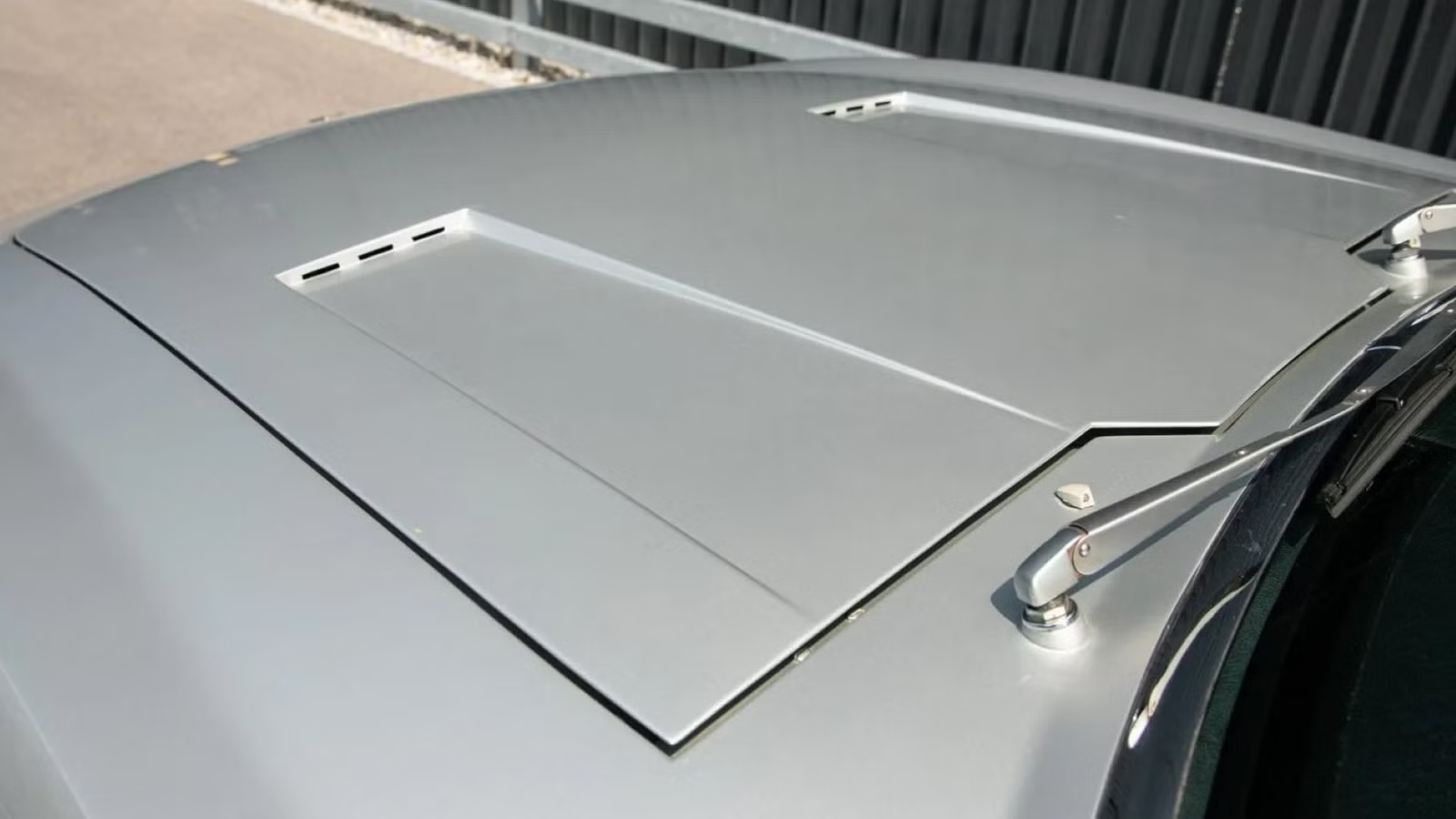
Sleeper sedans are one of the most endearing types of cars, even if they try not to be. There is no flashiness, no big wings advertising the power within, no overt statement bodywork that makes Instagram Reels go viral. Sleeper Cars, by their very nature, are designed to be walked past and not grab attention — apart from those in the know. True car fans know a sleeper when they see one, and recognize that under the hood generally lurks an exotic powertrain with near supercar-spec performance. No drama, no fuss, just engineering excellence and face-melting speed when you need it. Oh, and four doors and a trunk for when you want to take the family shopping. But the origin story of these four-wheeled Clark Kents is not what you might think.
Germany Pioneered The Sleeper Super Sedan — But Someone Beat Them To It

There are plenty of cars that can lay claim to being the first sleeper — the Oldsmobile Rocket 88 being one ofthem — but it is hard to argue with the fact that the Germans were the ones who fine-tuned the concept. In the ’80s, when supercars had reached their most flamboyant era, the Bayerische Motoren Werke, otherwise known as BMW, was concocting the perfect antidote to this madness. The E28 M5 was a fairly innocuous-looking family sedan, but it was packing a surprise under its hood.
The engineers had managed to shoehorn in a four-valve 3.5-liter six, designation M88/3, which had originally been developed for the legendary Lamborghini-sprinkled BMW M1 supercar. As soon as the M5 was launched in the mid-’80s, discerning buyers suddenly realized that they could have all the exotic ingredients of a sports car, just without so many people noticing. But it turned out that there was a Swiss manufacturer that had created a blisteringly quick four-door almost a decade and a half earlier. This was one of the first sleeper sedan pioneers — it’s just that most people didn’t notice.
The Monteverdi 375/4 Was A Euro Sleeper Sedan With US Power


The story goes that the Monteverdi car company came about because of a row with Enzo Ferrari. Racecar driver Peter Monteverdi ran a leading Swiss dealership handling exotic cars including Ferraris, when Enzo reportedly required him to order 100 cars and pay upfront. Not too happy with this suggestion, Monteverdi apparently did what was normal in the ’60s and ’70s if you fell out with the owner of a sports car company: make your own. The first car was the Monteverdi High Speed 375S coupe. Jay Leno bought one, and called the Chrysler V8-powered two-door a “Plymouth Roadrunner that went to grad school in Europe.”
But sporty, good-looking coupes were a dime a dozen in Central and Southern Europe at the time, so in 1972 Monteverdi did something different. Using the same Chrysler 440 Magnum V8 (the 375 in the name related to the hp figure), he made a 375/4 four-door version, using the same chassis but stretched 20.4 inches for more rear legroom. The 17.3-foot-long body was elegant but boxy and understated, and 375 hp (a 440 hp 7.2-liter Chrysler V8 could also be optioned) was on offer — Monteverdi had just created a blisteringly fast sleeper sedan that could beat pretty much anything in its path.
The 375/4 Was One Of The Fastest Four Doors Of Its Time

The huge (and heavy at 4,276 pounds) Monteverdi 375/4 High Speed more than lived up to its name. The top speed was 155 mph, and despite being fitted with a heavy-duty Chrysler TorqueFlite A727 three-speed automatic transmission (a four-speed manual was a rare option), it was still extremely quick off the line. The car was said to reach 60 mph in around 6.5 seconds — that’s the same as the M5 of 1985. It was still competitive compared to many hot hatches and sports cars not too long ago, too. But the 375/4 was launched in 1971, a full 14 years before the BMW. The Mercedes-Benz 300 SEL 6.3 was about as quick off the line as the Monteverdi but would struggle to hit 140 mph.
This Swiss-Made Four-Door Muscle Car Was High-End Luxury

The Monteverdi was packed full of opulence in a bid to tempt well-heeled customers away from the established high-end brands. The 375/4s would leave the factory filled with exquisite luxury, the surfaces covered in leather and wood. We may take electric windows and A/C for granted these days, but in the early ’70s they were standard on upmarket cars like the Monteverdi 375/4. This was a car that you could be chauffeured around in all week, then when Jeeves had a day off, drive it like a sports car on a Sunday morning. There was even the option of a small Sony TV screen for rear passengers — the height of high-tech. Some were said to also have Persian rug floor mats.
The Monteverdi 375/4 Remained Rare And Elusive

Monteverdi managed to catch the attention of the right people with the 375/4, with cars being delivered to discerning buyers in America and the Middle East, including the Qatari royal family. But while it was certainly a status symbol, this fast sleeper never threatened to take many sales away from the big brands. In the end, it is estimated that around 28 to 35 of the Fissore-bodied 375/4s were built between 1971 and 1976. The coupe versions were rarer than coachbuilt Ferraris. The problem for the Monteverdi and its huge thirsty engine was that you needed to be rich to buy one, and very rich to run one during the oil crisis that hit the ’70s.
When Monteverdi stopped making the 375s in the mid ’70s, it moved on to pioneering another new market: the upmarket SUV. The Monteverdi Safari was based on the International Harvester Scout and went head-to-head with the Range Rover. Speaking of Range Rovers, Monteverdi also converted these iconic British SUVs to four-doors in the early ’80s. The company briefly went into F1, but Peter Monteverdi passed away suddenly in 1998. The carmaker he left behind had been a quiet innovator. These days, collectors have started to realize how special it really was.
Collectors Are Finally Catching On To The Monteverdi 375/4

It’s good to see that the 375/4 is getting the recognition it deserves. According to Hagerty’s Valuation Tools, a 1970 Monteverdi 375/4 has a good condition price of $118,000. This price stays the same regardless of the year of car. One 1971 Monteverdi High Speed 375/4 sold on Bringatrailer.com recently for a whopping $400,500. The 1971 Monteverdi 375S coupe goes for twice as much, with a good condition price of $240,000. Just as a fun reference point (obviously they are very different cars), a 1988 BMW M5 will set you back $57,500 in good condition. Monteverdi may not be as famous as Ferrari and Lamborghini, but its opulence, vision, and outright speed make it a carmaker that everyone should know.
Sources: Hagerty, Bring a Trailer

Related posts

Latest Post


No Comments