The Surprisingly Reliable Hybrid SUV Nobody Talks About
7 minutes reading
Friday, 24 Jul 2026 12:00 0 100 autotech
Hybrid SUVs have become the go-to choice for families looking to reduce fuel costs without sacrificing practicality. Naturally, many buyers gravitate toward familiar names like the Toyota RAV4, Kia Sportage Hybrid, and Honda CR-V Hybrid—models that have built strong reputations for efficiency, comfort, and dependable ownership. With so many established contenders dominating the conversation, it’s easy for capable alternatives to slip under the radar. Yet one Hyundai hybrid quietly delivers everything buyers want, including excellent fuel economy, generous equipment levels, impressive safety credentials, and long-term dependability, while receiving far less attention than it deserves.
The three rivals mentioned are excellent choices in their own right. The Toyota RAV4 remains the benchmark for value, starting at $31,900 and returning an EPA-estimated 43 mpg combined, while also earning a 79/100 J.D. Power Consumer Rating—the Honda CR-V Hybrid counters with one of the roomiest and most refined cabins in the segment. Starting at $35,630, it delivers an EPA-estimated 37 mpg combined with all-wheel drive or 40 mpg combined in front-wheel-drive form.
Front 3/4 action shot of 2025 Kia Sportage Hybrid in blue being drivenKia
The Kia Sportage Hybrid brings bold styling, generous standard equipment, and impressive efficiency. With prices starting at $31,985, EPA fuel economy reaches up to 42 mpg combined, making it one of the most efficient compact hybrid SUVs on sale. All three are outstanding contenders, but another option deserves equal consideration. Sharing its platform and hybrid powertrain with the Sportage Hybrid, its corporate cousin emerges as a compelling alternative.
The 2026 Hyundai Tucson Hybrid Is The Surprisingly Reliable Hybrid SUV Nobody Talks About
Efficiency, Comfort, And Dependability In One Package
Starting at $32,450, the 2026 Hyundai Tucson Hybrid delivers strong value in the compact hybrid SUV segment. Every model features a 1.6-liter turbocharged four-cylinder engine paired with an electric motor, generating a combined 231 horsepower and 271 pound-feet of torque. Hyundai’s HTRAC all-wheel-drive system comes standard. The most efficient Blue SE trim achieves an EPA-estimated 38 mpg city, 38 mpg highway, and 38 mpg combined. Higher trims are rated at 36 mpg city, 37 mpg highway, and 36 mpg combined.
In terms of cargo space, it is decent. With 38.7 cubic feet behind the second row and up to 74.5 cubic feet with the rear seats folded, the Tucson Hybrid offers the roomy space that families expect from a compact SUV. Despite its credentials, the Tucson Hybrid tends to fly under the radar, as shoppers often gravitate toward more established names like the Toyota RAV4 Hybrid and Honda CR-V Hybrid. It is no longer lacking in amenities; Hyundai has refined the Tucson, transforming it into one of the most well-rounded choices in the segment—competitive on paper and in price.
2026 Hyundai Tucson Hybrid front wheelHyundai
Consequently, many buyers remain loyal to those familiar badges, often overlooking just how far Hyundai has taken the latest Tucson Hybrid. That loyalty is reflected in the sales figures. In 2025, Toyota sold 479,288 RAV4s in the United States, while Honda delivered 403,768 CR-Vs. Hyundai followed with 234,230 Tucsons, comfortably ahead of Kia’s 182,823 Sportages. Those numbers underscore just how dominant the RAV4 and CR-V remain in the segment, even though the Tucson Hybrid matches—or even exceeds—many of its rivals in areas such as standard all-wheel drive, interior technology, passenger space, and overall value.
On The Road, Comfort Over Sportiness
Rear 3/4 shot of 2026 Hyundai Tucson Hybrid driving on roadHyundai
On the road, Hyundai hasn’t set out to chase headline-grabbing performance figures but delivers where it matters. Industry reviews reinforce its strengths. Edmunds calls the Tucson Hybrid “a standout athlete in the hybrid SUV class,” commending its responsive steering, composed handling, and a ride quality that approaches luxury SUV levels of comfort. Rather than trying to be the sportiest option in the segment, the Tucson Hybrid prioritizes refinement and day-to-day comfort—delivering a relaxed, confidence-inspiring driving experience that families are sure to appreciate on every journey.
Ownership peace of mind is a major selling point for the Tucson Hybrid. RepairPal awards the Tucson a 4.0 out of 5 reliability rating, placing it fifth among 26 compact SUVs and noting an average annual repair cost of just $426—well below the segment average. J.D. Power echoes this sentiment, giving the 2026 Hyundai Tucson lineup an impressive Quality & Reliability score of 83 out of 100, cementing its status as one of the segment’s most dependable options. Long-term value is equally strong. iSeeCars reports the Tucson Hybrid depreciates by about 44.9 percent over five years, putting its resale value squarely in line with top rivals. For buyers, it’s clear: Hyundai has built a hybrid SUV that not only delivers on the road, but also holds its value over time.
It Offers More Than Just Good Fuel Economy
A Cabin That Feels More Premium Than Expected
Shot of 2026 Hyundai Tucson Hybrid dashboardHyundai
Side shot of 2026 Hyundai Tucson Hybrid front cabinHyundai
While efficiency may catch a buyer’s eye, it’s the Tucson Hybrid’s interior that truly lingers in memory. The updated cabin showcases a clean, modern aesthetic, anchored by available dual 12.3-inch displays that create a seamless flow between the digital instrument cluster and the infotainment system.
From personal experience—having sampled the standard diesel variant last year—I can confirm the build quality is impressive, representing a clear step up from the outgoing model. The interior feels more sophisticated, with improved materials, a more contemporary layout, and noticeably enhanced insulation, making every drive both quiet and comfortable. Higher trims add leather-appointed heated and ventilated seats, a column-mounted shift-by-wire selector, and clever storage solutions that maximize usable space.
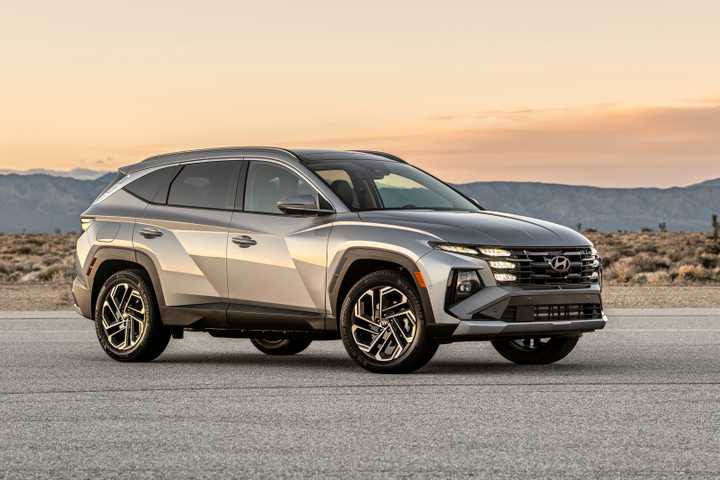
Front 3/4 shot of 2026 Hyundai Tucson Hybrid parkedHyundai
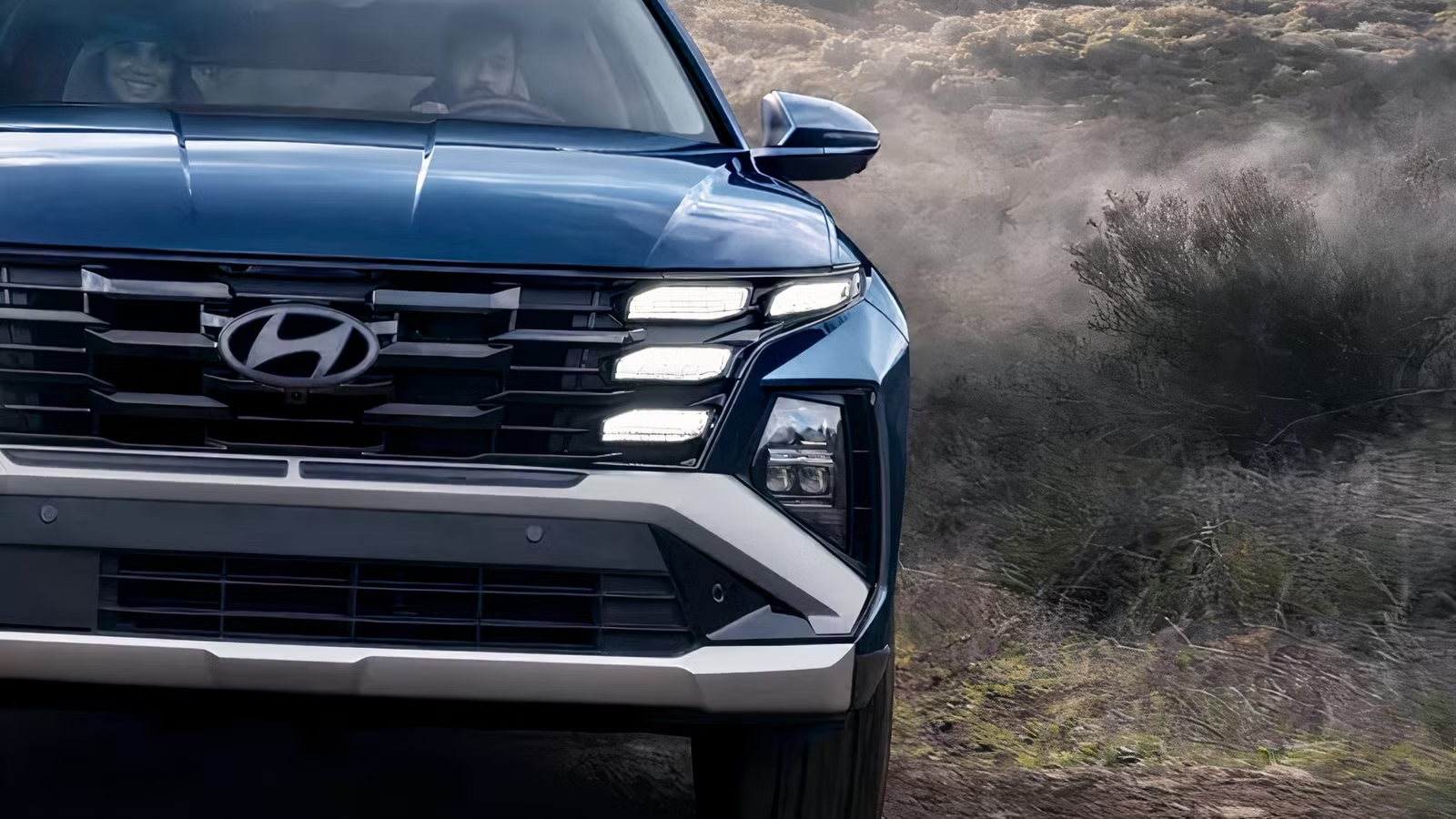
While the Tucson Hybrid mirrors the overall design language of the standard Tucson, Hyundai has introduced a handful of subtle, model-specific flourishes to set the hybrid apart. Look closely, and you’ll spot hybrid badging, exclusive alloy wheel designs, and distinctive trim accents—deliberate, understated cues rather than overt styling statements. This approach is intentional: instead of broadcasting its electrified credentials, the Tucson Hybrid opts for seamless integration within the lineup. Buyers still enjoy the same bold parametric grille, sharp LED lighting signature, and modern SUV proportions that have established the Tucson as one of Hyundai’s most distinctive models.
There Are Real Flaws — But None That Should Keep You Away
An Underrated Hybrid SUV That’s Easy To Recommend
2026 Hyundai Tucson Hybrid door sillHyundai
The 2026 Hyundai Tucson Hybrid excels by mastering the essentials: strong fuel efficiency, proven reliability, standard all-wheel drive, a spacious, tech-forward cabin, and one of the best warranties in its class—all at a competitive price. But it isn’t flawless. Cars.com notes that, while “the hybrid powertrain … transitions between electric and gas power seamlessly,” the ride suffers from a “wallowy ride quality that made the Tucson feel like it was tilting side to side,” with other SUVs in the class offering “much better on-road composure and handling”. They also observed that the traditional six-speed automatic delivers “smoother operation but reduced gas mileage,” with their real-world test averaging just 32.7 mpg.
2026 Hyundai Tucson Hybrid low front action shotHyundai
Tom’s Guide highlights that while the Tucson Hybrid delivers a smooth ride in everyday driving, it can feel “somewhat sluggish in ECO mode,” and overtaking on the highway may require pressing the pedal “significantly harder to get the transmission to kick down.”
These are minor quibbles in light of the Tucson Hybrid’s overall strengths. For buyers willing to look beyond the usual household names, it remains one of the most well-rounded compact hybrid SUVs on the market—quietly excelling in the areas that matter most, and deserving of far more attention than it typically receives.
Base Trim Engine
1.6L Smartstream I4 Hybrid
Base Trim Transmission
6-speed automatic
Base Trim Drivetrain
All-Wheel Drive
Base Trim Horsepower
178 HP @5500 RPM
Base Trim Torque
195 lb.-ft. @ 1500 RPM
Base Trim Fuel Economy (city/highway/combined)
38/38/38 MPG
Base Trim Battery Type
Lithium ion (Li-ion)
Make
Hyundai
Model
Tucson Hybrid
Sources: Hyundai USA, Edmunds, Cars.com, Tom’s Guide, EPA, J.D. Power











No Comments