-

Front 3/4 action shot of 2026 Honda Civic Touring driving on road Honda -
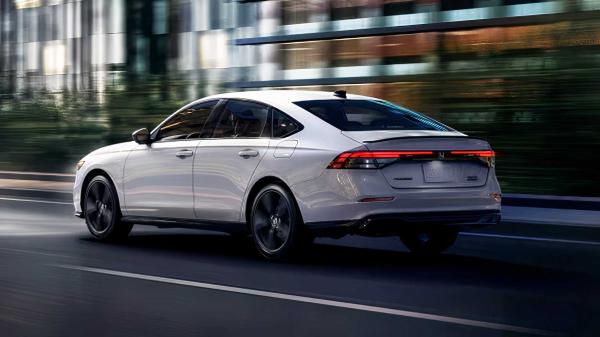
2026 Honda Accord Hybrid Rear 3/4 Driving Shot Honda

The Sports Sedan That Delivers Honda Reliability And Premium Driving Feel
9 minutes reading
Sunday, 11 Oct 2026 12:00 0 6 autotech

Sports sedans and hatchbacks have traditionally forced buyers to make compromises. A car can be fun to drive, but sacrifice comfort. It can offer an upscale cabin, but bring expensive maintenance. Or it can be dependable and practical, but leave enthusiasts wishing for more excitement behind the wheel.

56 autotech
That makes the formula behind one particular Japanese performance car especially interesting. It combines the engineering philosophy associated with Honda with the more upscale presentation expected from Acura, creating something that can feel premium without abandoning the qualities that made its mainstream relative so appealing in the first place.
The result is a car that can fly somewhat under the radar beside more familiar names from BMW, Volkswagen and Toyota. But underneath its understated badge is a 320-horsepower turbocharged engine, a manual transmission, and a chassis engineered with genuine driver engagement in mind. The car in question comes from Acura, and its appeal goes beyond simply being fast.
Honda Reliability Meets A More Refined Driving Experience
A Proven Formula With Everyday Usability

70 autotech
Honda has built a strong reputation around durable engineering, dependable powertrains, and vehicles designed to withstand the demands of everyday driving. While no performance car can promise trouble-free ownership indefinitely, that reputation provides an appealing foundation for enthusiasts who want something more exciting without completely abandoning practicality.
That becomes particularly important in the performance segment, where outright speed can sometimes come at the expense of everyday usability. The car at the center of this story takes a different approach, combining serious performance hardware with the comfort and versatility expected from a vehicle that may spend most of its life on ordinary roads.
This sports sedan is not simply a weekend toy designed to be driven hard and then parked. Instead, it offers the practicality needed for commuting, errands and longer road trips, while keeping enough performance in reserve to make a winding road considerably more interesting. For enthusiasts looking for one car that can handle both sides of that equation, that balance is a significant part of the appeal.
Acura’s Cabin Delivers BMW-Level Refinement Without BMW-Level Maintenance Bills

Honda’s engineering foundation is only half of the story. The car also benefits from a premium approach to design, equipment and driving refinement, giving it a more sophisticated character than its mainstream mechanical roots might initially suggest.
That distinction matters in a segment where traditional luxury performance cars can become increasingly complex and expensive as their performance and equipment levels rise. This particular approach offers many of the qualities buyers expect from a premium vehicle without making the ownership experience entirely dependent on luxury-brand engineering.

The emphasis is instead placed on creating a polished environment while preserving the mechanical involvement enthusiasts expect from a performance car. A well-appointed cabin, supportive seating, modern technology and a driver-focused layout complement the performance hardware rather than overshadowing it.
The result is a sports car for someone who still has to live with their car every day. It delivers a more upscale driving experience without forgetting that reliability, practicality and sensible engineering remain important long after the novelty of a new-car purchase wears off.
Meet The Acura Integra Type S
320 Horsepower, Front-Wheel Drive, And A Manual: Why This Combination Still Surprises People

Although the Integra nameplate may evoke memories of older Honda performance cars, the modern Integra Type S is a substantially different proposition. It takes the contemporary Integra’s practical hatchback body and turns up virtually every performance dial. For 2026, the Acura Integra Type S has a starting MSRP of $53,900. Its 2.0-liter VTEC Turbo four-cylinder produces 320 horsepower and 310 pound-feet of torque, making it the most powerful Integra yet.
That output is particularly interesting because the Type S does not rely on an automatic transmission or all-wheel drive to deliver its performance. Power goes through the front wheels via a six-speed manual transmission. Acura also gives it a limited-slip differential and a host of chassis upgrades designed to make that front-wheel-drive layout work far harder than it might suggest. The result is a car that can easily be overlooked by potential buyers considering better-known performance badges, despite having the hardware to compete for enthusiasts’ attention.
A High-Performance Powertrain With Everyday Manners

The 2.0-liter turbocharged engine is the star of the Type S’s mechanical package. It produces 320 horsepower at 6,500 rpm and 310 pound-feet between 2,600 and 4,000 rpm, with a 7,000-rpm redline. But outright output is only part of the story. The six-speed manual transmission gives the driver direct control over that power, while Rev-Match Control helps smooth downshifts. Acura describes the transmission as an exclusive close-ratio six-speed manual, reinforcing the Type S’s focus on driver involvement.
This makes the 2026 Integra Type S feel considerably more purposeful than a typical premium commuter. Yet its underlying Integra format keeps it just as capable when the winding roads are exchanged for the daily commute. That dual personality is central to its appeal: performance is available when wanted, but the car does not require every journey to become a track session.
The Chassis And Cabin Upgrades That Separate The Type S From The Standard Integra
How Acura’s Dual-Axis Front Suspension Solves The Torque-Steer Problem
The Type S’s performance credentials extend well beyond the engine. Acura equips it with a dual-axis strut front suspension, adaptive dampers, and a chassis tuned specifically to manage the demands of a 320-horsepower front-wheel-drive car. The dual-axis front suspension is particularly important because it helps Acura separate steering forces from the suspension geometry. Combined with the limited-slip differential, the setup is intended to give the front tires a better chance of delivering the engine’s torque to the pavement without turning the steering wheel into a wrestling match.
Wider bodywork, performance-focused brakes and 19-inch wheels further distinguish the Type S from the regular Integra. The result is not simply a more powerful version of the standard car; it is a comprehensively reworked performance model. That gives the Integra Type S a more sophisticated driving character than its relatively restrained exterior might initially suggest.
The Interior That Refuses To Feel Like A Race Car — And Why That’s The Point
-

2024 Acura Integra Type S interior shot showing cockpit Acura -

2024 Acura Integra Type S dashboard and front seats Acura -

2024 Acura Integra Type S front seats Acura
The interior follows a similar philosophy. Rather than turning the cabin into a bare-bones performance environment, Acura retains the technology and comfort features expected from a premium vehicle. The Type S includes sport-oriented seats and driver-focused controls while maintaining features such as dual-zone climate control, heated front seats, and advanced driver assistance technology.
That balance is important to the story because premium driving feel is not solely about acceleration or cornering. The driving position, seat comfort, cabin materials, technology, and overall atmosphere all contribute to how special a car feels during everyday use. The Type S therefore manages to occupy an interesting middle ground: aggressive enough to satisfy an enthusiast, but refined enough to avoid feeling like a purpose-built track car.
The Liftback Advantage: Why The Integra Type S Beats Its Rivals As A Daily Driver
24.3 Cubic Feet Of Cargo Space In A 320-HP Sports Car
One of the Type S’s biggest advantages is hiding in its body style. This is not a conventional three-box sports sedan. Its liftback configuration gives it considerably more flexibility when carrying larger items, while the rear seats make it more useful than a dedicated two-seat sports car.
That versatility is backed by a substantial 24.3 cubic feet of cargo volume with the rear seats in place, according to Acura’s specifications. For an enthusiast who has to live with one car every day, that matters. The Type S can handle commuting, errands and road trips while still being capable of entertaining its driver on a back road.
The Type S Vs. BMW M235i, Golf R, And GR Corolla: Where Acura’s Case Is Strongest
The Type S also occupies an unusual position against cars such as the BMW 2 Series, Volkswagen Golf R and Toyota GR Corolla. Each takes a different approach to performance, luxury, practicality and drivetrain configuration, making the Acura difficult to slot neatly into one category.
The BMW offers the traditional premium-brand experience, while the Golf R leans heavily into all-weather performance and the GR Corolla embraces a more overtly rally-inspired personality. The Integra Type S instead combines a premium badge and cabin with a 320-horsepower engine, front-wheel drive and a manual transmission.
That combination is increasingly unusual. Acura’s own comparison with the BMW M235i xDrive highlights the Type S’s 320-horsepower output, six-speed manual transmission, adaptive dampers, and driver-focused equipment. It is also worth remembering that the broader Integra range has demonstrated encouraging owner-reported quality. J.D. Power’s 2025 data gives the model an 82/100 Quality & Reliability rating, although that score applies to the Integra line rather than establishing long-term reliability specifically for the Type S.
That distinction makes the reliability argument more credible. Rather than promising that a high-performance car will never have problems, the Type S offers a performance package built around a manufacturer with a long history of producing enthusiast-oriented Honda powertrains, while its broader model family has already accumulated positive quality feedback.

The Acura Integra Type S is an unusual answer to a familiar enthusiast dilemma. It offers serious performance without abandoning the practicality of a daily driver, while its Acura identity brings a more premium environment than the Honda badge typically suggests.
Its 320-hp turbocharged engine, six-speed manual transmission, adaptive dampers, and driver-focused chassis give it the hardware to satisfy enthusiasts, while the Integra’s practicality and the model line’s encouraging owner-quality data help support its everyday appeal.
That combination is ultimately what makes the Type S interesting. It does not need to be the loudest or most exotic car in its class. Instead, it quietly combines two qualities that do not always coexist: the engaging character enthusiasts want and the sensible engineering philosophy many buyers associate with Honda.
Sources: Acura, Edmunds, J.D. Power, IIHS

Related posts




Latest Post


1 hour ago
7 autotech


No Comments