
The Sport Bike That Makes A Surprisingly Good Commuter
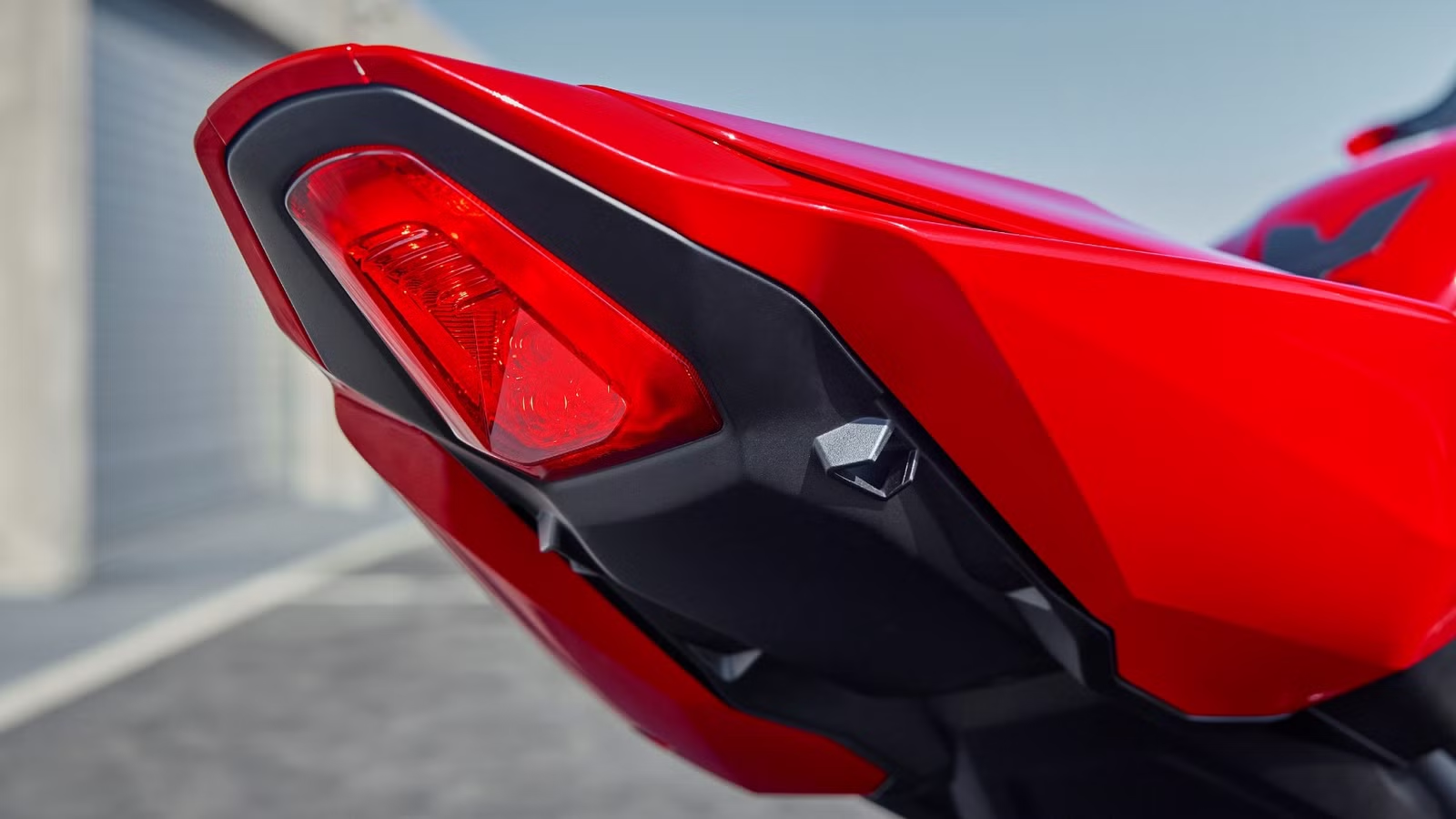
Commuting has never been a sports bike’s true purpose. Yet, ask true fanatics, and they’ll tell you it has its own fun. The rock-solid front end, the rev-happy engine, and snappy riding dynamics–the right sports bike gets you all this to make the commute fun. Bonus points because you look like a racer in a sea of average Joes during the Monday commute.

Emphasis, though, is on “the right machine”. After all, no one wants to get stuck in traffic aboard a fire-breathing, high-compression inline-four engine with your back hunched, arms aching, and fingers squeezing a rock-hard clutch lever. So what do you do if you want to get all the advantages of sports bike commutes without any of the pains? Well, you consider a recently updated Honda CBR.
What Makes A Sports Bike Friendly For Commuting Around Town
Technically, a commute-friendly sports bike is an oxymoron. These bikes were always built with racing first in mind and regular riding second. However, in recent times, more and more sports bikes are becoming friendlier for regular riding, particularly in the 500-800cc space. What makes them do that, you ask? Well, there are a few things.

Firstly, comfort has become a priority. The clip-ons sit above the triple-tree, the pegs are central rather than rear-set, and the flat saddles allow even short riders to plant their feet on the ground. Second is usable power. The meat of the horsepower and torque sit under 10,000 RPM, thanks to different engine layouts replacing the previously popular inline-four setups. That also helps with fuel efficiency.

Last but not least is tech. Traction control, ABS, and quickshifters all make life easier and safer in regular riding conditions. Plus, ride modes can help soften the power delivery when you just want to chill around town, and cruise control can allow you to relax when the freeway hits. Smartphone connectivity via a crisp display is a lesser-appreciated boon. Taking all that into account points us in the direction of one surprisingly commute-friendly CBR.
The Honda CBR650R E-Clutch Nails The Sports Bike Commuting Experience

We’re talking about the CBR650R E-Clutch. You might argue the CBR500R is a better commuter with a friendlier engine and underpinning package, but the 650R brings a more visceral sports bike experience. A lot of the credit goes to its inline-four engine, which sounds beautiful and has the top-end kick you’d expect from a proper sports bike. Yet, it is tuned for performing well at low RPMs without feeling dead. Add to that the relaxed ergonomics (for a sports bike) and E-Clutch tech, and this four-pot CBR becomes a surprisingly good commuter.
As for alternatives, the Triumph Daytona 660 comes close. It has similar performance from an inline-triple engine, a quickshifter for easy shifts, and relaxed ergonomics. However, the price of admission is higher than the CBR, maintenance is pricier, and there’s no E-Clutch to make traffic riding effortless. This is also a much newer engine platform unlike the well-proven CBR.
The CBR650R’s Recent Price Cut Makes Its Case Stronger In The Market

No one wants to spend a bomb on something they will ride daily and potentially subject to high wear. So the fact that the CBR650R now sells for $9,199–$700 less than the MY25 bike–makes its argument stronger than ever as a commuter. Not to mention, the new MSRP is lower than all of its rivals from Japan and Europe, even though some of them have half the cubic capacity and less performance. On that note, here are some nitty-gritty details of the midweight CBR as a refresher.
Powered By A 649cc Inline-Four Tuned For Usability

This is perhaps the USP of the CBR650R. In a segment full of parallel-twins and V-twins, the CBR sticks to OG supersport roots via its inline-four engine. But instead of peaky power, it’s tuned for usability in the real world. That means you get the symphony and smoothness of a four-cylinder engine without chasing high RPM peaks to enjoy the shove.
The numbers back that up. You’re looking at around 93 horsepower and 47 pound-feet, peaking at 12,000 RPM and 9,500 RPM. That also helps Honda claim a fuel efficiency of 48 MPG–not too low compared to its parallel-twin rivals. All the power reaches the wheel via a six-speed transmission that works in tandem with the E-Clutch.

The E-Clutch is what gives the CBR an unprecedented commuting advantage over anything else in the segment. This tech allows you to shift gears without using the clutch at any time. Yes, that includes rolling off from a standstill or slowing down to a stop. At the same time, when you hit your local twisties, you can turn off the system for some old-school fun.
A Short And Sweet Feature List

Barring the E-Clutch, there’s nothing really too fancy in the features department. You only get traction control, ride modes, and ABS as standard inclusions, none of which are tied up to a six-axis IMU. In the cockpit, there’s a small but crisp TFT instrument cluster. This has phone connectivity via the Honda RoadSync app, alongside three display layouts and varying brightness levels. A type-C port that hides under the bodywork and all-LED lights round things off.
Simple Underpinnings With Predictable Handling

Last but not least, the underpinnings follow the simplicity theme, too. The chassis has a steel construction rather than aluminum, while being paired up with a dual-sided swingarm. That use of steel makes the CBR a bit porky at 466 pounds. As for suspension duties, you get 41 mm USD forks and a monoshock–both from Showa and attached to 17-inch wheels. Adjustability is missing up top, but the rear allows preload changes. Likewise, the brakes have basic Nissin calipers with rubber lines.
Source: Honda Powersports

Related posts



Latest Post


No Comments