
The Sport Bike That Experienced Riders Keep Coming Back To
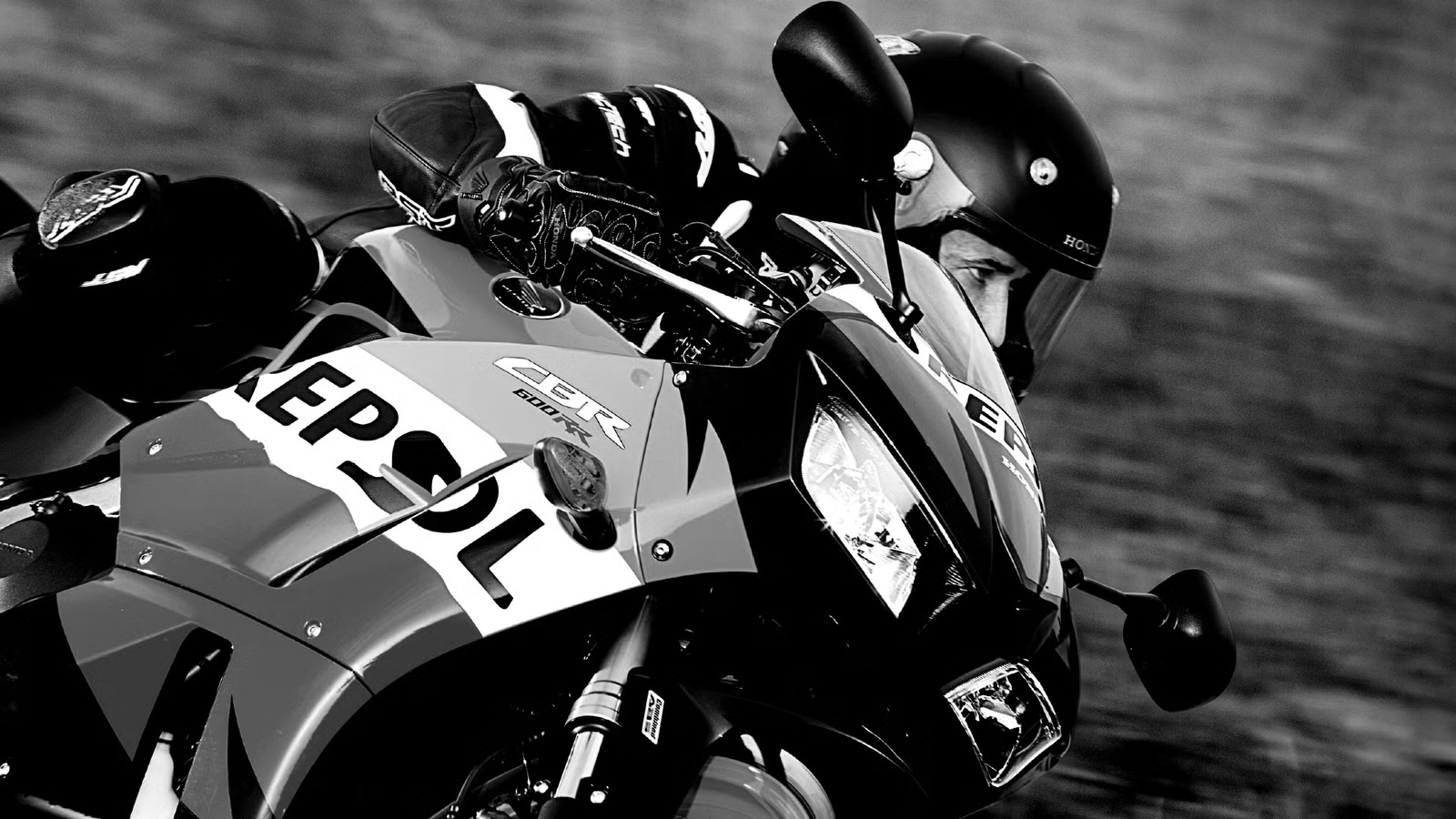
For riders who love sport bikes, there’s a natural temptation to keep moving up. You start on something small, get comfortable pushing it, and eventually want more power. A bigger engine promises harder acceleration and higher speeds, but there’s one experience that can change your perspective: taking your bike to the track. Suddenly, you’re working on your cornering, braking, vision, and body positioning, learning to carry more speed through each turn. Outright power starts to matter a little less when there’s so much else to master. Sometimes, the more rewarding motorcycle is the one that lets you make the most of what it has.
The Appeal Of A Liter-Class Superbike Goes Beyond Speed

Liter-class superbikes are poster bikes for a reason. Regardless of your flavor of choice, be it the BMW S 1000 RR, the Ducati Panigale V4, or the Honda Fireblade, these are dream machines that sit at the top of the sport-bike hierarchy. They’re gorgeous, head-turning machines, and if you’ve got the money to spend, it’s easy to see why you’d want one sitting in your garage. Naturally, there’s an assumption that moving up in displacement will make you a faster rider. More power means harder acceleration and higher speeds, right?
Look deeper, and you’ll find that it’s a little more nuanced than that. Forget public roads for a moment. Even on a racetrack, how much of a liter-class superbike’s potential can you realistically use? Any experienced track coach will tell you that becoming a better rider takes more than outright speed. Braking later, carrying more corner speed, and finding the right lines all take practice. So, where does that leave you? There has to be a way to retain the pedigree of a machine built for the track while stepping down to something that’s easier to tame.
The 600cc Supersport Makes A Mighty Good Case

That’s where 600cc supersports come in. With a long history rooted in production-based racing, these motorcycles have a strong following, and Japanese manufacturers Honda, Kawasaki, Suzuki, and Yamaha have all made notable offerings in the class. Don’t mistake their smaller engines for beginner-friendly manners, either. These are specialized sport bikes built for focused riding, typically using high-revving inline-four engines that love being worked hard. Their strongest performance sits higher in the rev range, so gear selection matters if you want to get the most out of them. And among the class’s most compelling options, one particular Honda makes a strong case for staying with 600cc.

The Honda CBR600RR Is The Sport Bike Worth Downsizing For

This 599cc supersport sits below the CBR1000RR in Honda’s North American lineup, carrying a name that’s been around since 2003. There’s a catch, though: the US-spec model hasn’t received a major update since 2013, while a revised version arrived in Japan in 2021 and Europe in 2024. Even so, it remains a road-legal, track-focused sport bike with plenty to offer riders looking to hone their skills around a circuit.
Its Screaming Inline-Four Rewards A Heavy Right Hand

The CBR600RR’s 599cc inline-four loves to be revved out (in case that wasn’t clear already). Its 12.2:1 compression ratio and close-ratio six-speed gearbox suit an engine that rewards a little more attention to gear selection. It also gets a centrally located, dual-stage ram-air intake that channels cool air into the airbox, helping boost power and smooth performance across the rev range, as claimed by Honda. Honda doesn’t publish power figures for the North American version, but commonly cited estimates put output at around 115 hp at 13,500 rpm and 47 lb-ft of torque at roughly 11,000 rpm.
The Chassis And Suspension Are Track-Oriented

Wrapped around the CBR600RR’s engine is an aluminum twin-spar frame, the lightweight construction you’d expect from a focused supersport. Up front, a 41mm inverted Showa fork handles suspension duties, while a Unit Pro-Link shock takes care of the rear. Both ends are adjustable for preload, rebound, and compression damping, so there’s plenty of scope to fine-tune the setup.
Honda says the rear suspension’s layout, which separates the shock’s upper mount from the frame, helps improve chassis response and rear-wheel traction. Braking duties fall to dual 310mm front discs with radial-mounted four-piston calipers, backed by a 220mm rear disc. The CBR600RR has a 23.5-degree rake and 3.9 inches of trail, while its seat sits 32.4 inches off the ground. Curb weight is 419 pounds without ABS and 434 pounds with it.
With No Electronics, You Keep Full Control

This is where the North American CBR600RR demands more from its rider. Unlike the updated version sold in Europe, it lacks a six-axis IMU and the rider aids that come with it, including traction control, wheelie control, selectable riding modes, and cornering ABS. There’s no electronic safety net managing wheelspin or front-wheel lift. It does get Honda’s Electronic Steering Damper, which adjusts damping according to speed and handlebar movement, while ABS remains optional.
The Ninja ZX-6R Is A Comparatively Newer But Equally Capable Alternative

The 2026 Honda CBR600RR starts at $11,499, with the ABS version costing $12,499. That’s a $1,000 difference for a braking system that adds 15 pounds to the bike’s curb weight. If keeping weight down and spending less are your priorities, the standard version makes a case for itself; if you want the added safety net of ABS, you’ll have to accept the extra weight. There’s also a newer version on the horizon. Honda has updated the CBR600RR for 2027 with Fireblade-derived brakes, revised front bodywork with integrated winglets, and a larger five-inch TFT display. It’s expected to come here soon.
If you’d prefer your supersport in a little more green, Kawasaki has another option in the Ninja ZX-6R. Its 636cc inline-four gives it a displacement advantage over the Honda, producing a claimed 127 hp at 13,000 rpm and 52.1 lb-ft of torque at 10,800 rpm. It also feels more in step with what you’d expect from a modern US-market supersport, with selectable power modes, traction control, an optional ABS system, and a quickshifter for clutchless upshifts. The 2026 ZX-6R starts at $11,599 without ABS and $12,599 with it, putting it just $100 above the equivalent Honda trims while offering a more extensive electronics package.
Sources: Honda Powersports; Kawasaki Motors Corp., U.S.A.

Related posts
Latest Post


No Comments