
The Small Sports Bike That’s More Fun Than Bikes With Twice The Power
Motorcycle performance has become an increasingly ridiculous numbers contest. This is particularly true for sports bikes. Middleweight examples now produce horsepower figures that once belonged to flagship superbikes, while today’s liter-class machines can exceed 200 horsepower without breaking a sweat. That power is impressive on paper, but public roads rarely provide enough room to use more than a fraction of it without risking a court date, a hospital visit, or an awkward conversation with both. That’s where you need a small bike that can keep you engaged without going ballistic speeds. An Aprilia does that quite well.
More Power Doesn’t Automatically Mean More Fun

Huge horsepower can be intoxicating, especially when an open road briefly gives a motorcycle enough space to stretch its legs. The trouble is that those moments tend to end almost as soon as they begin. A powerful sports bike can blast through an entire acceleration zone in one or two gears, leaving the rider backing off before the engine has reached the most exciting part of its rev range. The speed arrives, but the opportunity to participate disappears just as quickly.
Modern electronics make that performance safer and more accessible, but they also highlight how much excess capability riders are carrying around. Traction control, wheelie control, selectable power maps, and lean-sensitive intervention keep enormous outputs from overwhelming the available grip. These systems are impressive, yet much of their job involves restraining an engine that’s far more powerful than most streets can accommodate. The motorcycle’s headline feature becomes something the rider constantly asks it not to use.
Why Riding A Slow Bike Fast Is So Much Fun

A less powerful sports bike forces the rider to protect momentum. Braking too early, choosing the wrong line, or entering a corner in the wrong gear can’t be hidden beneath a tidal wave of acceleration on the exit. The rider has to look farther ahead, carry more speed through the turn, and use the gearbox properly. None of that makes the motorcycle objectively faster, but it makes each mile more involving because the person behind the handlebars contributes more to the result.

The Sweet Spot Sits In The 400-500cc Territory

Traditional entry-level sports bikes make an excellent case for starting small. They’re light, affordable, unintimidating, and forgiving when a new rider makes an awkward input. However, some motorcycles in the 300cc to 400cc range begin showing their limits once daily riding expands beyond city streets. Highway overtakes may require more planning, suspension can prioritize low cost over control, and basic brakes or displays can remind the owner that the machine was engineered primarily around accessibility.
Moving straight to a 600cc supersport brings aggressive ergonomics, higher insurance costs, peaky power, and track-focused chassis tuning, while friendlier middleweights can still make twice the power most roads allow riders to enjoy. The growing 450cc class fills that gap with manageable weight, stronger highway performance, useful torque, and equipment such as ride-by-wire throttles, adjustable electronics, inverted forks, radial brakes, and color displays.
The Aprilia RS 457 Is More Fun Than Bikes With Twice The Power
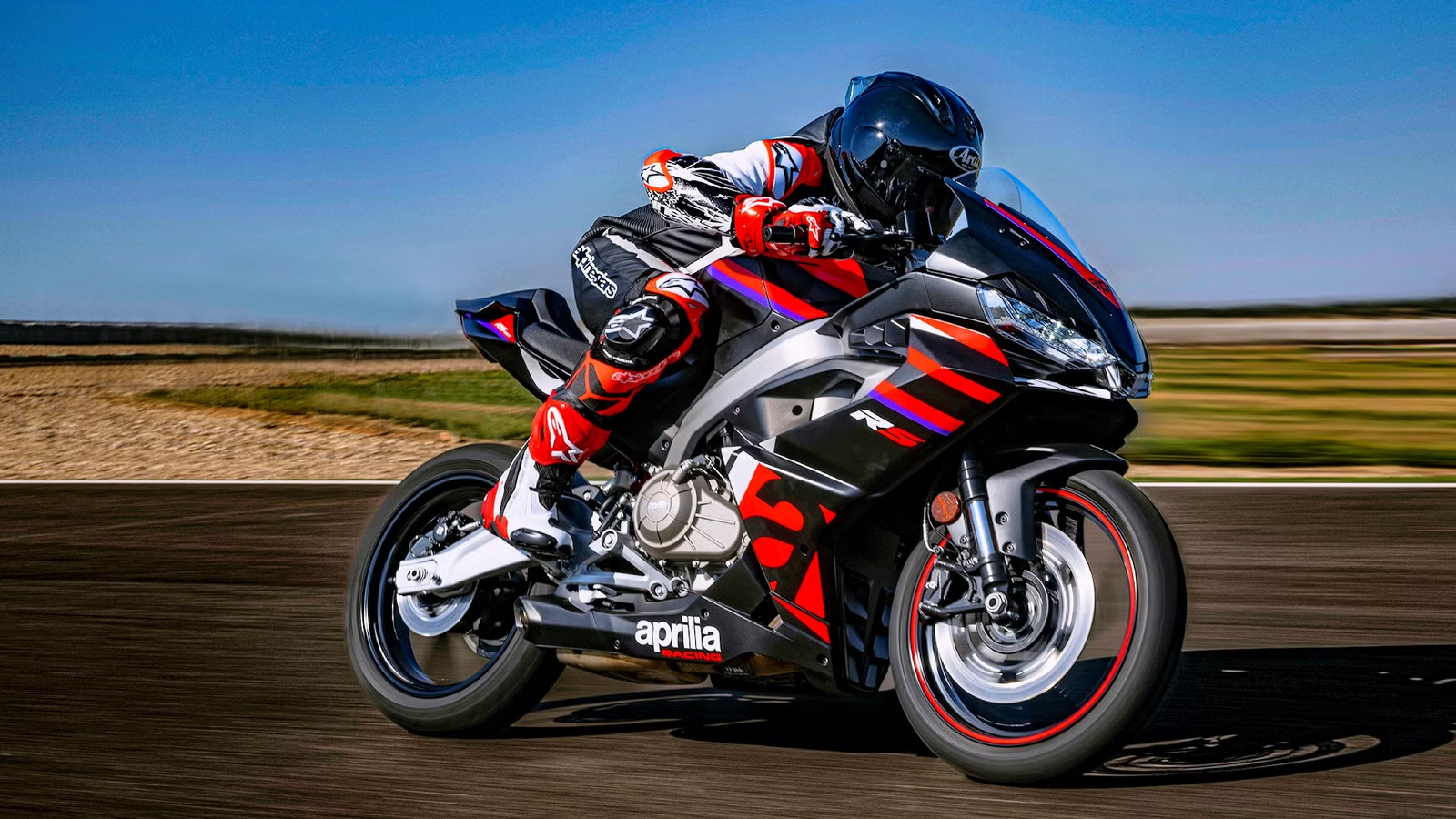
The Aprilia RS 457 captures that middle ground while looking nothing like a compromise. Its layered fairings, sharp LED lighting, compact tail, and aerodynamic bodywork borrow heavily from the RS 660 and RSV4. Aprilia hasn’t taken an inexpensive commuter, attached a plastic costume, and called it a sports bike. The RS 457 was designed as a smaller member of the company’s performance family, complete with the visual drama expected from an Italian machine.
The standard RS 457 carries a starting MSRP of $6,849, giving it some serious value for money. Its proportions also make it usable rather than merely photogenic. The seat stands 31.5 inches high, the fuel tank holds 3.4 gallons, and the motorcycle weighs 385 pounds ready to ride. The riding position places the clip-on handlebars above the upper triple clamp, producing a sporty stance without forcing the rider into a full racing crouch. A passenger seat and footpegs are standard, so the RS 457 hasn’t sacrificed everyday practicality simply to resemble a miniature MotoGP machine.
Aprilia’s 457cc Engine Prioritizes Usable Performance

Power comes from a 457cc, liquid-cooled, forward-facing parallel-twin with dual overhead camshafts and four valves per cylinder. It produces 47 horsepower and 32 pound-feet at 6,700 rpm, sending power through a six-speed transmission and a wet multiplate slipper clutch. Those figures won’t frighten a modern middleweight, but they’re enough for highway riding, enthusiastic back-road runs, and track days.
The engine is managed through a ride-by-wire throttle with three riding modes that alter power delivery, torque response, and traction-control behavior. Traction control offers three selectable intervention levels and can also be switched off, while dual-channel ABS helps manage braking. A five-inch color TFT display presents the settings through a clean interface, and backlit handlebar switches make the menus easier to navigate after dark. Full-LED lighting completes a technology package that’s unusually generous for this displacement.
Aprilia Built A Real Chassis Around The Smaller Engine

The RS 457’s biggest engineering advantage sits around its engine. Its twin-spar aluminum frame uses the engine as a stressed member, giving it a more premium and rigid foundation than the steel frames common in this class. A preload-adjustable 41-millimeter inverted fork and rear monoshock offer 4.7 and 5.1 inches of travel, balancing everyday comfort with enough support for fast road riding and occasional track use.
The 17-inch cast-aluminum wheels measure three inches wide at the front and 4.5 inches at the rear. They wear a 110/70 front tire and a 150/60 rear, keeping the contact patches large enough for grip without adding unnecessary steering effort. Braking is handled by a 320-millimeter floating front disc with a four-piston radial-mounted ByBre caliper, while a 220-millimeter rear disc works with a single-piston caliper. The hardware is simple, light, and appropriately serious for the performance available.
It Lets The Rider Be The Fast Part

Moderate power places more importance on the rider’s choices. A clean corner entry, a late but controlled braking point, and an early drive onto the straight matter because the engine can’t instantly correct every mistake. The RS 457 encourages smooth control inputs and rewards riders who understand how to preserve momentum. It can build useful skills at sensible speeds, but those same qualities also give experienced riders something to chase every time the road begins twisting.
A bike with twice the horsepower will disappear down a straight, and the Aprilia makes no attempt to challenge that reality. Once the road tightens, however, outright acceleration becomes only one ingredient. The RS 457’s light construction, communicative chassis, usable engine, and attainable limits create an experience that can be explored far more often. It isn’t fun despite having less power. It’s fun because the rider finally gets to use nearly all of it.
Source: Aprilia

Related posts
Latest Post


No Comments