
The Retro Motorcycle With Classic Looks And Modern Superbike Muscle
Retro motorcycles have a special appeal in a market that is now dominated by sharp bodywork, aggressive styling, and digital dashboards. Their rounded headlights, big fuel tanks, exposed components, and colorful graphics bring back memories of an era when motorcycling was far more mechanical than it is today. These days, riders expect more than nostalgia. The idea of simply owning an old bike is no longer appealing. However, a superbike engine nestled inside a bike that’s designed to look like your grandad owned? That’s a different story altogether. They want strong acceleration, dependable braking, and sophisticated electronics, but with the visual character of the 70s and the 80s.
When Classic Styling Meets Modern Superbike Performance

Retro motorcycles offer something that contemporary streetfighters sometimes overlook: visual simplicity. Instead of elaborate aerodynamic bodywork, winglets, and angular panels, these machines have a more traditional motorcycle silhouette. A round headlamp, a long fuel tank, an exposed engine, and a relatively upright riding position can give a motorcycle considerably more personality and presence today without feeling truly outdated.
There is also a more practical appeal, though. Many retro roadsters offer a more natural riding position than fully faired sport bikes, making them useful for both commuting and weekend rides alike. Their lack of extensive bodywork can make maintenance easier, but the rider also gets to enjoy most of the modern tech you get in today’s bikes.
The Appeal Of Superbike Power Without Superbike Ergonomics

A powerful engine can transform an otherwise ordinary roadster into something special. Large-capacity inline-four engines are particularly attractive. They feel relaxed at sensible road speeds, yet deliver substantial performance when you open the throttle. But outright performance is only part of the equation. A fully-faired superbike is designed around high-speed performance, with lower handlebars, aggressive footpeg placement, and an aerodynamic riding position. A performance-oriented retro roadster, on the other hand, offers a less demanding relationship between the rider and the bike.

There are a few bikes out there that marry performance and old-school design fairly well. The Triumph Speed Twin 1200 brings classic British styling to the segment. The Kawasaki Z900RS is inspired by its classic Z motorcycles. The Yamaha XSR900 shoves a few modern design cues into an otherwise retro package.
The Honda CB1000F Might Be The Perfectly Old-School Bike With Superbike Muscle
Price: $10,599

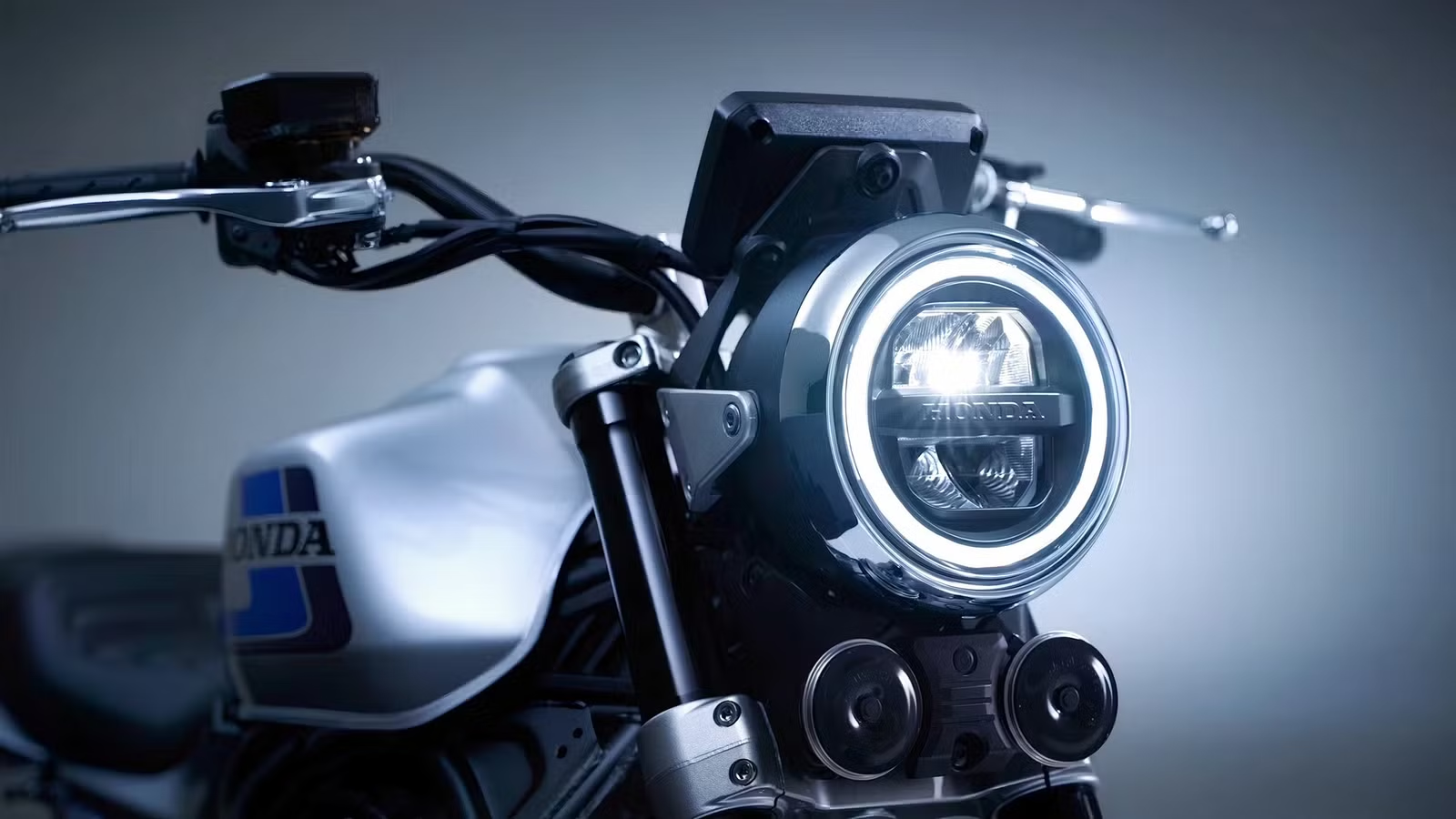
The Honda CB1000F is an interesting motorcycle within the modern retro category. It draws inspiration from the late-1970s CB750F and CB900F, motorcycles associated with Honda’s early superbike heritage. The signature “Wolf Silver Metallic” paint job accented by the blue stripes is a direct throwback to the early 1980s AMA Superbike livery. That’s not all, though. The CB1000F’s contemporary performance comes from the CB1000 Hornet platform, giving it a serious mechanical package beneath that old-school silhouette. A liter-class engine, modern braking, Showa suspension, and modern ride-by-wire tech make this bike just as modern as the latest superbike in the same class.
A Liter-Class Engine Propels The CB1000F

Powering the Honda CB1000F is a 1,000cc liquid-cooled inline-four engine. The same powerplant sits inside the CB1000 Hornet and is also the same one derived from the 2017 CBR1000RR Fireblade. On the CB1000F, however, the engine is tuned to produce 122 horsepower and 76 pound-feet of torque. The four-cylinder layout already promises smooth power delivery, but the engine is also tuned to produce better low- and mid-range grunt as compared to its Hornet sibling. Honda has also tuned the transmission gearing with shorter first and second gears that provide strong acceleration.
Showa Suspension And A Roadster-Friendly Chassis Are Present, Too

Now, the retro styling does nothing to change the fact that the chassis components inside the CB1000F are thoroughly modern. Up front, it gets a 41mm Showa Separate Function Fork-Big Piston inverted fork and a Pro-Link system with a single Showa monoshock at the rear. The front is adjustable for preload, rebound, and compression, while the rear offers preload and rebound damping adjustability. As far as riding dynamics go, a 57.2-inch wheelbase, 25-degree rake, and 3.9-inch trail give the CB1000F a naked bike layout allowing for decent amounts of agility. Just because the bike is meant to look 50 years old doesn’t mean it has to move like it is.
The CB1000F’s Retro Styling Hides Modern Technology

As far as design goes, the CB1000F is a very specific tribute to the Universal Japanese Motorcycles (UJMs) of the late 1970s and ‘80s. The clean lines, round headlight, and traditional proportions evoke the early superbike era. Even the paintwork is a throwback to the old AMA superbikes made famous by legendary American racer Freddie Spencer.
The tech, however, is properly modern. Inside the round headlamp sit LEDs for lighting. A five-inch full-color TFT instrument display provides riding information and supports Honda RoadSync for smartphone connectivity. Throttle-by-wire allows for five riding modes, including two configurable User modes. There’s cornering ABS, Honda Selectable Torque Control, Wheelie Control, and Rear Wheel Lift Control. Looking at the bike may evoke a sense of nostalgia, but there isn’t a single hint of ancient tech while riding the bike.
The Honda CB1000F shows us that classic styling does not mean ancient machinery. The 1,000cc engine, road-focused gearing, adjustable suspension, and mechanical foundations all point to a contemporary roadster with modern superbike performance. On the other hand, older motorcycle enthusiasts will admire the bike with a sense of nostalgia in their eyes.
Source: Honda

Related posts




Latest Post


No Comments