
The Power Cruiser That Feels Strong, Stable, And Easy On Long Rides
Most power cruisers ask you to choose: raw muscle or long-haul comfort. The Triumph Rocket 3 GT refuses to pick a side. Built around the world’s largest production motorcycle engine, this British bruiser delivers superbike-grade torque alongside genuine touring ergonomics — and it does so at a price that undercuts its closest European rival. If you’ve been scanning the cruiser market for something that genuinely does it all, you might be surprised to find the answer didn’t come from Milwaukee or Spirit Lake.
Why One European Power Cruiser Makes Traditional Muscle Cruisers Feel Outdated

For decades, the cruiser segment followed a familiar formula: a large-displacement V-twin engine, relaxed ergonomics, and an emphasis on character over outright performance. While that approach remains popular, it has left many modern cruisers surprisingly limited when it comes to power, long-distance comfort, and technology.

One European manufacturer took a completely different approach. Rather than building around tradition, it engineered a power cruiser around massive torque, advanced electronics, premium chassis construction, and genuine touring capability. The result is a motorcycle that delivers more performance than most American cruisers while remaining comfortable enough for all-day highway riding.
The Triumph Rocket 3 GT Combines Power-Cruiser Muscle With Touring Comfort


The motorcycle in question is the Triumph Rocket 3 GT. Built around the world’s largest production motorcycle engine, the British power cruiser produces nearly 180 horsepower and an unmatched 166 pound-feet of torque. Despite those headline figures, it remains surprisingly approachable thanks to its touring-focused ergonomics, advanced rider aids, and premium chassis design. The result is a motorcycle that feels just as comfortable devouring highway miles as it does showcasing its immense performance.
The Rocket 3 GT is the power cruiser that feels strong, stable, and easy on long rides. It has a proper focus on long-haul riding to justify the ‘GT’ in its name. This is evident from thoughtful inclusions such as the windscreen, forward-set footpegs, and a swept-back handlebar for easy reach — all while still justifying the power cruiser tag with superbike-level peak power and a torque output that no other motorcycle can match, let alone beat.
2.5-Liter Engine Produces More Torque Than Most Cars

While the Rocket 3 impresses from afar, the details are even more compelling. From the class-leading engine to premium touches like a single-sided swingarm, it’s clear that Triumph has sweated the finer points. And the pricing properly seals the deal by delivering exceptional value for an uber-premium machine. Let’s dive deeper.
Powered By The World’s Largest Production Motorcycle Engine

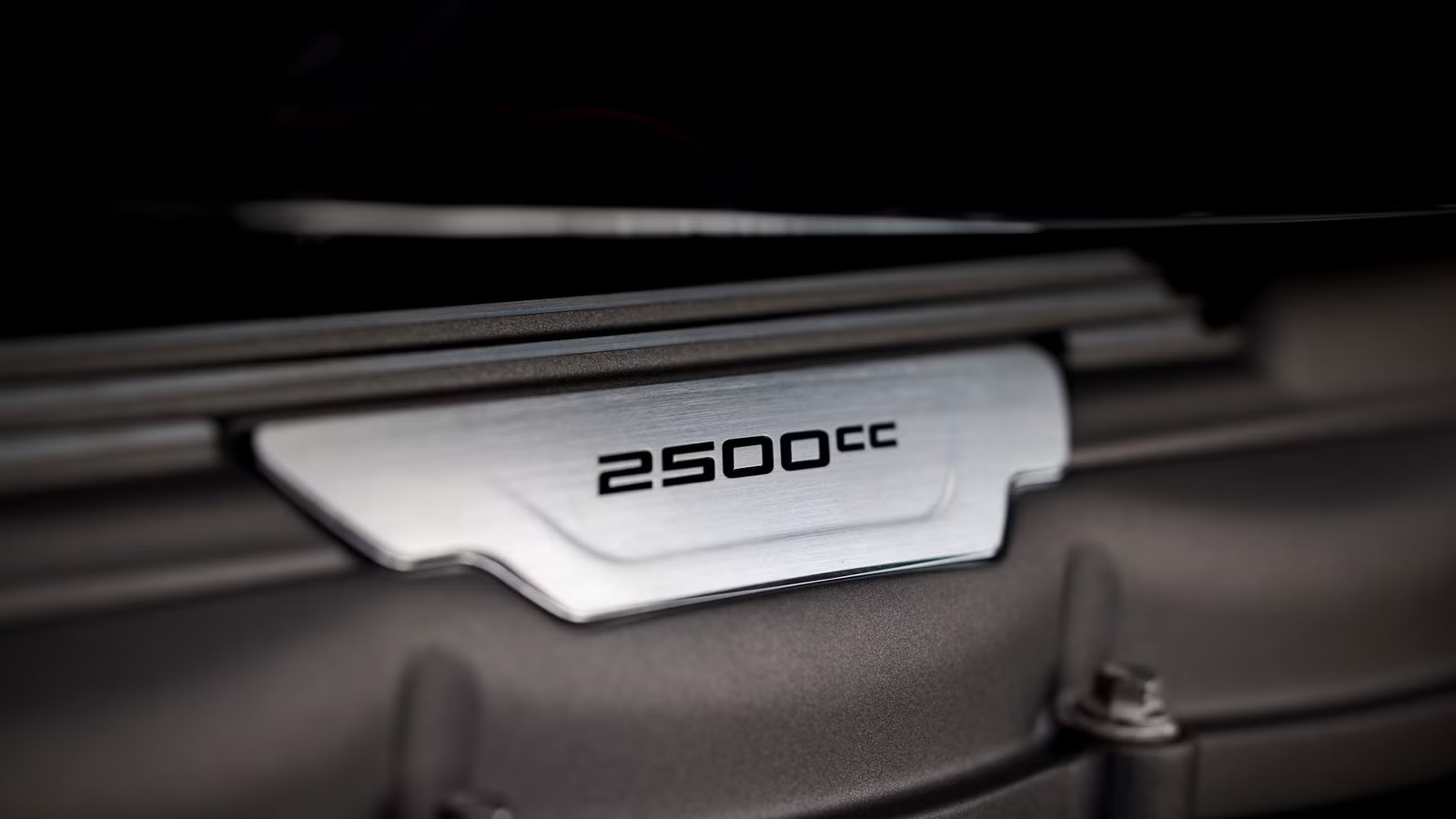
Starting off is the Rocket 3’s behemoth of an engine. This is a triple-cylinder mill displacing a whopping 2,458 cubic centimeters — making it the world’s largest production motorcycle engine, a title it has held for several years now. Harley-Davidson has only come close once in recent memory, with its uber-exotic CVO Road Glide RR. That bike was still some 300cc down on displacement.
Understandably, all that displacement brings mighty performance. We’re talking 179.5 horsepower and 166 pound-feet of torque, where the latter is not only the highest figure for any motorcycle, but also exceeds the torque output of cars like the Honda HR-V. Even with this level of performance, the compression ratio remains relatively modest at 10.8:1, and service intervals are twice as long as those of Harley-Davidson Softails.
|
Engine |
Power |
Torque |
Transmission |
Claimed efficiency |
|
2,458cc, triple-cylinder |
180 horsepower at 7,000 RPM |
166 pound-feet at 4,000 RPM |
Six-speed |
~35 miles per gallon |
Touring-Focused Ergonomics Separate The GT From The R

The ‘GT’ designation brings a few meaningful changes over the sportier R version. Most notably, the footpegs sit further forward — ahead of the first header and near the radiator — rather than being positioned under the third header. Likewise, the tubular handlebar is more swept for easier reach, and the saddle height is lower by almost an inch at 29.5 inches. Sweetening the deal is a pillion backrest and a windscreen to reduce highway windblast.
Built To Handle 166 Pound-Feet Of Torque

Since the engine isn’t traditional, Triumph ensured the chassis wasn’t either. The Rocket 3 uses an aluminum chassis with the engine as a stressed member, paired with an aluminum single-sided swingarm and Showa suspension. The latter comprises 47 mm USD forks with compression and rebound damping adjustment — capable of absorbing freeway imperfections that would punish riders on traditional cruiser suspension — along with an RSU monoshock with hydraulic preload adjustment. Tying things together are 17/16-inch alloy wheels, with dual 320 mm discs up front and a single 300 mm rotor at the rear. Four-piston Brembo calipers clamp all three rotors.
Weighs Under 700 LBs

Like the chassis, the single-sided swingarm, subframe, and wheels are all aluminum. This helps keep the curb weight just under 700 pounds wet — right in the ballpark of the Harley and Indian heavyweights. All other dimensions are par for the course, comprising:
- Wheelbase: 66 inches
- Width: 36 inches
- Tire size: 150/240-section (F/R)
- Tank capacity: 4.76 gallons
- Rake: 27.9 degrees
Advanced Electronics Keep The Power Manageable

Last but not least, there’s the impressive electronics package. A six-axis IMU and ride-by-wire enable cornering ABS, cornering traction control, and dedicated wheelie control, topped off with selectable throttle maps and ride modes. On the freeway, you’ll further appreciate the cruise control, all-LED lighting, and hill hold control. A USB port for charging devices rounds things out. Heated grips and a quickshifter are notable omissions, however.
Gets The Basics Of Soundtrack, Practicality, And Reliability Right
The Triumph Rocket 3 GT gets some other basics right, too, starting with the soundtrack. The big-bore, long-stroke inline-triple produces music for the ears. Inline-triples are inherently sonorous — even something as pedestrian as the Trident 660 has a terrific exhaust note that’s bassy and gruff. The Rocket 3’s engine turns it up to eleven. Thanks to the exhaust routing — three headers feeding into a catalytic box followed by a triple-exit muffler — the exhaust note genuinely growls.
Easy To Use Clutch For Urban Riding
Apart from the exhaust note, the Rocket 3 is also quite versatile and practical to live with, despite its performance. Triumph says the bike’s powerband, while ridiculously torquey, is paired with a torque-assist hydraulic clutch that keeps the lever action light. This means you won’t be getting a forearm workout every time you get stuck in traffic. The helical-cut gearbox is also praised for being precise and smooth. The main thing working against the bike in city traffic is engine heat.
Moreover, Triumph says the engine is easy to use at any speed. The generous power delivery is managed by ride-by-wire throttle and predictive, lean-sensitive traction control, so you don’t feel the full brunt of it at all times. At a sedate pace, the bike offers a gentle throttle response and composed demeanor. All that obviously changes the moment you open the throttle wide, when the horses are unleashed.
It’s Also Quite Reliable

It’s easy to assume that such a high-performance engine demands frequent maintenance and may not hold up over the long run, but the Rocket 3 GT will surprise you. Unlike most high-performance engines that run high compression ratios and are stressed to their limits, the Rocket 3 GT’s powerplant takes a more relaxed approach. Its large bore displacement and longer stroke — compared to other performance engines — means fewer failures over time. That’s reflected in its first major service interval of 10,000 miles, and in the fact that six-digit-mileage Rocket 3s are a common sight on owner forums.
The Rocket 3 Storm GT Is Not Easy On The Pocket

Being a premium power cruiser, the MSRP is understandably high. The Rocket 3 GT starts at $27,495, with the Evel Knievel collection edition rising to $28,295. This positions the Rocket 3 in an interesting place: it’s considerably pricier than powerful Harley-Davidson Softails like the Low Rider ST, but you still save meaningful money over its closest European rival, the Ducati Diavel V4. Not a bad position to occupy, given everything the GT brings to the table.
Verdict: A Better Long-Distance Power Cruiser Than Most Rivals
The Triumph Rocket 3 GT succeeds because it does more than simply produce massive power. It combines the world’s largest production motorcycle engine with genuine touring comfort, premium engineering, modern electronics, and surprisingly strong long-term usability. While American cruisers continue to dominate the segment, few can match the Rocket’s combination of torque, stability, and refinement.
For riders who want a motorcycle capable of effortless highway miles without sacrificing performance, the Rocket 3 GT remains one of the most compelling power cruisers on sale today.
Source: Triumph Motorcycles

Related posts


Latest Post


No Comments