
The Motorcycle That Makes Every Ride Feel More Special Than It Should
There are motorcycles you ride because you have somewhere to be, and there are motorcycles you ride because you suddenly find a reason to go. These bikes have a rare quality. They can turn an empty stretch of road into the destination, make a familiar route feel worth taking again, and somehow make even a short trip feel like an event. Their appeal is not found in a stopwatch or a specification sheet alone. It lives in the sound of the engine, the weight of the machine, the way it sits beneath you, and the feeling it creates when everything comes together. That kind of emotional connection has long been at the heart of cruisers and bobbers.
The Appeal Of The Cruiser And Bobber
Why Cruiser Riders Choose Feeling Over Lap Times

Cruisers have always followed a different set of rules from performance-focused bikes. Their appeal is not necessarily about chasing the next corner or extracting the last fraction of performance from an engine. Instead, they emphasize relaxed riding positions, strong low-speed torque, generous proportions, and unmistakable visual presence. The rider sits low, the engine is often proudly displayed, and the whole motorcycle seems designed to encourage taking the long way home.
Bobbers take that philosophy and strip it back even further. Their origins can be traced to post-war American riders who modified motorcycles by removing unnecessary equipment and shortening or “bobbing” the fenders. The result was a lighter, simpler, and more purposeful motorcycle.
How Postwar Veterans Created A Motorcycle Philosophy That Still Resonates Today

Now, the bobber’s appeal was never simply about removing parts. It was about creating a motorcycle with a stronger visual identity. A shortened rear fender, solo seat, and exposed mechanicals all made a relatively ordinary motorcycle look completely transformed. Modern motorcycles have become increasingly sophisticated with electronics, ride modes, premium suspension, and loads of rider assistance. Bobbers offer an alternative. Something that reminds us that a motorcycle can be desirable because of what it leaves out as well.

This restraint also creates an interesting relationship between rider and machine. The motorcycle feels personal even before accessories and modifications are added. And this can come from the heritage the bobber carries. The style is inseparable from its history, and even today, riding a bobber brings up a feeling that you just can’t find in any other motorcycle.
The Triumph Bonneville Bobber Proves Retro Style And Modern Substance Aren’t Mutually Exclusive
How A 1956 Land Speed Record And 1940s Custom Culture Collide In One Motorcycle

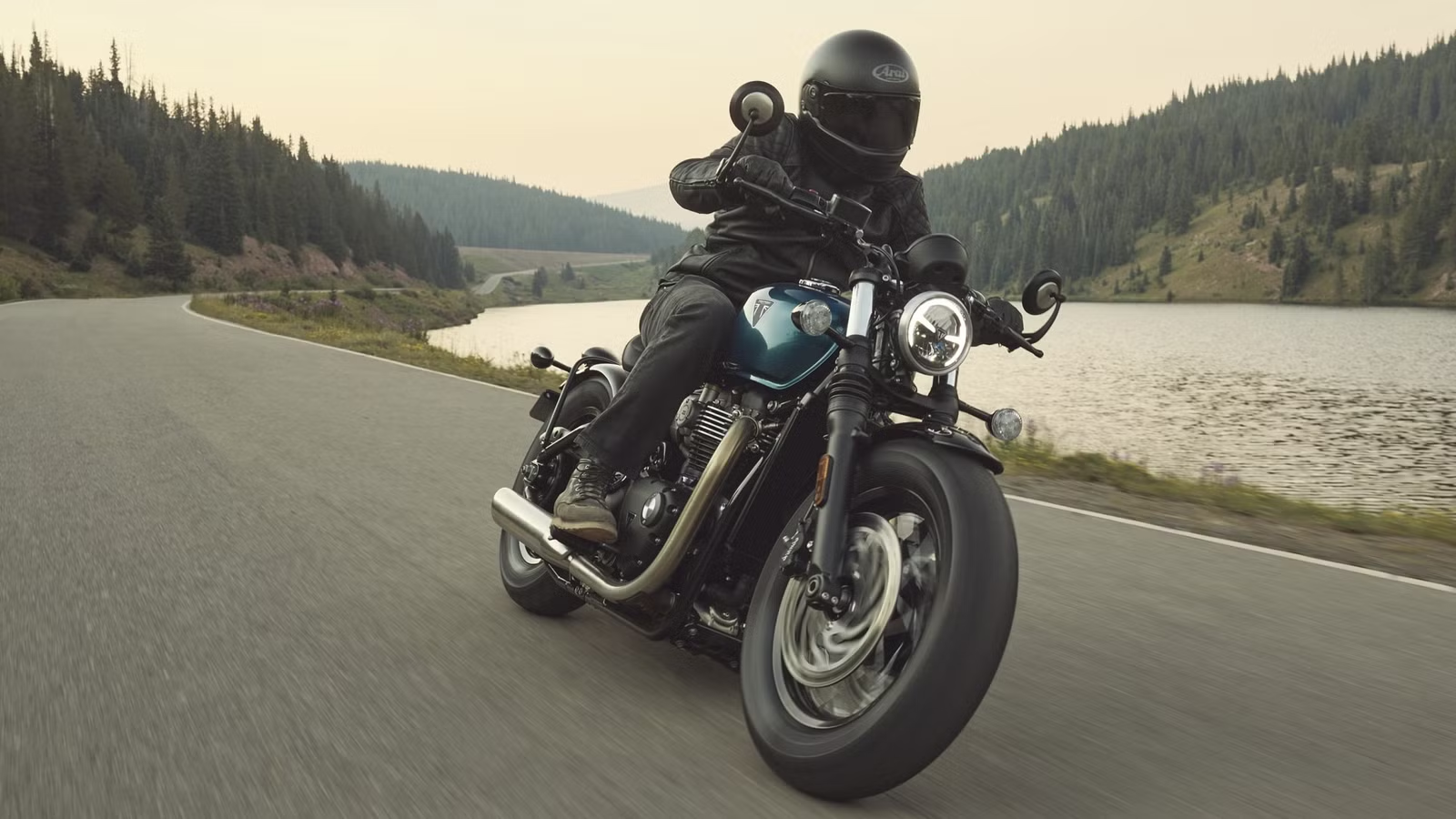
The Bonneville Bobber is not an unusual choice, really. On paper, it is a 1,200cc parallel-twin, but in person, these numbers matter less than the way the motorcycle combines them. Its low stance, single floating seat, and deliberately minimal bodywork turn heads like few other bikes do.
It pairs two distinct motorcycling cultures. The iconic “Bonneville” nameplate comes from the 1956 land record set by Johnny Allen at the Bonneville Salt Flats in Utah using a Triumph parallel-twin engine. The styling, on the other hand, comes from 1940s and ’50s custom bob-job culture.
A Big Parallel-Twin Is The Heart Of The Bonneville Bobber

Powering the Bonneville is a 1,200cc liquid-cooled parallel-twin that produces 77 horsepower at 6,100 rpm and 78 pound-feet of torque at 4,000 rpm. The 270-degree crank helps give the engine a distinctive V-twin pulse, while electronic fuel injection and electronic throttle control bring modern precision into the mix. It is not just modern; it feels genuinely special thanks to that soundtrack.
Torque is not just available lower down in the rev range, but you can find a decent spread of it across the tach. This makes it particularly well-suited for the kind of riding you would do on a cruiser. It will burble down a city street, roll along a scenic highway, or even accelerate out of a corner without requiring constant gear changes.

Transmission comes via a six-speed gearbox and a chain final drive. A big engine also means a heavy clutch, but Triumph gives the Bobber a slip-and-assist clutch, so crawling through traffic is not as much of a forearm workout as one would expect on a traditional classic bike.
The Hidden Suspension Trick That Makes It Look Authentically Old-School

As the name suggests, the Bobber is in fact a “bobber”. Inspired by the “bob-job” movement by returning WWII veterans, the bobber symbolizes a culture of freedom and customization. The bobbed fender, cantilevered seat, round headlamp, and extremely minimal bodywork all make the bike look like an authentic ’50s motorcycle.
One of the neat things about this is the hidden softail design. The suspension components have been hidden under hardtail styling to keep the bike true to its roots, but still provide the comfort and stability that comes from a conventional softail. There is every reason to feel like you are riding a piece of history every time you take out the bike.
The Bonneville Bobber’s Chassis Is Low, Long, And Surprisingly Serious

Underneath that minimalist bodywork is a tubular steel frame with steel cradles and a twin-sided tubular steel swingarm. The bike rides on 16-inch spoked wheels and aluminum rims wrapped in 130/90-16 and 150/80-16 tires at the front and rear, respectively.
The low-slung stance is as much visual as it is functional, but the 26.9-inch seat height makes the bike extremely approachable for just about anyone. The bike weighs 551.2 pounds at the curb, so it certainly isn’t lightweight, but put the low center of gravity together with the short seat, and you have a bike that feels more manageable than you might think.

The 58.5-inch wheelbase allows for impressive straight-line stability, and a 25.4-degree rake helps keep the handling agile for a cruiser. Suspension comes from 47mm Showa cartridge front forks and a monoshock at the rear. As we have mentioned, the rear suspension has been hidden to preserve that hardtail styling of an old classic. Braking, too, is modern with twin 310mm discs up front and Brembo two-piston calipers, and a single 255mm disc clamped down on by a Nissin single-piston caliper.
The Triumph Bonneville Bobber Is Modern Where It Matters
Technology On The Bobber Isn’t Sparse

The Bonneville Bobber may look like a motorcycle that rolled out of a custom shop, but its electronics are fully modern. It gets two riding modes, Road and Rain, which adjust throttle and traction-control settings. There’s also IMU-based lean-sensitive ABS and traction control, along with cruise control for longer rides. The instrumentation is restrained: you get an analog dial with an LCD insert to toggle the bike’s settings. There’s also a USB-C socket to provide charging.
Base Price: $14,795

The reason the Triumph Bonneville Bobber is so appropriate for this article is that it’s not one of those rational purchase bikes. Many buyers weigh power, usability, and even maintenance when considering a motorcycle purchase. But the Bobber is an emotional purchase. You buy it because it speaks to you in a way that other motorcycles don’t. This is exactly why every ride on the Bobber, whether to the nearest coffee shop or along a scenic coastal road, feels more like an occasion than just another day on another motorcycle. The motorcycle is the event, and not necessarily the ride.
Source: Triumph Motorcycles

Related posts




Latest Post



No Comments