
The Japanese Sports Sedan With M5 Pace And Toyota Running Costs
There is a used sedan trading hands right now that lost every magazine comparison test it ever entered. It gave up horsepower, torque, and lap times to the German icon it was built to fight, and reviewers politely filed it away as a noble also-ran.
Yet today, clean examples of this sports sedan are hammering for double — sometimes nearly triple — what that German benchmark brings at auction. Buyers are not paying for nostalgia or a badge. They are paying for something the spec sheets never measured, and the answer to this paradox sits in the engine bay.
The Slower Sedan That Sells For Double What The M5 Brings
The numbers coming out of the auction world make no sense until you understand what is driving them. The highest price recorded on Cars and Bids for this sedan is $70,000 for a 2020 model, and early 2016 examples are not far behind, with three selling for $64,501 and others trading at $56,000 and $60,000. These are results for a car that struggled to find buyers when it was new.

Its old rival is heading in the opposite direction. The same auction platform shows F10-generation BMW M5 prices sitting consistently in the $24,000 to $35,000 range, with very few examples creeping over $40,000. Even an M5 with the Competition Package hammered for just $46,000 — a striking result for the car that dominated its era.
Here is what makes the inversion so strange. The F10 M5’s 4.4-liter twin-turbo V8 produced 552 hp and 501 lb-ft, launching it to 60 mph in as little as 3.7 seconds with launch control. The M5 was the better performer in every department and carried a higher price tag when these particular cars were new, yet collectors are choosing the Japanese sedan regardless. Those buyers know something the road testers never bothered to quantify.
The Lexus GS F Was The Answer Nobody Wanted — Until Now

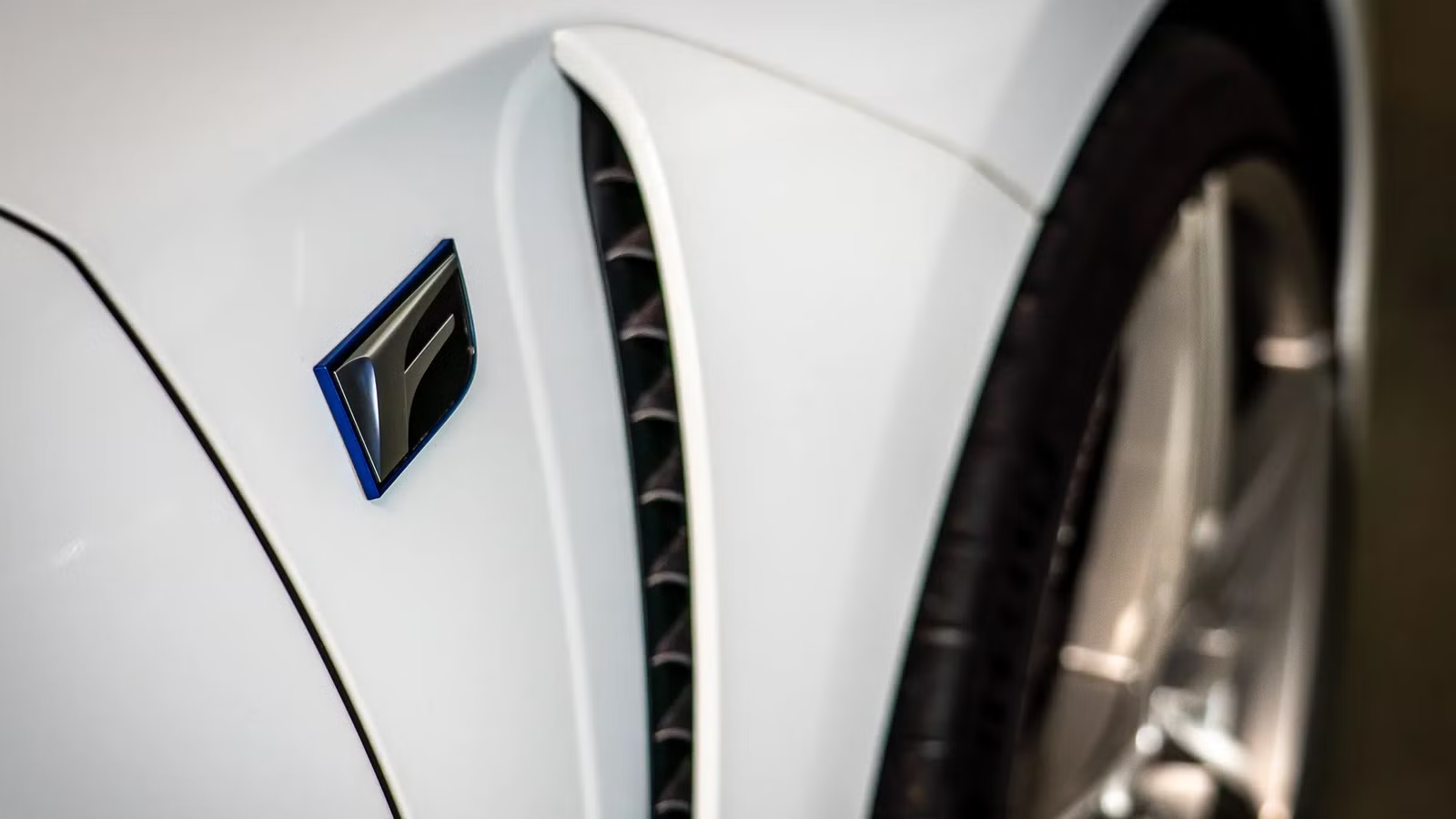
The car commanding those prices is the 2016-2020 Lexus GS F, the brand’s first and only real shot at the M5. It arrived late to the super-sedan war, conceded the horsepower argument before the first test drive, and left the market quietly when Lexus killed the entire GS line. The enthusiast press respected it, praised its purity, and then recommended the faster Germans anyway.
Sales figures reflected that verdict. Just 2,484 GS Fs were built for the US market across the full production run, with 1,418 of those coming in 2016 alone, and annual production never touched 500 cars from 2017 onward. Fewer than 200 units of the final 2020 model year were produced for the American market, making late cars genuinely scarce.

Price was a big part of the problem when new. A 2016 GS F carried a starting MSRP of at least $85,000 before options, which was serious money for a sedan that gave up 85 hp to its Bavarian rival. A decade later, that commercial failure has flipped into a rarity floor holding values up.
Two Injection Systems, Zero Turbos: Why This V8 Refuses To Wear Out

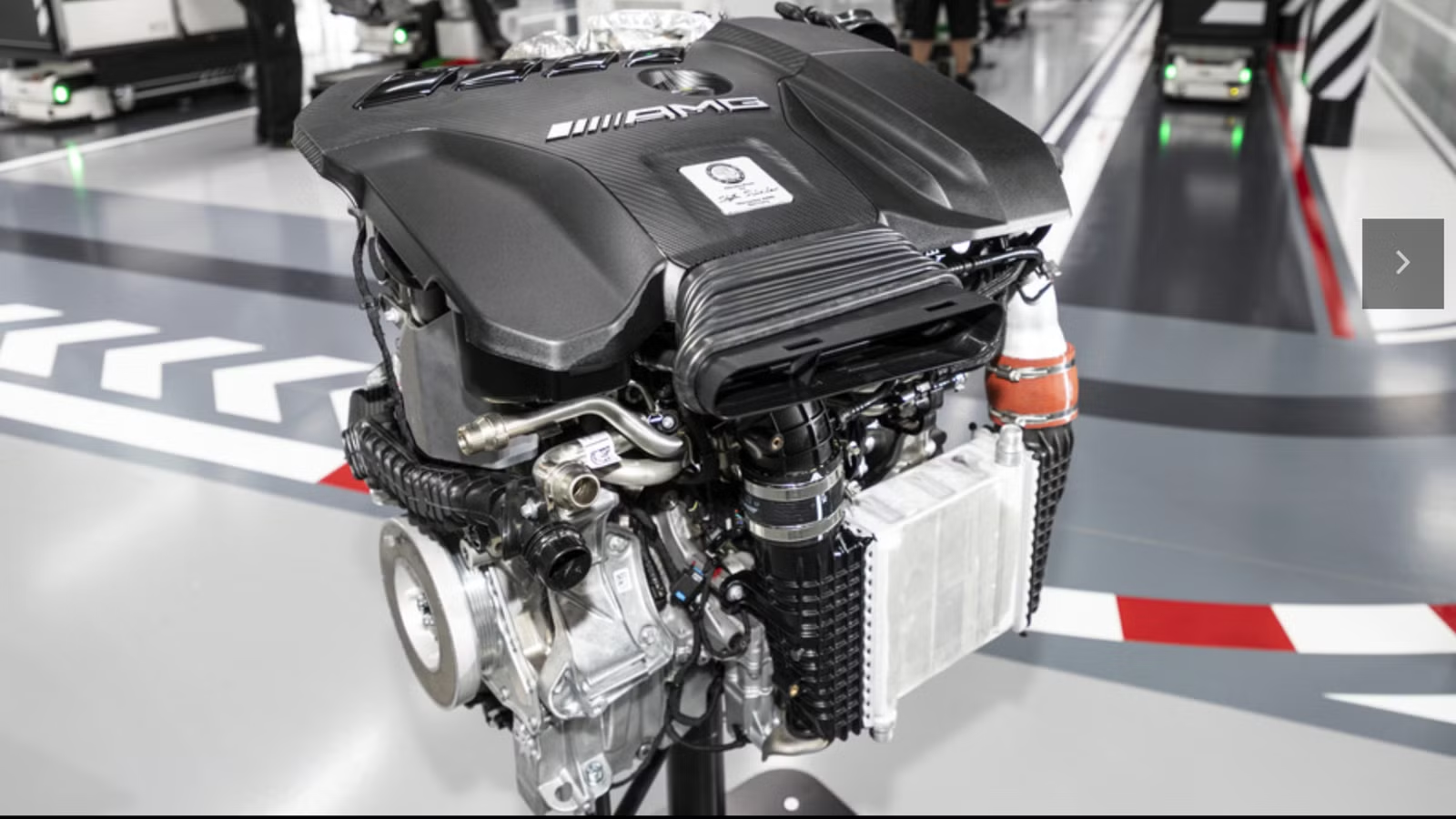
The GS F’s 2UR-GSE is the reason the ownership math works, and it starts with how the engine breathes. The naturally aspirated 5.0-liter V8 was engineered for low weight and high strength, with forged connecting rods and titanium intake and exhaust valves that allow a 7,300-rpm redline, delivering 467 hp and 389 lb-ft of torque. There are no turbochargers to fail, no wastegates to stick, and no intercooler plumbing to leak as the miles pile on.

The critical detail is the fueling. The high-pressure D-4S direct injection system also uses port fuel injectors, which allows a high 12.3:1 compression ratio for optimized performance and efficiency. Those port injectors continuously wash fuel over the intake valves, preventing the carbon buildup that chokes direct-injection-only engines as they age — the exact problem that sends aging German turbo motors in for expensive walnut-blasting sessions.
The M5 tells the opposite story under the hood. The most severe known issue with the F10’s 4.4-liter twin-turbo S63 V8 is rod bearing failure, made worse by BMW’s notoriously long oil-change intervals, and the failure list hardly stops there. One of the main reasons the Bavarian car sells so cheaply compared to the Lexus is that it has the potential to bankrupt its owner. The GS F’s conventional torque-converter eight-speed automatic completes the durability picture, trading dual-clutch drama for a transmission design with decades of proven service behind it.
The Five-Year Numbers That Rewrote The Ownership Math

The financial case extends beyond one auction site, and the clearest data comes from the GS F’s mechanical twin. The Lexus RC F coupe shares the same 2UR-GSE V8 and eight-speed automatic, so its ownership data serves as a reliable proxy for the sedan. Its numbers against the equivalent BMW are hard to argue with.
Over five years, the BMW M4 loses 44.1 percent of its value while the Lexus RC F loses just 33.6 percent, meaning the Lexus retains 10.5 percentage points more of its value than its direct rival. That makes the RC F the best-performing Lexus of all for resale, retaining 74.9 percent of its value after the first five years. For a luxury performance car, that retention rate is nearly unheard of.

Maintenance and repair costs for an RC F amount to just $2,493 over the first five years, according to CarEdge. That beats the luxury coupe segment average by $3,064, and the car carries only a 16.52 percent chance of needing a major repair in that window — 16.43 percent better than its segment peers. Those are Toyota Corolla-grade ownership numbers attached to a 467-hp V8.
The Last V8 Sports Sedan Worth Buying With Your Head

The GS F lost the 0-60 argument by eight tenths of a second, but it won the 60,000-mile argument by a margin themarket has now priced in at auction. The reader who chose Japanese reliability over German cachet a decade ago is watching the results validate the decision in real time.
The car’s position in history only strengthens the case. Rear-wheel-drive V8 sedans are dwindling from the market, and the GS F is likely the last of a dying breed, which puts a second floor under values beyond simple rarity. Nobody is building a naturally aspirated, 7,300-rpm luxury sedan again.

None of this means shopping blind, because age catches every car eventually. Known GS F checkpoints include wear in the PCV system and the liquid-filled bushings in the lower front control arms, which degrade over time and cause excessive toe-in. That is the entire list of common concerns, and it reads like a single line item next to the M5’s catalog of failure modes.
That is the real story the auction results are telling. The GS F was never the fastest way to spend $84,440, but it has proven to be the smartest way to own a V8 super-sedan past the warranty period. The market took a decade to do the math, and the math now favors the F badge.
Sources: Cars and Bids, Classic, BMW Blog, Car Edge, KBB

Related posts






Latest Post


No Comments