
The Motorcycle That Has Depreciated Into A Surprisingly Good Buy
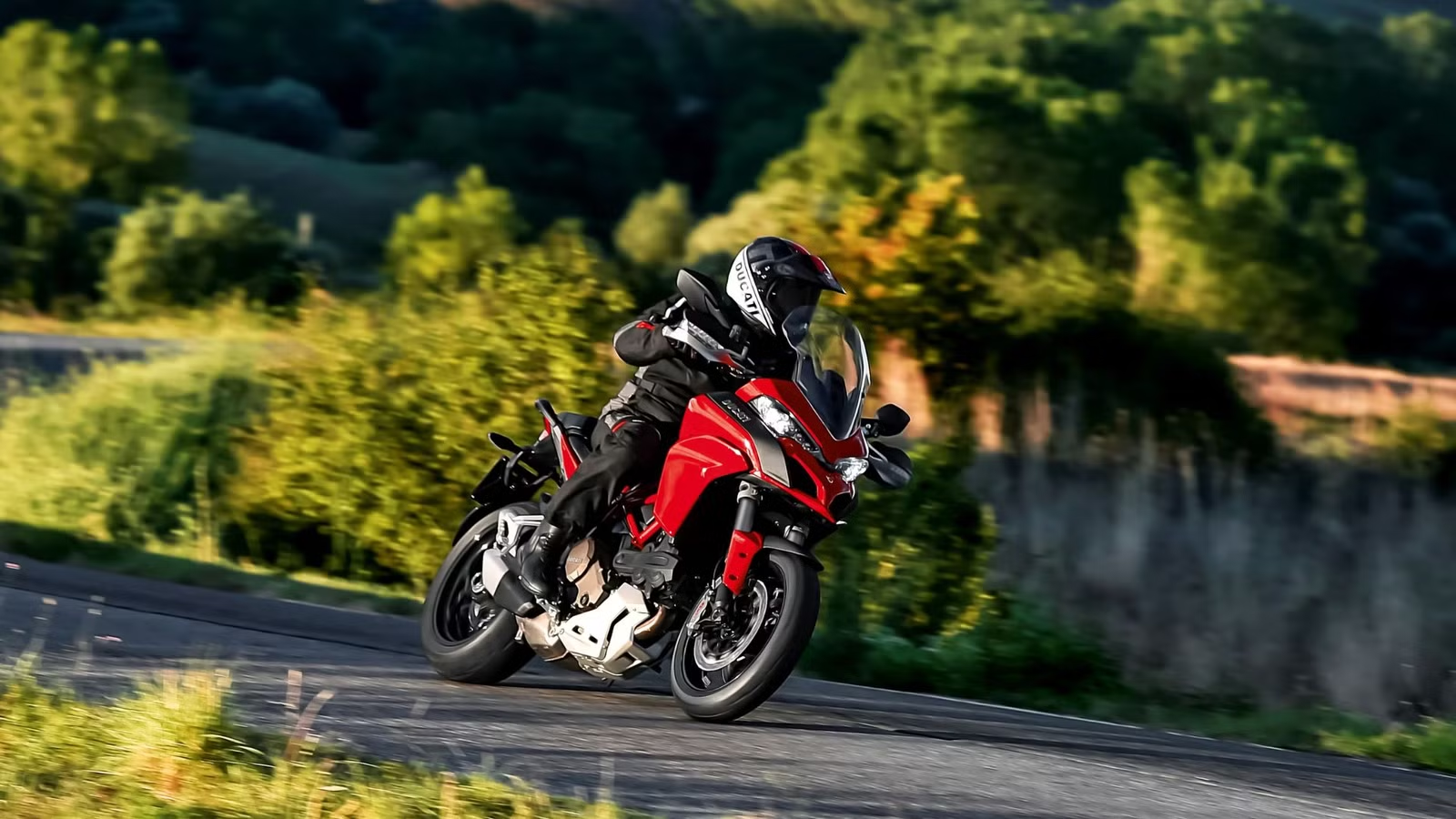
A four-bikes-in-one marketing promise is a tall claim for any motorcycle. But there are a couple of genres of bikes that make this possible. Adventure bikes as well as crossover touring bikes have the ability to transform the ride based on what surface you choose to traverse on the day. This is enabled not only by engineering a great engine, top-notch suspension, and an able chassis, but mostly by a host of electronics that are capable of communicating with the hardware.

The only trouble is, these days, even such tech marvels of motorcycles lose their monetary value in a matter of a few years. The tech as well as the bike’s mechanical capabilities, however, stay intact, and that’s exactly why they become a very attractive used purchase decision as depreciation hits them hard in the initial years. Ducati has one gem of an ADV-tourer that fits the bill well.
Why Buying A 2015 Flagship ADV In 2026 Is Smarter Than Buying New
A crossover built to switch between a sport bike’s throttle response, a tourer’s comfort, an ADV’s traction management, and still being able to tackle the urban environment on a daily basis needs an elaborate suite of electronics. This tech wasn’t available till a couple of decades ago, and definitely not all in one bike. Just as the inclusion of an inertial measurement unit (IMU) and ride-by-wire technology became accessible to high-end flagship bikes, the high-end ADV came about.
The tech didn’t come cheap, and the cost would be transferred to the buyers who, for this class of high-tech top-shelf motorcycles, would end up shelling out anything north of $16,000 – $18,000 in the mid-2010s. But being early adopters of tech carries the biggest risk of obsolescence as the tech progresses faster every year. And with that, comes the dilemma of depreciation.

Thankfully, electronics don’t wear the way a clutch or a chain does, and the sensor suite along with the engine underneath still continues doing exactly what they did the day they were built. That translates to the accessibility of a flagship-grade bike with tech that is still relevant and helpful. And if that bike happens to be one that pioneered half of what’s standard equipment nowadays, then you’ve just hit the jackpot of all bargains.
The 2015 Multistrada 1200 DVT: The Year Ducati Built A Bike That Ages Better Than Its Price

The Ducati Multistrada 1200 debuted in 2010 with a multi-faceted personality encompassing a sport bike, a tourer, a commuter, and an enduro machine. The platform’s biggest overhaul came in 2015, when Ducati revised the old Testastretta engine and rebuilt the whole IMU-based electronics package around a new camshaft system. That version of the Multistrada 1200 wore a base price tag of $17,995. A decade on, the same machine tells a very different story on the used market.
A $17,995 Flagship Now Listed From $4,999 — What The Used Market Says Today

Current listings for the Multistrada 1200 run from as low as $4,999 up to $11,495, averaging around $8,380 across the used market. Against a $17,995 original sticker, that average sits at less than half of what the bike cost new, and even the cleanest, lowest-mileage examples at the top of that range still undercut the original price by more than $6,000.
The floor of that range belongs to higher-mileage bikes well past their factory warranty. These are best picked up by those willing to budget for a Desmo valve service sooner rather than later, and that will set you back an additional $1,000 – $1,500 plus labor. Nevertheless, the math still holds: a machine that once required nearly $18,000 to put in a garage is now available for a fraction of that, but a depreciated price only matters if the technology underneath is still worth having — and that’s where the 2015 DVT overhaul changes everything.
Desmodromic Variable Timing Rewrote The Testastretta’s Character

Ducati built the Desmodromic Valve Train (DVT) system around independent camshaft phasers on both the intake and exhaust sides. Each one would hydraulically rotate its camshaft relative to the crank to adjust valve overlap on the fly. The old Testastretta 11-degree engine fixed that overlap at a narrow angle for smoother low-speed manners, capping outright power in the process.
DVT helped widen the overlap at high rpm for a genuine top-end rush while narrowing it back down at lower revs, so the bike idles cleanly, and pulls off a stoplight without the erratic surging that plagued the earlier engine. The result is an engine that makes 160 horsepower at 9,500 rpm and 100 pound-feet of torque at 7,500 rpm, both up from the pre-DVT bike. All this was delivered through the same 1,198.4cc, 90-degree L-twin that Ducati had already proven in the 1198 sport bike.
Four Riding Modes Run On Electronics That Still Undercut Their Price Class

Four ride-by-wire power modes that include Sport, Touring, Urban, and Enduro retune throttle response and cap output differently. This gives the rider immense versatility in dropping to roughly 100 horsepower in Urban and Enduro mode, so the big Ducati on a wet parking lot or a loose fire road is easier to manage.
The IMU that arrived alongside the DVT upgrade feeds Ducati’s Cornering ABS and Ducati Wheelie Control, while Ducati Traction Control offers eight rider-selectable intervention levels. This level of tech from a decade ago still functions the same today, as none of the hardware behind it is a wear item, barring some replaced sensors as and when required. The Multistrada 1200 was available in many iterations, including an Enduro variant, that’s again a bargain today, biased more towards the ADV side of its many personalities.

The base Multistrada 1200 skipped the semi-active Skyhook suspension that was reserved for the pricier Enduro and S trims. Even then, the base Multi runs a fully adjustable 48mm inverted fork and a fully adjustable Sachs monoshock. Although the semi-active suspension is a great piece of tech, it is not a must-have. Thus, used prices for the base variant should be negotiated accordingly.
The Multistrada 1200 Against Its Era-Contemporary Rivals

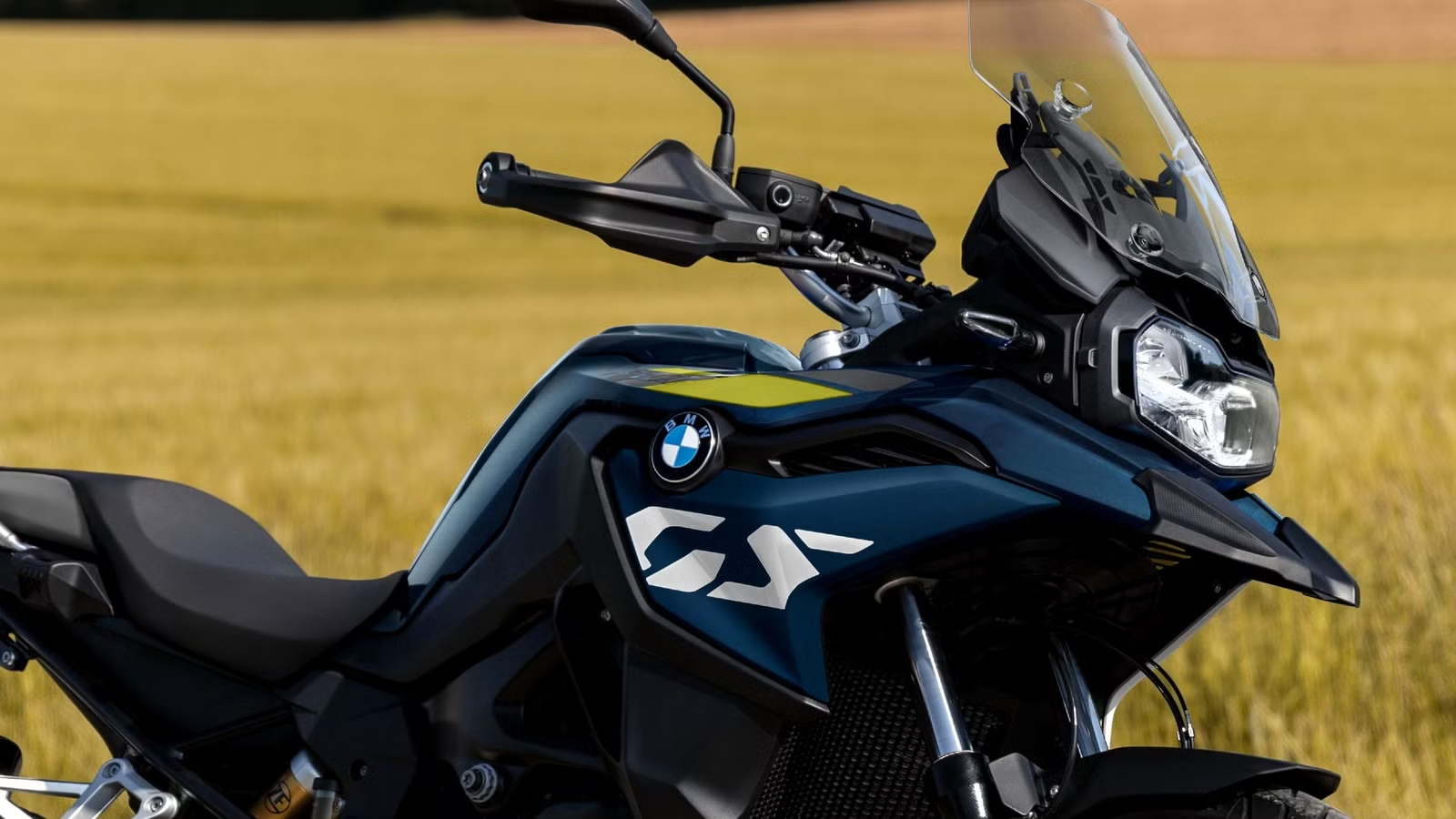
The BMW R 1200 GS is also significant in redefining adventure riding, and shared the years with the DVT-era Multistrada 1200, launching with a 2016 MSRP of $16,495 with a 1,170cc water-cooled boxer twin making 125 horsepower and 92 pound-feet. That boxer runs a shaft drive, and BMW’s off-road pedigree through the GS nameplate is longer and deeper than Ducati’s. Used R 1200 GS listings today average around $8,000, tracking close to the Multistrada’s own used price, and are equally a good used buy.

The KTM 1090 Adventure R replaced the 1190 outright for 2017, dropping to a 1,050cc V-twin that still makes 125 horsepower and 80 pound-feet. KTM simplified the electronics to hit a lower price point, pulling the lean-sensor ECU that the 1190 ran, so the traction control loses the cornering awareness of the Multistrada. WP suspension with 8.7 inches of travel and wire-spoked wheels make up the difference off-road if that’s what your ADV riding includes more of. Used prices sit lower too, typically between $6,000 to $9,000, with rougher examples dipping under $6,000.
Source: Ducati, Cycle Trader

Related posts



Latest Post


No Comments