
Pink Floyd Star Is Selling His Rare Supercar Valued At $35 Million
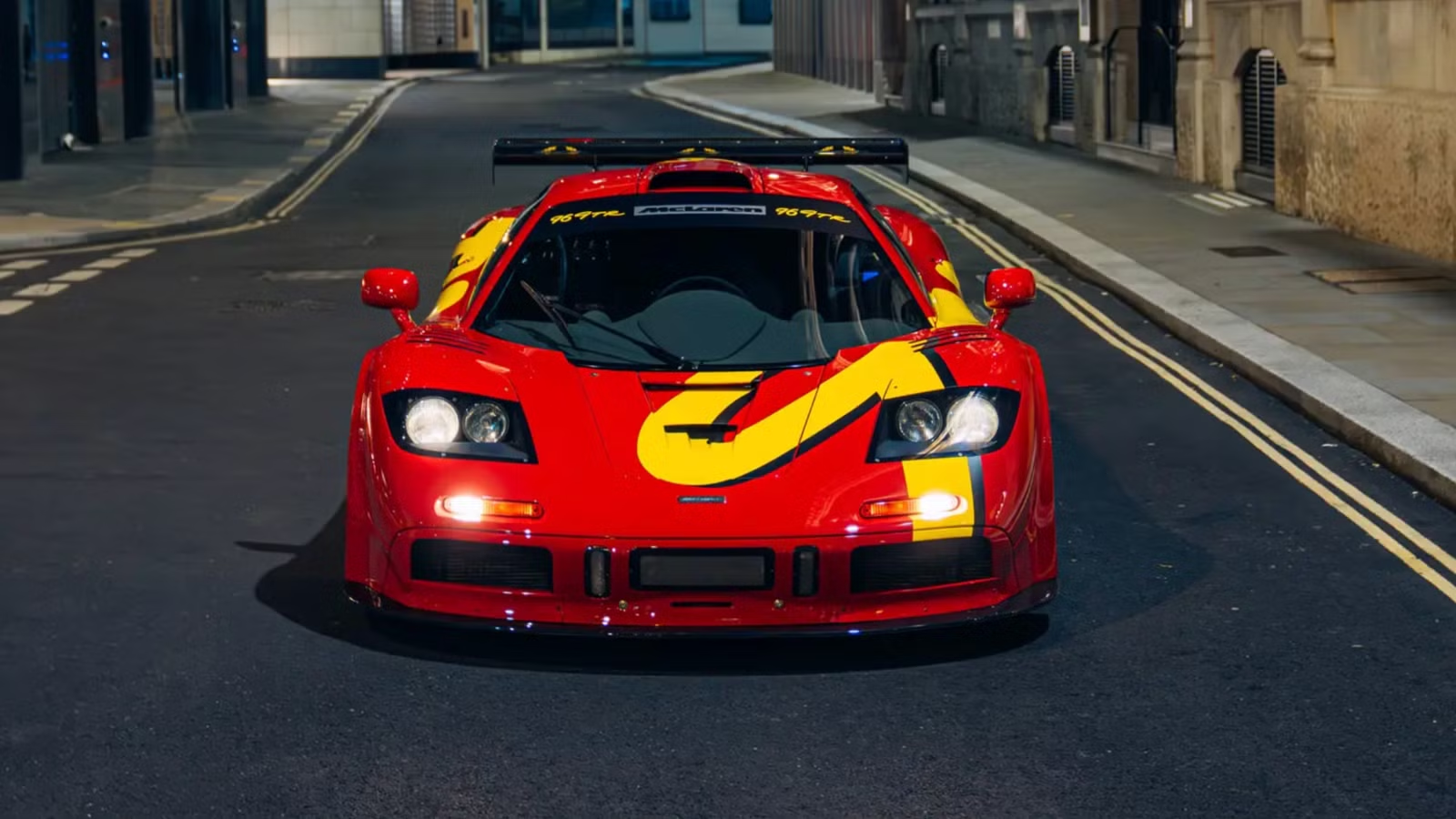
Nick Mason, the drummer behind Pink Floyd, is putting one of the most extraordinary McLarens ever built on the market — and the asking price of more than $35 million is one of the highest figures ever attached to a McLaren offered for sale. The car is a McLaren F1 GTR, a machine already legendary in collector circles, and Mason’s example carries a provenance story that makes the number easier to understand, even if it still takes a moment to process.

At that price point, this supercar masterpiece is a signal about where ultra-rare British machinery is trading right now, and what serious collectors are willing to pay for a car with the right combination of racing history, celebrity ownership, and irreplaceable scarcity.
The Car: A One-of-a-Kind McLaren F1 GTR With a Complicated History
The McLaren F1 GTR is already one of the most coveted racing machines ever built. Developed from the road-going F1 — itself widely considered the greatest driver’s car of its era — the GTR was McLaren’s full-blooded Le Mans competitor, powered by a BMW S70/2 V12 and stripped of everything that wasn’t essential to going fast. Only a small number were ever produced, and each one carries a distinct racing lineage.


Mason’s example is described as one-of-a-kind, and its history is genuinely unusual: the car was involved in two separate crashes over the course of its life. That detail might seem like a liability, but in the collector world, a well-documented accident history on a racing car — with verified repairs and continuous provenance — often reinforces rather than undermines value. It proves the car was actually used, actually raced, and survived. For a GTR, that’s part of the story, not a footnote to be buried.
Why $35 Million — And What It Signals About the Hypercar Market

The $35 million-plus asking price puts this McLaren in genuinely rarefied company. For context, another McLaren F1 GTR entered the market around the same period with pre-sale expectations of at least $35 million — figures that, taken together, suggest the F1 GTR has reached a valuation tier that would have seemed extraordinary even five years ago.

What’s driving those numbers? Three forces are converging. First, the F1 GTR’s production run was tiny, and attrition over decades of racing means the surviving examples are fewer still. Second, collector appetite for analog, naturally aspirated hypercars from the 1990s has been climbing steadily — these are machines that cannot be replicated, updated, or replaced by anything McLaren builds today. Third, celebrity provenance at this level — a founding member of one of the most recognized bands in rock history — adds a layer of cultural weight that serious collectors factor into their bids. Mason isn’t a peripheral figure; he’s been a committed car collector for decades, and his name carries genuine credibility in that world.
Nick Mason’s Place in the Collector Car World

Mason has long been known in enthusiast circles as one of rock music’s most serious car collectors — not a celebrity who buys trophy cars for the garage, but someone who actually drives them, races them in historic events, and understands what he owns. That reputation matters here. A GTR that passed through Mason’s hands isn’t just a famous person’s car; it’s a car that was owned by someone who knew exactly what it was.
For buyers at this level, that distinction is meaningful. The asking price reflects not just the metal and the racing history, but the complete package: a documented, single-owner provenance from a collector whose credibility is beyond question in the historic racing community.
Whether the final sale price clears £26 million or pushes higher, this listing is a clear data point for where the McLaren F1 GTR — and ultra-rare 1990s hypercars more broadly — stands in 2026. Gearheads who’ve been watching this segment of the market will want to track where it lands.

Related posts




Latest Post


No Comments