
The Mopar Proto Muscle Car From a Brand Nobody Remembers
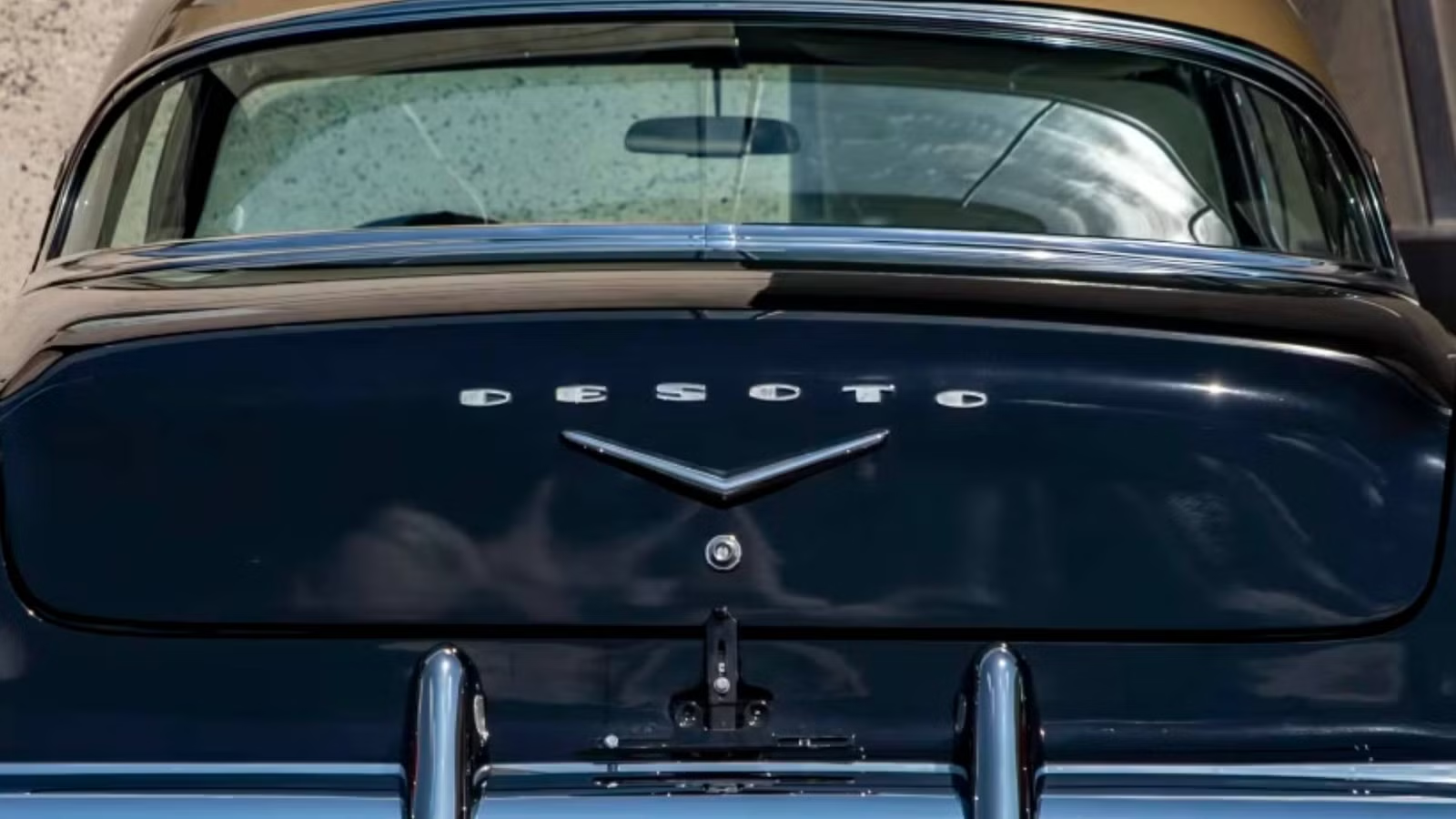
In most retellings of the muscle car wars, the journey officially began in late 1963, when the 1964 Pontiac GTO made its debut. Those of us who bothered to dig deeper know that Oldsmobile was building something approximating a muscle car with a big V8 engine as far back as the early 1950s. But if you’re super into the nitty-gritty, and official narratives are something you like to blow your nose with, you’ll know that even that doesn’t tell the full story, because around the same time, Chrysler was in the mix as well, with something all their own. The only problem is that almost nobody remembers the name anymore.
DeSoto: Chrysler’s Black Sheep Brand

After the end of the Second World War, it was as if every American automaker strived to be more like General Motors. GM’s prolific range of brands, from Chevy at the very bottom to Pontiac and Oldsmobile further up, and Buick and Cadillac at the very top, was the envy of the American auto industry for the sheer amount of ground it covered in the market.
Ford tried to match this energy by adding Edsel in between Mercury and Lincoln in the 1950s, and we all know how well that went. Meanwhile, Chrysler didn’t need to invent a brand out of thin air to do the same; it already had a go-between in the form of DeSoto. Positioned comfortably above Dodge but lacking the prestige of Chrysler, DeSoto sat squarely between its rivals at Oldsmobile and Buick in terms of refinement.
During the early 1950s, a DeSoto showroom was primarily filled with austere, conservatively styled machines. It was only towards the latter half of the decade that Chrysler’s hot shot designer Virgil Exner was allowed to take the brand’s design language in a more aggressive direction. Exner’s famed “Forward Look” styling brought sweeping tail fins and flashy push-button transmissions to models like the Firedome and Fireflite. Yet they weren’t striking fear into the hearts of hot-rodders at the local drag strip — but that was soon to come.

The Gen-I Hemi: The Perfect Engine to Revitalize DeSoto

the mid-1950s, the DeSoto brand was a 25-year-old legacy company with a penchant for reserved styling and subtle performance. If there was ever an engine that could change the narrative in a hurry, it was Chrysler’s first-generation Hemi V8. After watching their corporate siblings dominate NASCAR speedways with the Chrysler 300 and the Dodge D-500, the division’s engineers desperately wanted a high-octane halo coupe of their own to inject some much-needed adrenaline into its stuffy upper-middle-class lineup.
DeSoto would indeed request that a specially tuned version of that mighty Hemi be dropped into a standard two-door hardtop chassis. Starting in 1952, the long-standing DeSoto Firedome had introduced the brand to Hemi power with a 276-cubic-inch variant, but it was strictly tuned for smooth, sensible cruising. It was a fine engine, and one that fit the DeSoto philosophy quite well.
But remember, the DeSoto formula was set to change, and that meant an even bigger Hemi under the brand-specific Firedome nameplate would soon be inbound. When it arrived, this new Firedome Hemi would totally flip the script on DeSoto. It’d be bigger, more powerful, and it’d let DeSoto stand tall at a time it was starting to fade from the limelight. It wouldn’t save the brand in the end, but boy, was it ever cool.
1956 DeSoto Adventurer: A Legit Muscle Car Almost a Decade Early

When DeSoto’s limited-production halo car debuted, it was far more than just a dressed-up Fireflite. While the standard Fireflite was a big, cushy cruiser, its performance offshoot, the Adventurer, had an altogether different mission statement. Under the hood, the DeSoto team packed a bored-out, specially modified 341-cubic-inch Firedome Hemi V8. Breathing through a pair of Carter four-barrel carburetors and utilizing a far more aggressive camshaft, this high-compression powerhouse cranked out a staggering 320 gross hp.
It was enough raw grunt to get two tons of mid-century steel sprinting to 60 in the mid-eight-second range. For the period, that was blistering speed, effectively transforming a comfortable executive cruiser into a legitimate stoplight brawler. To ensure this executive missile looked as loud as its thunderous exhaust note, the factory draped the car exclusively in white, black, or gold paint schemes.
They then accented it heavily with highly distinctive gold anodized aluminum trim, applying the flashy finish to everything from the mesh grille to the bespoke wheel covers and sweeping side trim that stretched across its sizable flanks. Paired with a two-speed PowerFlite automatic gearbox, power brakes, and heavy-duty suspension, the Adventurer was the closest thing to an Audi RS7 or BMW M850i that you could get in those days. Or, keeping it in the Chrysler family, a widebody Charger Hellcat or 300 SRT. It was still a leather-lined luxury machine, but it packed as much muscle as any other car on the road.
A Rare Mopar Muscle Hero

In the end, the Adventurer stayed in production for five model years, from 1956 to 1960, remaining with the DeSoto brand until the year before the whole thing went under in 1961. In that inaugural year, only a paltry 996 units were produced, making this gold-trimmed proto-muscle car an ultra-rare artifact of the early horsepower wars.
Today, only a handful survive, and if you’re lucky enough to see one roll past the auction floor, expect them to sell anywhere from $45,000 and change on the low endto well north of $100,000 for a pristine, Concours-level car. For a mid-50s Chrysler product that wasn’t a Dodge or a Plymouth, that might seem like a lot. Still, it’s not like there isn’t a crazy story behind it.
Sources: Mecum, Hagerty, Broad Arrow Auctions

Related posts




Latest Post


No Comments