
The Mopar Muscle Car So Far Ahead Of Its Time That Dodge Still Refers To Its Aerodynamic Playbook Today
FineArtAmerica’s three-quarter blueprint makes the thing look almost unreal: an 18-inch steel nose up front, a 23-inch rear wing out back, both treated as engineering dimensions rather than styling tricks. This winged Mopar muscle car sits inside a car-blueprint catalog with more than 126 independent artist designs as of October 2026. This is not another NASCAR-ban story. Its shape was never trying to look cool, which is why it still does.
This Winged Mopar Started With A High-Speed Problem
The starting point was the 1968 Dodge Charger, and it already had one thing sorted: presence. Aerodynamics were another matter. Its recessed front grille and tunneled rear window created high-speed lift and drag, problems that became harder to ignore as speed climbed. On the street, the shape looked dramatic. On a superspeedway, the air pushed back.
Dodge had plenty of horsepower, so adding more power wasn’t the real answer. The body needed work. The Charger 500 was the first serious attempt to clean things up, replacing the recessed grille with a flush treatment and smoothing the rear-window area. That helped the air move around the car more cleanly, but Dodge wanted more for NASCAR’s fastest tracks.

The next step had to solve another problem at the same time: NASCAR homologation rules meant the radical race-car body also needed a street-going counterpart. So the engineers weren’t free to build some one-off prototype and hide it at the track. Race-developed hardware had to make its way into dealerships.

That distinction matters. The bizarre shape that followed wasn’t a styling exercise looking for an excuse. Dodge started with an aerodynamic problem and kept changing the car until the air behaved better.
Its 18-Inch Nose And 23-Inch Wing Were Pure Function

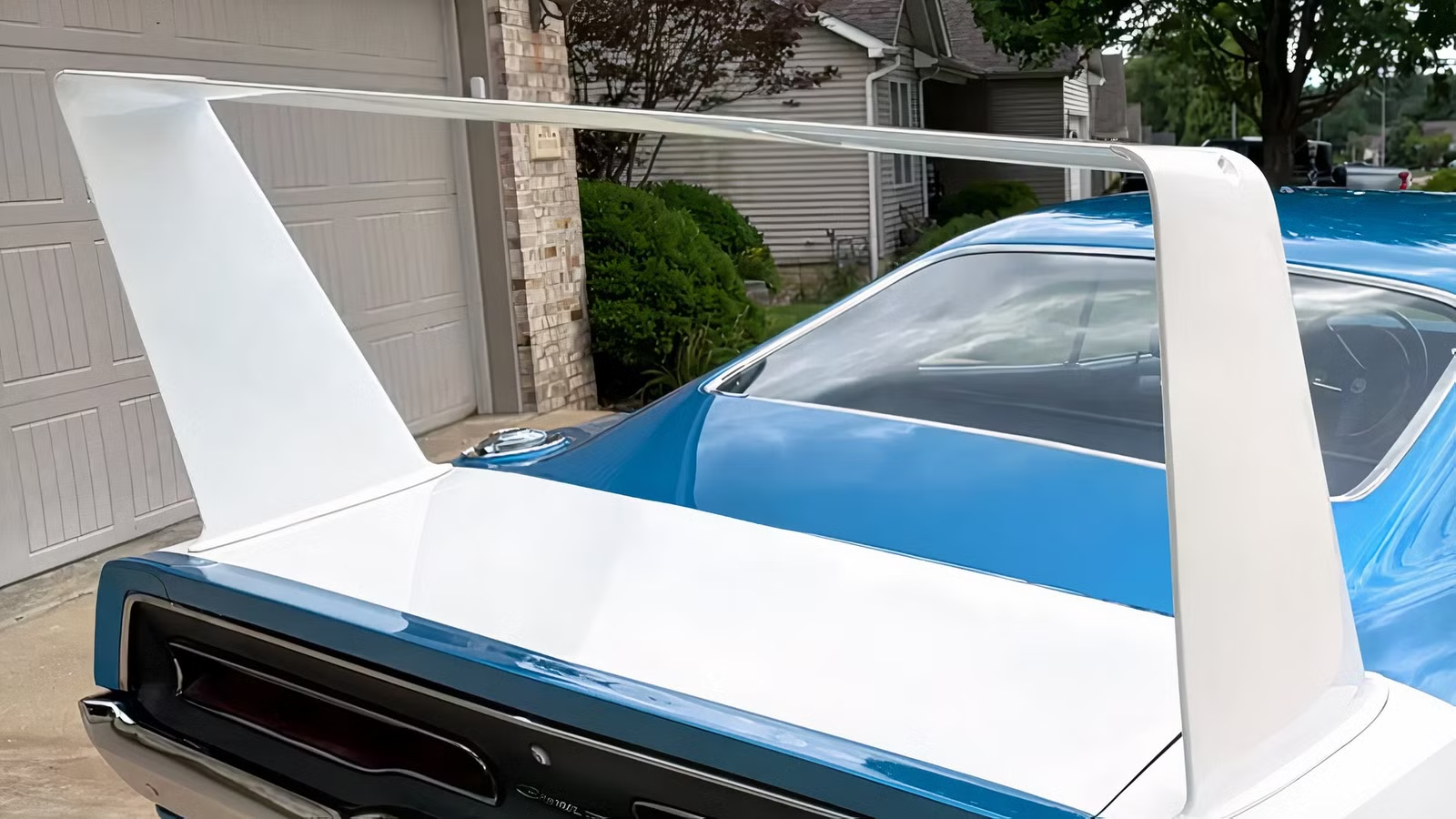
Start at the front. An 18-inch steel nose cone stretched beyond the Charger’s original face, replacing the upright, draggy front end with something that could split the air more cleanly. Dodge also added a front spoiler and other aerodynamic changes to help control lift. At the opposite end sat the part nobody could miss: a 23-inch rear wing tall enough to reach cleaner air above the roofline instead of working down in the turbulent wake behind the body.
That wing looks excessive until you stop judging it as styling. The same goes for the nose. Eighteen inches of extra front bodywork and a wing nearly two feet tall sound outrageous if the goal is simply to make a muscle car look tougher. They make much more sense when the job is cutting drag, reducing lift, and keeping a big-block car stable beyond 180 mph.

The rest of the body followed the same logic. The rear-window area was smoothed out to clean up airflow, and the exaggerated front and rear hardware worked as part of a package rather than as isolated visual tricks. Nothing about it was subtle, but subtlety wasn’t the assignment.
That is why the blueprint treatment works so well. Strip away the paint, chrome, period advertising, and collector-car mythology, and you’re left with a diagram of problems and fixes. The nose reaches forward because the old nose was hurting the car. The wing reaches upward because the useful air was higher up. In technical art, the proportions stop looking like 1960s theater and start looking like engineering.
The 1969 Dodge Charger Daytona Proved The Aero Worked At 200.447 MPH

The car behind all that outrageous geometry is the 1969 Dodge Charger Daytona. FineArtAmerica’s full artwork title is almost comically literal: “1969 Dodge Daytona Three-Quarters Perspective Aerodynamic Muscle Car Classic Muscle Car Blueprint.” Dodge’s own Daytona history provides the factory-side context. Approximately 503 street cars were built, with the 375-hp 440 Magnum as the standard engine and the 425-hp 426 Hemi optional. Only an estimated 70–74 received the Hemi.
But the number that really explains why this car matters is 200.447 mph. On March 24, 1970, Buddy Baker drove Cotton Owens’ Daytona at Talladega during a transmission test and became the first driver to officially top 200 mph on a closed NASCAR circuit. NASCAR’s account records Baker first breaking the barrier at 200.096 mph before improving the mark to 200.447 mph during the test. That 18-inch nose and 23-inch wing had gone from strange-looking hardware to a 200-mph engineering statement.

At that speed, horsepower can’t simply bully its way through bad aero. Drag rises brutally with speed, while lift and instability that seem manageable lower down can become the thing that ends the run. The Daytona’s shape let Dodge turn big-block power into sustained speed without the standard Charger’s aerodynamic weaknesses setting the ceiling. A modern 219-mph performance build faces the same test: eventually, the hardware has to deliver the number. The giant wing had receipts.
NASCAR changed the rules across 1970–71 in ways that steadily made the Aero Warriors less viable, so saying the Daytona was simply “banned for being too fast” compresses a messier phase-out into one neat line. The more important part here is what happened before the rulebook caught up. The Daytona’s bizarre bodywork had proved exactly why it existed. The rules moved on. The engineering idea didn’t.
Why Dodge Still Uses The Daytona’s Aero Playbook Today

More than half a century later, Dodge brought the Daytona name back on a car that could hardly be more different underneath. The 2024/2025 Charger Daytona is electric, all-wheel drive, and built around a completely different platform. Yet one of its most obvious engineering features follows the same basic thinking as the 1969 car: fix the airflow first.
The modern car does that with the R-Wing, a front aerodynamic pass-through that gives air a route through the nose rather than forcing the whole front surface to shove it aside. Stellantis describes the R-Wing front pass-through as a callout to the original Charger Daytona while also using it to enhance aerodynamic downforce. That makes the connection more useful than a retro badge or styling cue. Dodge reached back for the engineering habit.
The R-Wing Makes The Lineage Literal

The clever part is that Dodge didn’t simply copy the old pointed nose cone. That would have turned the new car into costume jewelry. Instead, the R-Wing creates a passage above the nose, giving air somewhere useful to go while preserving the blunt front profile Dodge wanted. Different hardware, same problem-solving instinct.
That link also helps explain why the 1969 car still looks futuristic. Styling trends change. A shape created to solve a physical problem has a better chance of making sense decades later because the air hasn’t changed its mind. Modern electric performance cars still have to balance speed, efficiency, stability, and aerodynamic drag. The tools are better now, but the aerodynamic problem is familiar.

That is why the blueprint works as more than nostalgia. Strip the Daytona back to its 18-inch nose and 23-inch wing, and you can see exactly where Dodge’s engineers were fighting the air. The modern R-Wing answers the same kind of problem without copying the old hardware.
Function that pure doesn’t age. Sometimes modern aero engineers really are still copying the homework.
Sources: Dodge

Related posts




Latest Post


No Comments