
The Luxury Sedan With A Better Shot At 250,000 Miles Than A Camry
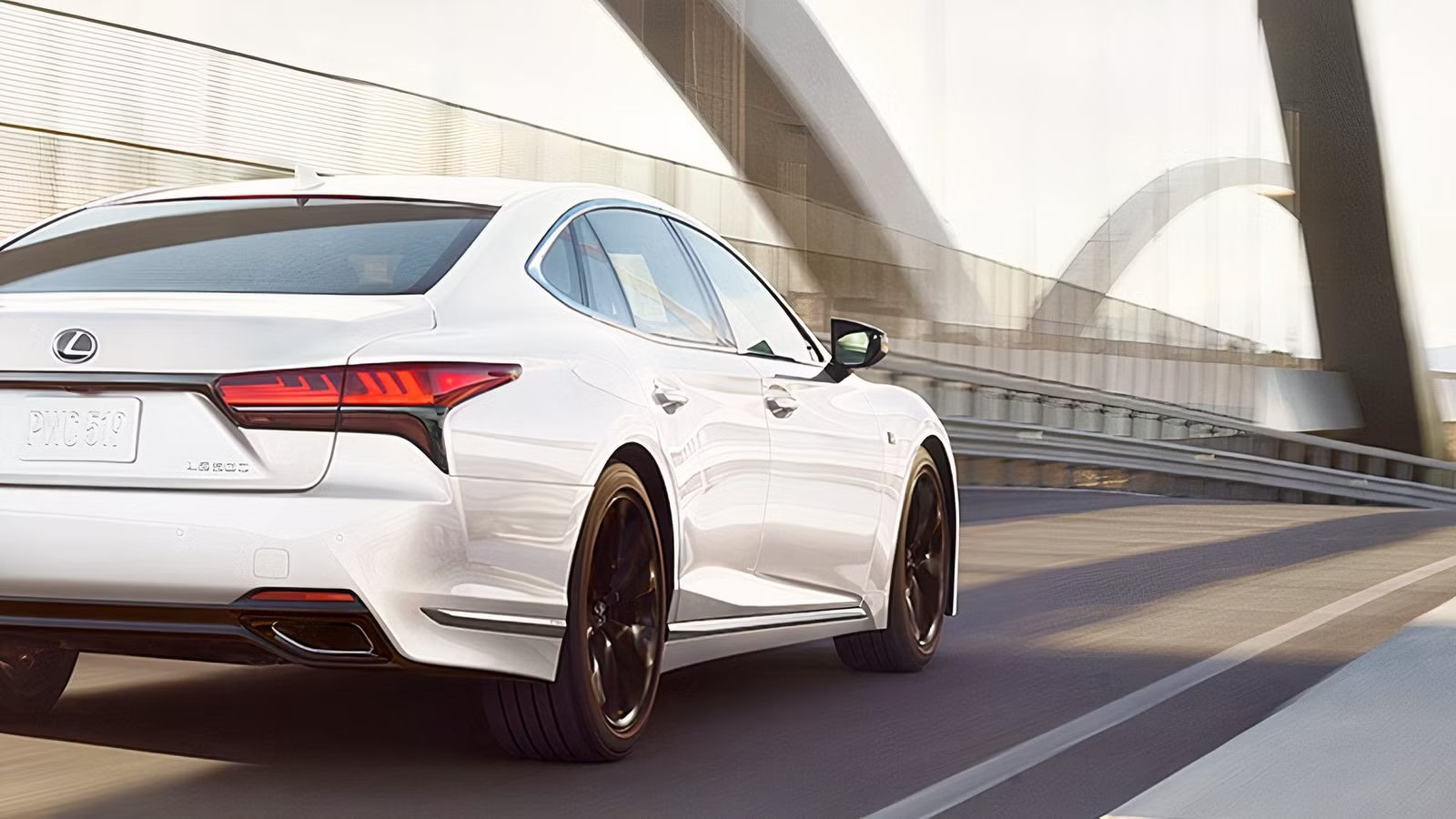
Luxury cars in 2026 are expected to be less popular than in previous years because of declining affordability. Although demand is niche, wealthier consumers expect their cars to deliver unparalleled luxury and practicality. The gradually declining demand means that competition in the segment has become much more aggressive, resulting in some formerly popular models falling into obscurity on dealership lots.

Crossovers and SUVs in the premium and luxury segments also continue to command stronger demand, further relegating their sedan counterparts to the bottom end of the quarterly sales charts. Due to a declining demand and other factors, buying a used luxury sedan typically results in the best value that you can enjoy today.
Lexus’s Focused Approach To Luxury Sedans
Lexus approaches the luxury sedan market in 2026 by prioritizing electrification, ride comfort, and refined quality rather than raw performance. The Japanese brand now embraces a dual-powertrain strategy, deploying flexible architectures that accommodate advanced self-charging hybrids and fully electric drivetrains within the same segment footprint.

Styling shifts toward a sleek, aerodynamic design language that blends continuous body surfaces with subtle functional cooling elements. Inside, the passenger compartment emphasizes acoustic isolation, expansive rear legroom, and intuitive digital interfaces tailored for effortless operation.
Advanced all-wheel-drive vectoring systems maintain neutral chassis posture, ensuring composed high-speed stability across varied road surfaces. Instead of competing against aggressive European sport sedans, Lexus concentrates on isolated, quiet cruising, intuitive safety automation, and sustainable material luxury.
The Lexus LS Beats The Camry In Long-Term Reliability

The Lexus LS achieves a 38.8 percent probability of reaching 250,000 miles in the iSeeCars longest lasting cars study for 2026. Conversely, the standard Toyota Camry registers an 8.8 percent likelihood. The Lexus luxury flagship exceeds the mainstream midsize sedan by 30 percentage points, demonstrating superior longevity within the passenger car category.
According to Edmunds, the full cost to own a 2026 Lexus LS 500 Heritage Edition closes in at $120,295, $51,993 contributes towards depreciation. Over the first three years, you can expect it to lose $38,016 of its initial $99,280 MSRP. It’s also only going to cost you $10,707 to maintain and $1,310 to repair over five years and 60,000 miles.
You can also expect to spend $18,176 on fuel and $10,205 on taxes and fees. Kelley Blue Book indicates that you can expect to spend $5,382 on maintenance and $1,324 on repairs during the same period.
iSeeCars is a bit lighter on the model’s depreciation, indicating that you can expect it to lose 21.6 percent or $21,099 of its value after three years. This performance is almost 15 percent better than the rest of the segment and almost three percent better than the entire sedan market. These figures are not as competitive as the estimations provided for the Camry.
How To Keep Your LS In Showroom Condition

Data from KBB and RepairPal highlights relatively low long-term operating expenses for the Lexus LS. Average annual maintenance and repair costs for the LS range between $550 and $700. Lexus requires scheduled maintenance visits every 5,000 miles or six months, alternating between basic tire rotations and multipoint visual inspections at the 5,000-mile mark, and full synthetic engine oil and filter changes at 10,000 miles or 12 months.
Major fluid service intervals occur at 30,000-mile increments, requiring fresh hydraulic brake fluid, engine air intake filters, and cabin air filtration units. Specific repairs, as listed by RepairPal, include $252 on a stabilizer bar link kit, $517 on spark plug replacements, $1,718 for a new fuel pressure sensor, $3,124 for a new exhaust manifold, and $1,853 for new stabilizer bushings. Replacing the camshaft can set you back by as much as $3,983.
Lexus’s Warranty Has You Covered

The Lexus LS maintains a strong reputation for long-term reliability, placing high in annual dependability studies conducted by J.D. Power. For the 2026 model year, the LS shows zero active safety or mechanical recalls on record. Every new 2026 Lexus LS includes a comprehensive factory warranty program.
Standard bumper-to-bumper coverage lasts for four years or 50,000 miles, while the powertrain warranty extends to six years or 70,000 miles. Corrosion perforation coverage covers six years with no mileage limit, and Lexus provides complimentary maintenance for the first two factory visits at six months or 5,000 miles and 12 months or 10,000 miles.
A True Japanese Business-Class Setting
Lexus equips the 2026 LS with extensive standard features, including a 12.3-inch touchscreen infotainment display, wireless Apple CarPlay, wireless Android Auto, a 12.3-inch digital instrument cluster, a heated leather steering wheel, 28-way power-adjustable front seats, and a 23-speaker Mark Levinson reference surround sound audio system. For 2026, Lexus offers the exclusive LS 500 AWD Heritage Edition, limited strictly to 250 units in Ninety Noir exterior paint over a Rioja Red leather interior.
The 2026 Lexus LS 500 Heritage Edition features a base MSRP of $97,830, reaching $99,380 after adding the mandatory $1,550 destination fee. Because this Heritage Edition includes all equipment from the factory, buyers avoid extensive option packages. In comparison, a base 2026 Mercedes-Benz S-Class starts above $117,000 before options, while a base BMW 7 Series starts near $98,000 and rises past $115,000 when buyers add comparable executive seating and driver assistance packages.
Generous Interior Space

The 2026 Lexus LS 500 features a spacious executive cabin layout with 37.3 inches of front headroom and 37.3 inches of rear headroom when equipped with the standard sunroof. Front passengers enjoy generous room to stretch out with 41.0 inches of legroom, while rear passengers benefit from 38.9 inches of legroom, offering comfortable seating positions during long journeys.
Shoulder room measures 58.8 inches in the front and 56.4 inches in the rear, paired with the hip room measuring 55.5 inches up front and 55.2 inches at the back. At the rear, the power-operated trunk provides 16.95 cubic feet of dedicated cargo capacity, supplying sufficient space to accommodate multiple full-size suitcases or golf bags without compromising rear-seat comfort.
Lexus’s Punchy Twin-Turbo V-6

Powering the 2026 Lexus LS 500 is a 3.4-liter twin-turbocharged V-6 engine paired with a direct-shift 10-speed automatic transmission. This powertrain produces 416 horsepower at 6,000 RPM and 442 pound-feet of torque at 1,600 RPM. Equipped with standard all-wheel drive, the full-size sedan accelerates from 0 to 60 MPH in 4.6 seconds and reaches an electronically limited top speed of 136 MPH. The 10-speed transmission executes fast, seamless gear shifts that keep the twin-turbo V-6 inside its peak power band during hard acceleration while keeping engine revolutions minimal during high-speed highway cruising.
According to the EPA, the Lexus LS’s engine may be reliable, but the twin-turbo engine doesn’t return the best fuel efficiency estimates. You can expect this model to consume 17/27/21 MPG on the city/highway/combined cycle, while covering 456 miles on a single 21.7-gallon tank.

You can expect to spend $6,250 more on fuel over the course of five years compared to the new vehicle sold in the U.S., $2,850 every year, and $4.74 to drive 25 miles.
Lexus doesn’t sell this model with the rear-wheel-drive system anymore, but this model wasn’t that much more efficient, with it consuming 18/29/22 MPG, while covering 477 miles on a single tank. This would cost you $5,500 more in fuel over five years, $2,700 to refuel every year, and $4.52 to drive 25 miles.
Sources: Lexus, iSeeCars, Edmunds, J.D. Power, and the EPA.

Related posts




Latest Post


No Comments