The Luxury German Electric Sedan That Lost Half Its Value In Just Three Years
8 minutes reading
Thursday, 30 Jul 2026 16:00 0 99 autotech
Electric cars have a resale problem, and it is not a rounding error. Buy almost any new car and the market hands you a discount you never asked for the moment you drive it home. Buy a gas car and the hit is real but survivable. Buy an electric one and it can be brutal. The reasons are simple, and once you understand them, the whole used-EV market starts to look less like a warning and more like an opportunity.
The average electric vehicle loses roughly 61 percent of its value across the first three years. The equivalent gas car gives up about 47 percent over the same stretch. That fourteen-point gap is not noise; it is a structural discount baked into every used EV listing on the market. The engine of it is pace. Electric powertrains improve on a phone-like cadence, so the moment a newer car posts a longer range and a quicker charging curve, yesterday’s model gets repriced against today’s. The used market does that repricing without mercy.
The Luxury Flagship Depreciation Curse
BMW i5 M60 front 3/4 shotLyndon Conrad Bell | TopSpeed
Climb into flagship money and the drop gets steeper still. Luxury electric flagships can surrender up to 70 percent of their original MSRP across five years. The badge that justified the premium when the car was new does almost nothing to defend the price when it is used. If anything, it speeds the fall, because the buyers who can afford these cars new tend to want the newest thing, and they leave the three-year-old car to fend for itself. Add the quiet anxiety that surrounds an out-of-warranty European EV and you have a recipe for a very long way down.
The Porsche Taycan Is The Cautionary Tale Everyone Knows
A beauty shot of the Porsche Taycan Turbo SPorsche
If you want to watch this happen in real time, look at the car that became shorthand for luxury EV depreciation. The Porsche Taycan arrived in 2020 as the electric sedan that would finally make EVs desirable. It succeeded. It also became one of the most spectacular value slides in recent memory, the car every used-EV skeptic points to when they want to prove a point.
What The Porsche Taycan Price Collapse Looks Like
High-angle rear 3/4 shot of 2026 Porsche Taycan GTSPorsche
iSeeCars data has theTaycan shedding around 55 percent of its value over five years, dragging a car that stickered well into six figures down to the mid-forties. Look at the dollars and it stings more. CarBuzz pegs a fully-specced Taycan Turbo GT at roughly $21,000 in lost residual value every single year, before a track day or a set of aftermarket wheels ever enter the picture.
Why Even The Taycan Bleeds On Resale Value
2025 Porsche Taycan front shotPorsche
Here is the twist. By the numbers, the Taycan actually holds its value better than most luxury EVs. iSeeCars has the luxury electric large-car category losing closer to 60 percent over five years, which makes the Taycan the relative overachiever of the segment. The problem is the starting price. When a car opens above $100,000, even a reasonable percentage becomes a five-figure dollar loss that would buy a whole other car outright. And if the segment’s best-retaining player still bleeds this badly, imagine what happens to a rival that does not hold value nearly as well.
The Audi e-tron GT Falls Even Harder On Resale Value
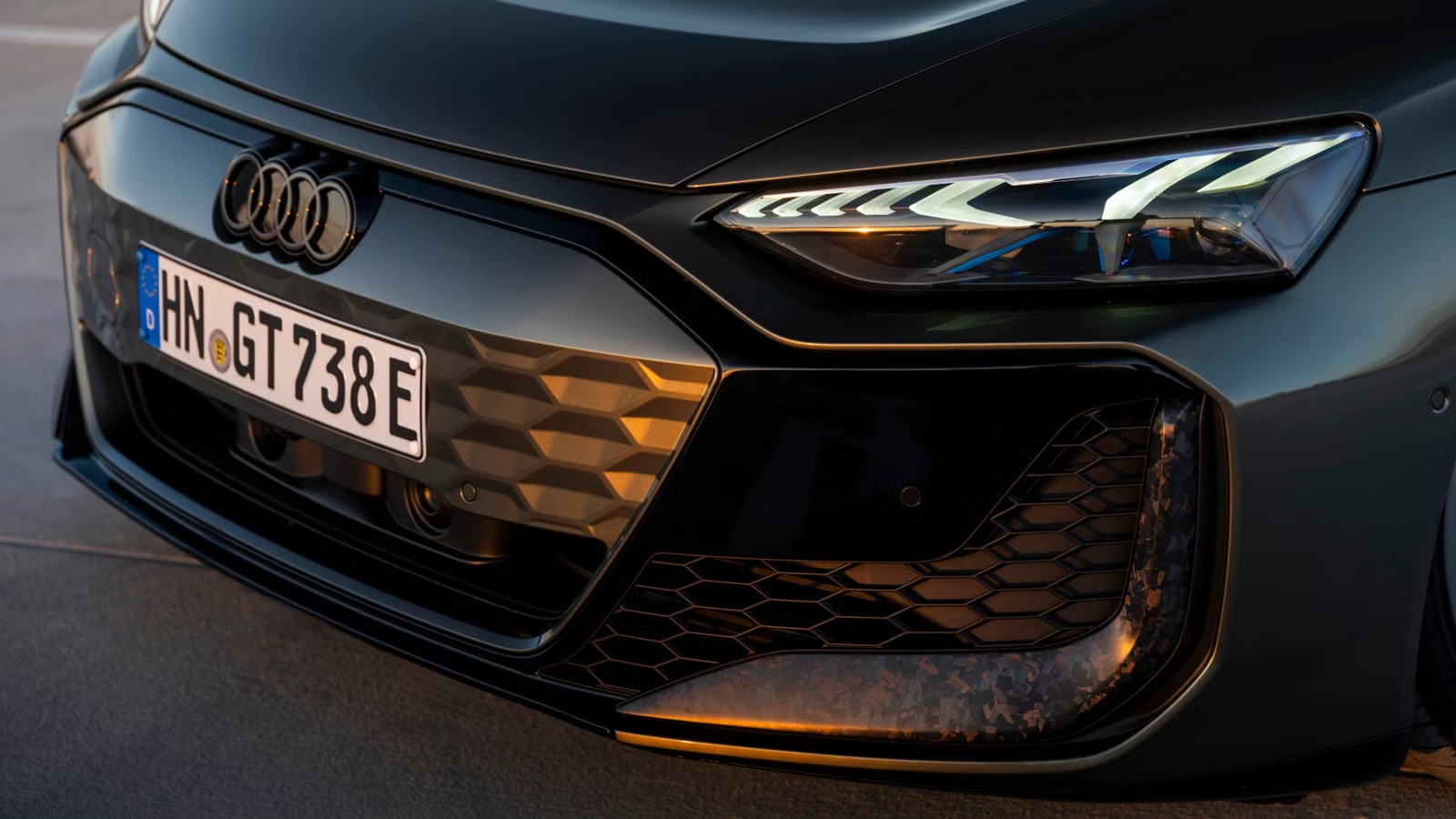
Front 3/4 action shot of 2026 Audi RS e‑tron GT PerformanceAudi
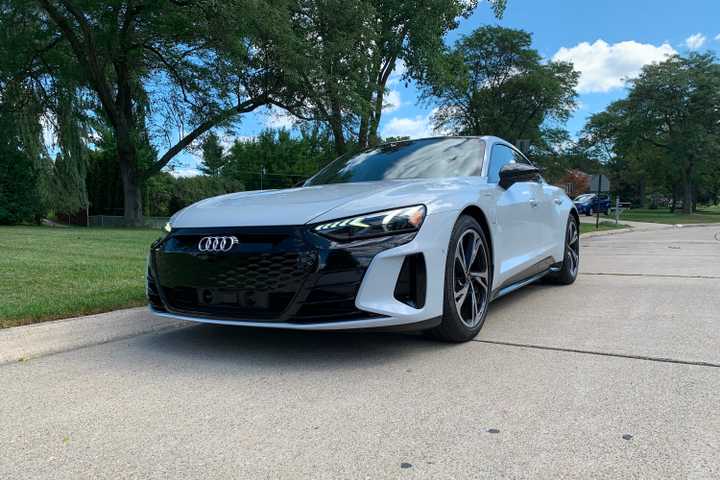
That rival is the Audi e-tron GT. It shares its bones with the Taycan, right down to the J1 platform underneath, but it does not share the Porsche crest’s grip on resale value. That is the whole story in one line. The e-tron GT lineup, the base car and the RS, loses 56.3 percent of its value in three years, according to iSeeCars. Now read that against the Porsche. The Audi sheds more value in three years than its Taycan cousin does in five. We broke the Porsche side of this down in our Taycan depreciation piece, and the Audi still manages to look worse.
The Audi e-tron GT Depreciation Numbers
2024 Audi e-Tron GT front 3/4 shotAudi
Frame the 56.3 percent against the window sticker and the math turns savage. A car that crossed six figures new lands in the mid-five-figures inside three model years. Push the clock to five years and the figure climbs to 68.7 percent. This is not a soft fade in value; it is a cliff, and the first owner is the one standing at the bottom of it. The second owner, the one paying attention, gets to pick up a near-new luxury sedan for a fraction of what the badge commanded twelve months into ownership.
Why The e-tron GT Falls Hardest
Interior shot of the new Audi RS e-Tron GTAudi
Interior shot of the Audi RS e-Tron GT PerformanceAudi
Two forces do the damage, and they are the same ones dragging down the whole segment, just amplified. The first is iteration. Every time a newer electric flagship posts a longer range and a faster charge, the older e-tron GT reads as dated, fairly or not. The second is warranty anxiety. Buyers hesitate over a European luxury EV once the factory coverage thins out, and that hesitation shows up as a lower price. The four rings, for all their shine, do not reassure a used buyer the way the Porsche crest does. So the e-tron GT falls, and it falls hard.
The Battery Health Check That Turns The e-tron GT Into A Steal
The 2022 Audi e-Tron and the 2022 Audi RS e-Tron GT charging side by sideAudi
Everything above reads like a reason to stay away. It is actually the setup for the smartest used luxury buy of the year. The depreciation already happened, and someone else already absorbed it. Your job as the buyer is not to fear that cliff but to make sure the car at the bottom of it is sound. In 2026, that comes down to one number and a thirty-dollar app.
State Of Health Is The New Odometer
A side-view exterior shot of an Audi RS e-tron GTAudi
For decades, the odometer told you what a used car was worth. On a used EV, it barely matters. Battery State of Health, or SOH, has officially replaced mileage as the most important number in used EV valuation. SOH is the honest measure of how much usable capacity the pack has left compared to the day it was built. The good news for a buyer is that modern packs age slowly, losing only about one to two percent of capacity a year.
Do the math, and a healthy three-to-four-year-old car should still read somewhere in the mid-80s to low-90s percent. Land in that band and the battery has years of life left. Fall below it and you have either a bargaining chip or a reason to walk. Either way, you know something the seller usually does not.
The Thirty-Dollar App The First e-tron GT Owner Never Opened
CarBuzz Managing Editor Roger Biermann driving Audi RS e-tron GT on ice.CarBuzz/Valnet/Audi
Verifying SOH is almost embarrassingly cheap. Start with the free myAudi app, which surfaces basic pack information straight from the car. Go deeper with a thirty-dollar OBD-II adapter and software built for Volkswagen Group cars. OBDeleven and Ross-Tech VCDS both read cell-level battery data on the e-tron GT platform, and Car Scanner ELM OBD2 pulls SOH onto a phone through a cheap Bluetooth dongle. Want a second opinion in writing? Independent services like Recurrent and AVILOO issue standalone battery certificates. None of this demands a technician. It demands an afternoon and a curiosity the first owner never had. Do it, and the depreciation that gutted them becomes the discount that rewards you.
The e-tron GT Is A Steal For The Buyer Who Checks The Battery
A static outdoor shot of an Audi e-tron and RS e-tron GTAudi
Be honest about the downside first. The e-tron GT depreciates brutally, and the out-of-warranty worry that scares buyers off is not imaginary. A luxury European EV can carry real repair risk once the factory coverage lapses, and pretending otherwise would be doing you a disservice.
But that fear is exactly what creates the opening. It does the price-cutting, and a thirty-dollar app does the reassuring. Verify the battery, confirm an SOH in the mid-80s or better, and you are buying a six-figure German sedan for mid-five-figure money with proof that its most expensive component is healthy. The Taycan taught the market how far a luxury EV can fall. The e-tron GT fell further. For the buyer willing to do the homework the first owner skipped, that is not a depreciation horror story. It is the smartest used luxury purchase of 2026.












No Comments