The Long-Lasting Sporty Car That You Can Drive To Work Daily
10 minutes reading
Wednesday, 17 Jun 2026 21:02 0 71 autotech
Engine bay of a 2020 Honda Civic Type RIsaac Atienza | TopSpeed
There is a particular kind of automotive unicorn that enthusiasts have chased for decades. A car that delivers genuine, unfiltered driving excitement without making every Monday morning commute feel like a punishment. For most of automotive history, that combination existed only in theory. Sports cars demanded sacrifice—in comfort, in practicality, in running costs—and the cars that spared you those sacrifices rarely stirred much emotion behind the wheel.
The hot hatch changed the equation, but even within that category, most cars forced a compromise somewhere. Too stiff, too thirsty, too expensive to insure, or simply not exciting enough to justify the premium over a standard model. The modern turbocharged hot hatch, engineered with a sophistication that would have seemed implausible twenty years ago, has finally closed that gap for good. Today, the best cars in this class can genuinely do everything. Thrill on a canyon road, behave on a freeway, fit a car seat in the back, and return reasonable fuel economy while doing all of it. That is no small achievement.
Why The Modern Turbocharged Hot Hatch Has Redefined What A Daily Performance Car Can Be
Front 3/4 shot of 2026 Volkswagen Golf GTI drivingVolkswagen
For most of automotive history, the idea of a genuinely quick car that you could also use as a reliable daily driver was a compromise at best and a fantasy at worst. You either bought the sports car and accepted the stiff ride, the temperamental cold starts, and the punishing insurance premiums, or you bought the sensible hatchback and told yourself the commute wasn’t so bad. The turbocharged hot hatch changed all of that. Over the past decade, a new generation of compact performance cars has emerged from Europe and Japan that genuinely bridges the gap between track-capable hardware and the kind of everyday usability that lets you haul groceries on Saturday morning without wincing.
These cars offer real horsepower, real chassis sophistication, and real-world practicality in a single, affordable package. The best of them hold their value, drink fuel at a reasonable rate by performance-car standards, and are engineered to last well beyond 100,000 miles without demanding specialist attention. Among this class, one car sits clearly above the rest. It’s built in Japan, sold at a price that won’t require a second mortgage, and it makes 315 horsepower through the front wheels in a way that defies everything you think you know about torque steer.
The Sports Car That Proves 228 Horsepower Is All You Actually Need
One Japanese sports car is defying the horsepower war in favor of balance, throttle response, and lightweight construction.
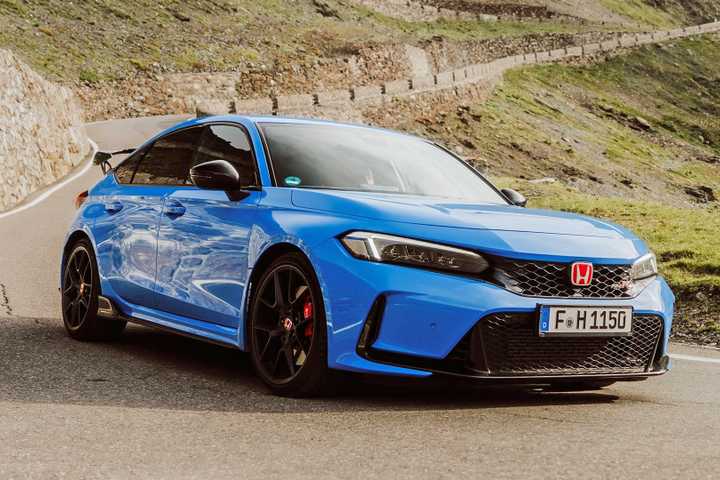
The Honda Civic Type R Is The Long-Lasting Sporty Car That You Can Drive To Work Daily
Engine bay of a 2020 Honda Civic Type RIsaac Atienza | TopSpeed
Honda has spent decades building a reputation for engines that simply refuse to die. The Civic nameplate alone has racked up more than 27 million global sales, a number that reflects not just popularity but trust, the kind that only comes from consistently delivering mechanically sound products over generations. The turbocharged 2.0-liter VTEC engine at the heart of the current hot hatch is no exception. It produces 315 horsepower and 310 pound-feet of torque, routed through a six-speed manual transmission and a limited-slip differential, but the engineering philosophy behind it is rooted firmly in durability rather than in outright headline numbers.
Base Trim Engine
2L inline-4 Turbo
Base Trim Transmission
6-speed manual
Base Trim Drivetrain
Front-Wheel Drive
Base Trim Horsepower
315 HP @6500 RPM
Base Trim Torque
310 lb.-ft. @ 2600 RPM
Base Trim Fuel Economy (city/highway/combined)
22/28/24 MPG
Make
Honda
Model
Civic Type R
Segment
Compact Hatchback
The engine architecture draws heavily from Honda’s race-developed VTEC variable valve timing system, a technology refined over more than three decades and proven across millions of road cars. The addition of a twin-scroll turbocharger improves thermal efficiency and reduces lag, while avoiding the complexity of some rival twin-turbo setups. Oil passages, cooling circuits, and bearing tolerances are all engineered with sustained high-rpm use in mind, not just peak-power figures for a spec sheet.
Long-Term Ownership Data Supports The Reputation
Interior shor of a 2025 Honda Civic Type R center console and gear leverGuillaume Fournier | TopSpeed
Reliability surveys consistently place Honda near the top of mainstream manufacturer rankings. The previous-generation FK8 Civic Type R, which ran from 2017 to 2021, accumulated an extensive track record across tens of thousands of examples and proved to be a remarkably low-drama machine at high mileage. Owners regularly report crossing 150,000 miles on factory components with nothing more than routine maintenance. The current FL5, introduced for 2023, inherits that mechanical DNA and builds on it with refined suspension geometry, improved heat management, and a more sophisticated limited-slip differential.
The Japanese Four-Cylinder Engine Is So Reliable It’s Still In Production After Almost 25 Years
This Honda engine remains a crucial part of its production strategy.
Ride Quality, Suspension Tuning, And Why The Civic Type R Doesn’t Punish You On The Commute
Front 3/4 action shot of 2026 Honda Civic Type R in red being driven on roadHonda
The reputation that has long surrounded performance hatchbacks, that their firm suspension makes anything short of a freshly laid race circuit feel like a construction site, does not apply here. The current FL5 Civic Type R uses an adaptive damper system with three selectable modes: Comfort, Sport, and +R. In Comfort mode, the adaptive dampers soften their response meaningfully, absorbing road surface imperfections in a way that genuine daily driving demands.
The suspension geometry itself is the real story. Honda’s engineers spent considerable development time tuning the front MacPherson strut layout and rear multi-link setup specifically for road use, not just circuit performance. The result is a car that remains composed over expansion joints, freeway seams, and the kind of broken urban asphalt that reduces lesser performance cars to an exercise in teeth-clenching. The wider track, lower center of gravity, and precisely calibrated steering rack deliver feedback and response when you want them, and settle into something close to neutrality when you don’t.
At Highway Speeds, Wind And Road Noise Are Well-Controlled For The Class
Side action shot of 2025 Honda Civic Type R in redHonda
The Sport mode remains entirely usable on a daily basis for drivers who prefer a more connected feel without wanting the full firmness of +R. The cabin insulation is a genuine step forward from the FK8 generation, reflecting Honda’s recognition that a car bought for its performance credentials still needs to function as a commuter for 48 weeks of the year. Cabin resonance at idle, once a mild complaint from Type R owners, has been substantially addressed in the current generation.
The Long-Lasting Japanese Luxury SUV That Rarely Needs Repairs
The Acura MDX isn’t just another luxury SUV, it’s proof that sophistication and dependability can coexist.
Interior Space, Tech, And Comfort That Make It A Practical Workday Companion
2025 Honda Civic Type R front cabin showing dashboard and front seatsGuillaume Fournier | TopSpeed
Open the rear hatch and the 2026 Honda Civic Type R immediately makes its utilitarian case. The cargo area delivers a useful 24.5 cubic feet behind the rear seats, more than many small crossovers can claim. Fold those seats flat and the number climbs to 46.2 cubic feet, enough for a full weekend’s worth of gear or a meaningful IKEA run. This is a genuine five-door hatchback with adult-usable rear seats and a loading floor that sits at a practical height for regular use.
Up front, Honda’s interior quality has made a generational leap. The cabin uses a nine-inch Honda Connect touchscreen running a system that’s responsive, logically organized, and compatible with both Apple CarPlay and Android Auto without requiring a subscription. Physical shortcut buttons sit below the screen, solving the one-touch-access problem that plagues competitors who have gone all-in on touchscreen menus. The digital instrument cluster is configurable and changes its display theme based on the selected drive mode, giving the cockpit a performance-relevant feel without becoming distracting.
Seats Are Arguably The Cabin’s Best Feature
The front buckets provide excellent lateral support for spirited driving while remaining comfortable enough for a two-hour highway run. Heating is standard. The driving position is low and purposeful without being cramped, and the Alcantara-wrapped steering wheel falls naturally to hand. The shift action of the six-speed manual is satisfying without being heavy, yet precise enough to reward the driver and light enough not to fatigue the wrist in traffic.
Low Running Costs, Strong Resale Value, And The Long-Term Case For Choosing The Type R
Profile shot of 2025 Honda Civic Type R in whiteGuillaume Fournier | TopSpeed
Performance cars typically come with performance-car running costs. The Type R disrupts that assumption at almost every turn. EPA-rated fuel economy of 22 mpg city and 28 mpg highway is genuinely reasonable for a 315-horsepower turbocharged engine, and real-world figures reported by owners through relaxed daily use tend to sit comfortably within that range. Insurance rates, while higher than a standard Civic, remain substantially below what equivalent European hot hatches command, thanks in part to lower repair costs and the widespread availability of Honda parts and technicians across the country.
Scheduled maintenance intervals are generous. Fluid changes, brake inspections, and filter replacements are the primary recurring items. The Honda Sensing suite of driver assistance features, standard across the lineup, includes collision mitigation, adaptive cruise control, and lane-keeping assist, which collectively tend to reduce the frequency of minor incidents that quietly drain ownership budgets over time.
The Resale Story Is Where The Type R’s Long-Term Case Becomes Genuinely Compelling
2025 Honda Civic Type R front 3/4 shotGuillaume Fournier | TopSpeed
According to Kelley Blue Book data, a 2024 Honda Civic Type R has depreciated only 16 percent over two years, retaining a private-party resale value of approximately $38,200. That is a remarkably shallow depreciation curve for a performance car at this price point. The 2025 model has shed just 11 percent of its original value in its first year, with a current private-party resale value of around $41,600. For context, many European performance hatches in the same segment depreciate at rates nearly double that figure within three years of purchase.
The practical conclusion of all this is straightforward. The Honda Civic Type R costs less to own per mile of enjoyment than almost any performance car available in the American market today. It will start reliably on a cold January morning in Minnesota, carry the week’s groceries without complaint, and then, on a winding two-lane road between here and wherever you’d rather be, remind you exactly why you bought it in the first place. That dual identity isn’t a compromise. It’s an engineering achievement, and it’s the reason the Civic Type R isn’t just the best hot hatch money can buy, it’s the smartest performance car purchase you can make right now.













No Comments