The Last Affordable Manual Sedan Honda Still Builds
7 minutes reading
Thursday, 8 Oct 2026 13:00 0 10 autotech
Manual transmissions used to be the default choice for anyone who wanted to save money and feel something behind the wheel. Now they are closer to a checkbox nobody ticks. J.D. Power data reported by WardsAuto pegged the manual transmission take rate at 1.7 percent of new vehicle sales as of 2023, up from 0.9 percent in 2021, and even that modest bump hasn’t stopped automakers from cutting the option loose. Honda has been part of the retreat. So has Toyota. So has Nissan. So, starting with the 2027 model year, has Volkswagen. If you assumed the last affordable sedan you could buy new with a clutch pedal was already gone, you’re close to right. There’s one holdout left in Honda’s own lineup, and it isn’t the car most people expect.
The overall numbers tell a simple story. Manual transmissions accounted for less than one percent of new car sales through most of the last decade, and even the recent uptick tracked by J.D. Power only pushed the figure to 1.7 percent as of 2023. That growth is concentrated almost entirely in sports cars and performance trims. The Subaru BRZ posted a 90 percent manual take rate in 2025, the WRX hit 85 percent, and the Toyota GR Corolla reached 71 percent, according to Motor1’s annual survey of automaker sales data.
Ordinary commuter sedans barely register by comparison. Automakers run that math every product cycle. A manual gearbox needs its own certification testing, its own parts supply chain, and its own assembly line calibration, all to serve a sliver of buyers who could just as easily be sold a CVT that also happens to return better fuel economy on the EPA cycle. For a mainstream sedan built to move six-figure annual volumes, that math rarely favors the stick shift.
Accord, Corolla, And Sentra All Made The Same Call
2026 Nissan Sentra front driving shotNissan
Honda’s own Accord was one of the first casualties. The last manual-equipped Accord left Honda’s Marysville, Ohio plant in December 2019, and Honda confirmed the transmission wouldn’t return for the 2021 model year, citing a take rate that never topped two percent in the years before the cut.
Toyota reached the same conclusion with the Corolla sedan, which in the United States comes exclusively with a continuously variable transmission; the manual gearbox Toyota still builds lives only in the GR Corolla hatchback, a car aimed at a different buyer at a different price. Nissan closed the loop for 2026, dropping the manual option from the redesigned ninth-generation Sentra entirely. Every trim, from the base S to the top SR, now comes standard with an Xtronic CVT. Three of the best-selling nameplates in the compact and midsize segments, and not one of them still builds a manual sedan.
The 2026 Civic Si Is The Exception Nobody Expected
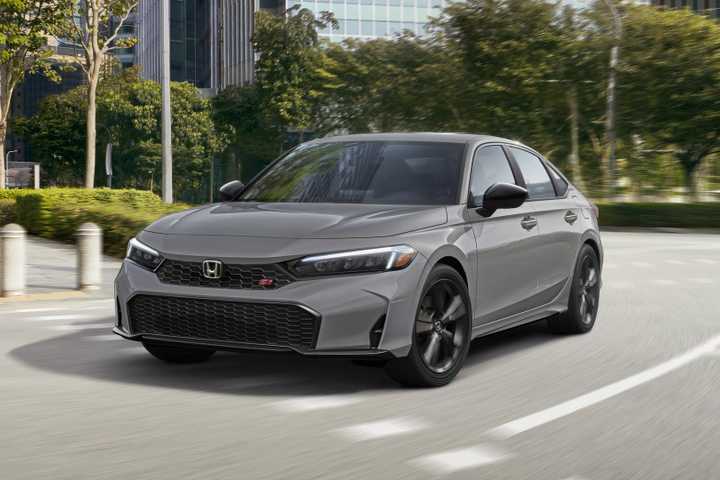
Front 3/4 action shot of 2026 Honda Civic Si driving on roadHonda
Honda didn’t follow its own Accord down that path. The 2026 Civic Si keeps the manual transmission not as a checkbox but as the entire point of the car, and it does so in the one segment where nearly every competitor has already moved on.
200 Horsepower And A Six-Speed That Refuses To Die
2026 Honda Civic Si manual shifterHonda
The Civic Si pairs a turbocharged 1.5-liter four-cylinder engine, rated at 200 horsepower and 192 pound-feet of torque, with a close-ratio six-speed manual transmission. Rev-match control comes standard to smooth downshifts for drivers who want it, and it can be switched off for anyone who prefers to heel-toe on their own. There’s no automatic option on the table at all. Step down to the standard Civic sedan and Honda will sell you a continuously variable transmission; step up to the Si and the manual is the only choice, a decision the rest of the segment stopped making years ago.
$31,495 Puts It Within Reach Of Nearly Every Compact Buyer
Profile shot of 2025 Honda Civic Si in black parked on roadHonda
The 2026 Civic Si starts at $31,495, according to Edmunds, in a single, fully loaded trim with no options list to navigate. That undercuts the Volkswagen Jetta GLI, which starts at $33,745 and remains the Si’s closest manual rival, but only for one more year; Volkswagen has confirmed the 2027 GLI will drop the manual entirely in favor of a dual-clutch automatic, ending three pedals in its American lineup for good.
The Subaru WRX starts slightly higher at $33,690, and the Toyota GR Corolla, while it keeps its six-speed manual standard, starts north of $40,000 as an all-wheel-drive hatchback aimed at a more hardcore buyer. Among manual-equipped sedans that most compact-car shoppers would actually cross-shop, the Civic Si is the cheapest one left standing.
What The Manual Actually Buys You In 2026
The manual gearbox isn’t the only thing separating the Si from an ordinary Civic. Honda builds a chassis around it that most cars at this price can’t match.
A Limited-Slip Differential Money Usually Can’t Buy At This Price
2026 Honda Civic Si driving in the wetHonda
Every 2026 Civic Si comes standard with a helical limited-slip differential, a piece of hardware that competitors in this price range typically leave off the options list entirely, if they offer it at all. Paired with a sport-tuned suspension and 18-inch wheels wrapped in performance-oriented rubber, the differential helps the Si put its power down cleanly out of corners rather than spinning the inside front tire. The result is a car that drives sharper than its horsepower figure suggests. It won’t out-accelerate a Golf GTI or a WRX, but through a series of corners the chassis feels more sorted than the spec sheet implies.
The Ownership Case Nobody Talks About
2025 Honda Civic Si engineGuillaume Fournier | TopSpeed
Honda’s reliability reputation isn’t marketing. RepairPal ranks the Civic third out of 36 compact cars for reliability, with a 4.5 out of 5.0 rating and an average annual repair cost of $368, well below the $526 average for compact cars and the $652 average across all vehicles. The probability of a repair turning into something severe sits at just 10 percent. A manual driveline plays into that math too.
Where a failed CVT can mean an expensive unit replacement, a manual’s wear items, mainly the clutch, are simpler and cheaper to service over the life of the car. For a buyer weighing a Si against a CVT-only rival, the ownership case isn’t just about how the car feels to drive. It’s about what that car will cost to keep running for the next decade.
It Won’t Be The Fastest Car In The Lot, And That’s Not The Point
2026 Honda Civic Si rear 3/4 shotHonda
The honest weakness is straightforward. Edmunds clocked the 2026 Civic Si at 7.2 seconds to 60 mph, a full 1.3 seconds behind the automatic Volkswagen GTI’s 5.9-second run in the same test, a car that no longer even offers a manual of its own. Against nearly anything else in its price range with a turbocharger and a dual-clutch gearbox, the Si will lose the drag race every time. Honda never built it to win that argument.
What the Si offers instead is something none of its automatic-only rivals can: a genuine three-pedal experience in an everyday sedan, at a price point that puts it within reach of buyers who aren’t shopping for a dedicated sports car. The Accord gave up its manual in 2019. The Corolla sedan never got one back. The Sentra just lost its last chance. The Jetta GLI keeps its stick for one more model year before Volkswagen retires it for good. That leaves the Civic Si standing nearly alone as the manual sedan Honda still builds for people who simply want a fun, reliable daily driver, not a track weapon. In a segment that has spent the last five years quietly voting the clutch pedal out, that alone is worth something.








No Comments