The Korean Flagship That Matches The Mercedes S-Class For $25,000 Less
7 minutes reading
Saturday, 11 Jul 2026 15:00 0 79 autotech
The full-size luxury flagship segment has long been governed by an unwritten rule: true executive-tier refinement demands a six-figure entry fee and absolute submission to European “badge tax.” However, a quiet revolution in the $90,000 space has completely disrupted this hierarchy. By challenging the traditional mechanics of factory packaging, one challenger brand has forced legacy German manufacturers to defend their pricing structures on name recognition alone, forever changing the value equation for the modern luxury buyer.
For decades, the tier-one executive sedan market has been an exclusive playground dominated by legacy powerhouses like the Mercedes-Benz S-Class and the BMW 8 Series Gran Coupe, rolling status symbols that historically allowed German automakers to command a steep premium based on brand heritage. Yet, a quiet shift is taking root as high-net-worth buyers begin to look past traditional hood ornaments in search of pure engineering value. Beneath the surface of this elite market, an aggressive upstart has spent the last decade mastering cabin insulation, ride plushness, and material craftsmanship to replicate top-tier European refinement. Rather than relying on marketing hype, this challenger has completely upended how vehicles are packaged at the factory, drastically altering what features must be included out of the box and pulling back the curtain on artificial industry markups.
This “badge tax” is not merely an abstract marketing concept; it is a tangible premium baked directly into the window sticker of traditional European flagships. Historically, tier-1 German manufacturers have weaponized their decades of motorsport heritage and cultural prestige to command a pricing structure that decouples a car’s cost from its actual bill of materials. For the consumer, this means a significant portion of a six-figure MSRP is allocated toward purchasing social currency and brand equity rather than physical engineering or cabin features. By establishing this artificial financial barrier, legacy brands created a closed ecosystem where high pricing itself became the primary marker of luxury, leaving a massive opening for an automaker willing to price a vehicle based on its objective material worth rather than the pedigree of its emblem.
The Strategy Of Subtle Segment Disruption
Genesis G80 3.5T AWD Exterior ImageLyndon Conrad Bell | Top Speed
This Korean marque has quietly spent the last decade mastering the delicate architecture of cabin insulation, ride plushness, and material craftsmanship. Rather than trying to out-hype the German establishment, this challenger focused on replicating top-tier European refinement while entirely upending how vehicles are packaged at the factory. By drastically altering what features must be included out of the box before a buyer even glances at an options list, this subtle segment strategy is exposing artificial luxury markups across the industry.
Front 3/4 action shot of 2026 Genesis G90 e-SC Prestige Black being drivenGenesis
Rear 3/4 shot of 2026 Genesis G90 e-SC Prestige Black parkedGenesis
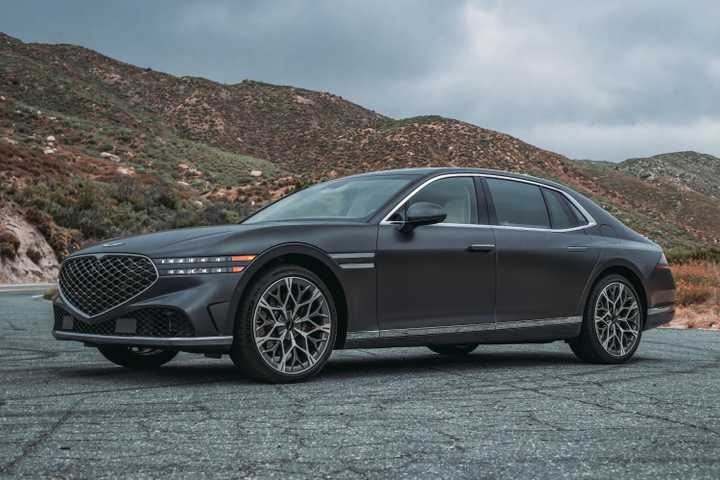
The vehicle orchestrating this segment coup is the Genesis G90, a flagship that directly challenges the financial baseline of tier-one luxury with a 2025 base price of $89,700, which gently edges up to $92,700 for the 2026 model year. The true magnitude of this disruption becomes undeniable when looking at the hard comparative math: contrasting a fully loaded Genesis G90 3.5T Prestige Black AWDagainst a Mercedes-Benz S 580e 4MATICreveals an immediate, documented upfront saving of approximately $25,000.
The Documented $25,000 Upfront Savings
Side 3/4 action shot of 2025 Genesis G90 3.5T in gray driving on roadGenesis
When analyzing a $25,000 pricing delta at this tier of the market, the narrative shifts from simple budget-consciousness to strategic asset allocation. In the context of executive transportation, a $25,000 cash reserve represents a massive financial cushion that effectively covers years of comprehensive insurance, fuel expenses, or private chauffeuring services before the European competitor breaks even. By maintaining this unassailable value gap (even with the nominal price adjustments introduced for the 2026 G90 model year), Genesis shifts the burden of proof onto the competition. The question for the modern executive is no longer whether they can afford the Mercedes, but whether the emotional satisfaction of owning a three-pointed star is worth writing a separate, unjustifiable $25,000 check.
Standardized Luxury Vs. The European Options Trap
2026 Genesis G90 interior second rowGenesis
What makes this price chasm truly fascinating is how each brand treats its cabin space. While Genesis equips the G90 with elite executive rear-seat amenities, advanced multi-mode massage functionality, and dual-pane acoustic insulation as standard factory equipment, European rivals routinely treat these essential flagship comforts as premium add-ons, locking them behind dizzying, five-figure package upgrades that rapidly push final transaction prices deep into six-figure territory.
Genesis G90 Performance And Cabin Serenity
2026 Genesis G90 exterior designGenesis
Under the hood, the G90 matches its luxury presence with highly refined engineering, starting with a standard 3.5-liter twin-turbo V6 engine that generates a robust 375 horsepower and 391 pound-feet of torque. For drivers demanding tier-one performance, Genesis offers an advanced 48-volt electric supercharger (e-SC) mild-hybrid powertrain that pumps output to 409 horsepower and 405 pound-feet of torque, a system that eliminates turbo lag entirely to launch the massive sedan from zero to 60 mph in a seamless 5.1 seconds.
Effortless V6 Power With Mild-Hybrid Innovation
Genesis G90 3.5 Liter V6 Twin-Turbo with 48V e-superchargerGenesis
The implementation of the 48-volt electric supercharger (e-SC) is a masterclass in modern powertrain optimization, specifically engineered to mimic the seamless, low-end grunt of a traditional, large-displacement V-8 without the associated fuel economy penalties. By deploying an electric supercharger that forces air into the engine instantly at low RPMs, Genesis engineers successfully fill the temporary torque vacuum before the larger exhaust-driven twin turbochargers fully spool up. This dual-induction strategy yields a perfectly linear power delivery and instantaneous throttle response, ensuring that the heavy sedan pulls away from a standstill with the silent, effortless urgency expected of an elite executive cruiser.
Vault-Like Serenity And Advanced Ride Dynamics
Front 3/4 action shot of 2025 Genesis G90 3.5T E-Supercharger in white driving on coast roadGenesis
To compete at this level, Genesis poured immense resources into matching the legendary, whisper-quiet highway ride of the S-Class. The G90 deploys a sophisticated active noise cancellation system layered over heavy acoustic glass to cultivate a genuinely vault-like cabin serenity. On the tarmac, the luxury experience is anchored by a multi-chamber air suspension system and intelligent chassis tuning that proactively flattens out road imperfections, proving that the G90’s refinement is fully realized in motion.
The Broader Market Fallout
Rear 3/4 shot of 2026 Genesis G90 e-SC Prestige Black parkedGenesis
The G90’s aggressive packaging strategy has sent shockwaves through the entire luxury landscape, most notably usurping the Lexus LS’s historic mantle as the ultimate “smart-money executive choice” and leaving the aging Japanese flagship struggling for segment relevance. By delivering equivalent executive content at a far more rational entry point, Genesis has effectively backed elite German brands into a corner, forcing Mercedes-Benz and BMW onto the defensive, relying heavily on brand prestige rather than tangible feature superiority to justify their pricing.
Total Cost Of Ownership And The Six-Figure Moonshot
Beauty shot of the 2024 Cadillac CelestiqCadillac
The value proposition stretches far beyond the initial showroom floor transaction. Genesis backs its flagship with a class-leading 10-year/100,000-mile powertrain warranty paired with complimentary scheduled maintenance — financial peace of mind that European manufacturers consistently refuse to replicate. This grounded approach to total ownership costs stands in stark contrast to other regional players like Cadillac, which chose to abandon the sub-$100,000 flagship space entirely to chase the ultra-exclusive, six-figure boutique territory with the Celestiq.
The Genesis G90 successfully dismantles the myth that world-class executive luxury requires a mandatory six-figure investment and a compromised options sheet. By pairing effortless twin-turbo power and vault-like serenity with an unmatched warranty package for $25,000 less than a Mercedes S-Class, Korea has done more than introduce a highly competitive sedan. They have fundamentally rewritten the rules of engagement for the flagship segment, leaving legacy luxury icons with little more than their badges left to defend.









No Comments