The Korean EV With The Highest Driving Range In 2026
12 minutes reading
Monday, 20 Jul 2026 15:00 0 99 autotech
In today’s economy, EVs are becoming hedge bets against the unpredictability of gasoline prices. Every time global oil production takes a hit, regardless of the reason, pump prices spike, and drivers are reminded how exposed traditional vehicles remain to forces outside their control. Because petroleum’s tendrils work their way into every aspect of our daily lives, that instability has led more mainstream consumers to research EVs, especially households looking for predictable long-term ownership costs in a time of uncertain budgets.
Electric vehicles have taken great strides since the revolutionary GM EV1 predicted we could travel up to 55 miles without using a drop of gasoline. Then, the 2011 Nissan Leaf offered a more palatable 73 miles of range, and the 2012 Tesla Model S made electricity a consideration with its 265-mile range. Korea jumped on the trend early, with the 2012 Kia Ray EV (86 miles of range), and came to the U.S., with the 2015 Kia Soul EV (93 miles). Today, Korean EVs are some of the most prolific in the market and boast some of the longest driving ranges.
Why Korean EVs Have Become Serious Range Contenders
Hyundai Ioniq 5 Guinness World Record holder rear shotHyundai
Korean automakers approached EV development differently from other companies. After Tesla proved that EVs could be so much more than a compromise, several new makers prioritized massive battery packs and headline-grabbing acceleration times, but Korean manufacturers concentrated on efficiency engineering in a way that the first wave of mainstream Japanese compacts targeted the muscle-car-obsessed North American car culture at the turn of the 1970s.
Korean EVs have become especially strong in areas like lightweight platform design, low rolling resistance, energy-dense battery packaging, and software-based energy management, all of which contribute to improved efficiency and, by extension, longer driving ranges. They also tend to be low-key because improved efficiency makes the EV usable day in and day out, but it isn’t as sexy as three-second 0–60 times, so buyers remember the Tesla Model S and Lucid Air, but not so much the 7.5-second Chevy Equinox EV or Fiat 500e.
Korea’s EV Industry Has Prioritized Efficiency Instead Of Excess
Kia EV 6 at Tesla SuperchargerTopSpeed | Michael Frank
Korean automakers have emerged as serious leaders in the EV range race by following a philosophy they have always followed. Rather than chasing power or size or luxury, they have primarily inhabited the middle ground, balancing power and efficiency, size and practicality, luxury and comfort. Applied to EVs, that means dialing back on oversized batteries and powerful motors, focusing instead on extracting the most usable miles from every kilowatt-hour.
A white 2024 Genesis Electrified G80 electric midsize sedan is parked.Genesis
Today’s consumers are increasingly comparing EVs directly against ICE vehicles rather than evaluating them as emerging technologies, and they expect comfort, practicality, refinement, and convenience without excuses. Like their ICE vehicles, Korean EV platforms balance efficiency with flexibility, enabling sedans, SUVs, and crossovers to share key components without sacrificing competitiveness—sedans concentrate on quiet comfort, SUVs maximize interior space and versatility, and performance crossovers shoot for the acceleration gold.
Modern EV Platforms Have Changed The Competitive Landscape
BYD Han L EV Platform And BatteryBYD
Range is still the primary concern about EV adoption, but it is also the competitive benchmark for EVs, much like horsepower was the competitive benchmark for muscle cars—the headline number that consumers instantly recognized as good or bad. And just like an ICE’s horsepower, an EV’s range is susceptible to a bunch of variables, starting with the platform. Early EVs were often adapted from ICE models or platforms that primarily used traditional car batteries, which needed more space, added more weight, but didn’t get a lot of miles if the EV were to remain usable for a family.
2024 Dodge Charger Daytona EV PlatformDodge
Dedicated EV platforms transformed what electric vehicles could become because they took into account smaller, denser batteries. The modern flat-floor platform (often referred to as a skateboard) includes all the electric components—battery, motor(s), thermal management systems, etc.—and allows the weight to be kept lower due to the more compact battery pack. And the all-inclusive platform allows just about any body style.
The 2025 Hyundai Ioniq 6 Is Korea’s EV Range Leader
The Rear-Wheel Drive Model’s 342-Mile Range Rivals Comparable ICE Sedans
2024 Hyundai Ioniq 6 SE Standard Range nearside quarterHyundai
The Hyundai Ioniq 6 delivers range leadership without forcing the car into luxury-sedan pricing. That distinction matters because many long-range EVs occupy premium segments beyond the reach of mainstream buyers—to substantially surpass the Ioniq 6’s range, you’re looking at a GM pickup, Lucid, Mercedes EQS, Rivian or Tesla, and even to match it, you’re considering a BMW—and demand $1,000s in financing and insurance costs over five years, in exchange for $100s to go the extra distance.
When you tally it all up, the Ioniq 6 can not only compete against luxury and prestige EVs; in many cases, it beats them at their own game. It succeeds because it balances efficiency with livability. Mainstream EVs are expected to do more than post impressive EPA numbers. They must function comfortably as primary household vehicles for daily family shuttling, commuting, and road-tripping. The sad part is that this is your last chance to acquire one because when the 2025 Hyundai Ioniq 6 runs out, it’s gone.
The Ioniq 6 Was Designed Around Aerodynamics First
2025 Hyundai Ioniq 6 Parked SidewaysHyundai
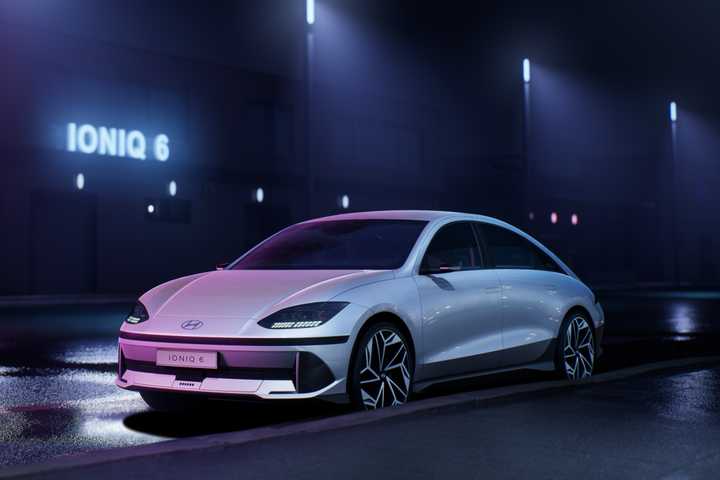
The Hyundai Ioniq 6 stands apart because its profile goes against the modern crossover trend that’s sweeping the automotive marketplace. While much of the industry shifts toward SUV proportions, Hyundai went with a sleek fastback sedan shaped less by fashion than by airflow management. Its concept-car-like silhouette immediately gives it an efficiency advantage over taller, boxier alternatives, because it’s more efficient to force a knife-blade through the air than a brick.
2024 Hyundai Ioniq 6 SE Standard Range sideHyundai
Because highway speeds dramatically increase energy consumption, every reduction in drag directly contributes to range, especially by like-sized vehicles on high-speed, long-distance trips. Efficient long-distance tourers like the Lucid Air feature drag coefficients of around 0.20 Cd, while electric crossovers and SUVs like the Lucid Gravity and Toyota bZ usually struggle to meet 0.25 Cd. The Hyundai Ioniq 6 clocks in at 0.21 Cd, showing that Hyundai’s mission of designing for efficiency, rather than fine-tuning it later, was the right call.
Hyundai Affected Range Through System Efficiency Rather Than Battery Size
An action shot of a 2023 Hyundai Ioniq 6 drivingHyundai
The best way to increase EV range continues to be by using larger batteries, but then engineers have to strike a balance between efficiency and vehicle weight. In the Ioniq 6, Hyundai concentrated on optimizing energy conservation in relation to the entire vehicle. The RWD model uses a single motor, which reduces complexity, weight, and energy consumption, compared to the dual-motor powertrains of AWD EVs (which is actually what many buyers seem to prefer, for reasons beyond range).
2025 Hyundai Ioniq 6 Rear SeatsHyundai
But the Ioniq 6 surpasses even comparable EVs, mostly due to Hyundai’s balancing motor output for real-world drivability, rather than acceleration times. Software tuning is also a factor, with Hyundai calibrating regenerative braking, battery temperature, and power delivery. Though there are exceptions, consumers are becoming more receptive to intelligent engineering, rather than just adding bigger components to deliver higher power outputs or enhance efficiency.
How The 2026 Hyundai Ioniq 6 SE RWD’s Long Range Plays In The Real World
An action shot of a 2023 Hyundai Ioniq 6 driving on the roadHyundai
The 2025 Hyundai Ioniq 6 shows that electric sedans still possess meaningful advantages. Crossovers may dominate sales charts, but their added height and weight inherently reduce aerodynamic efficiency, which is one of the key factors in driving range. In the Ioniq 6, Hyundai leveraged the traditional sedan shape to extend range without having to resort to the old tried-and-true bigger battery.
The slippery shape and software calibration help the Ioniq 6 return strong highway efficiency, which contributes to longer runs. Combine that with exemplary charging capability, and there’s less distance- and time-related stress created during long-distance travel, because drivers spend more time covering road miles. In the long run, that also reduces costs because more distance means fewer stops at expensive roadside charging stations.
Aerodynamics Define The Hyundai Ioniq 6
2024 Hyundai IONIQ 6 rear endHyundai
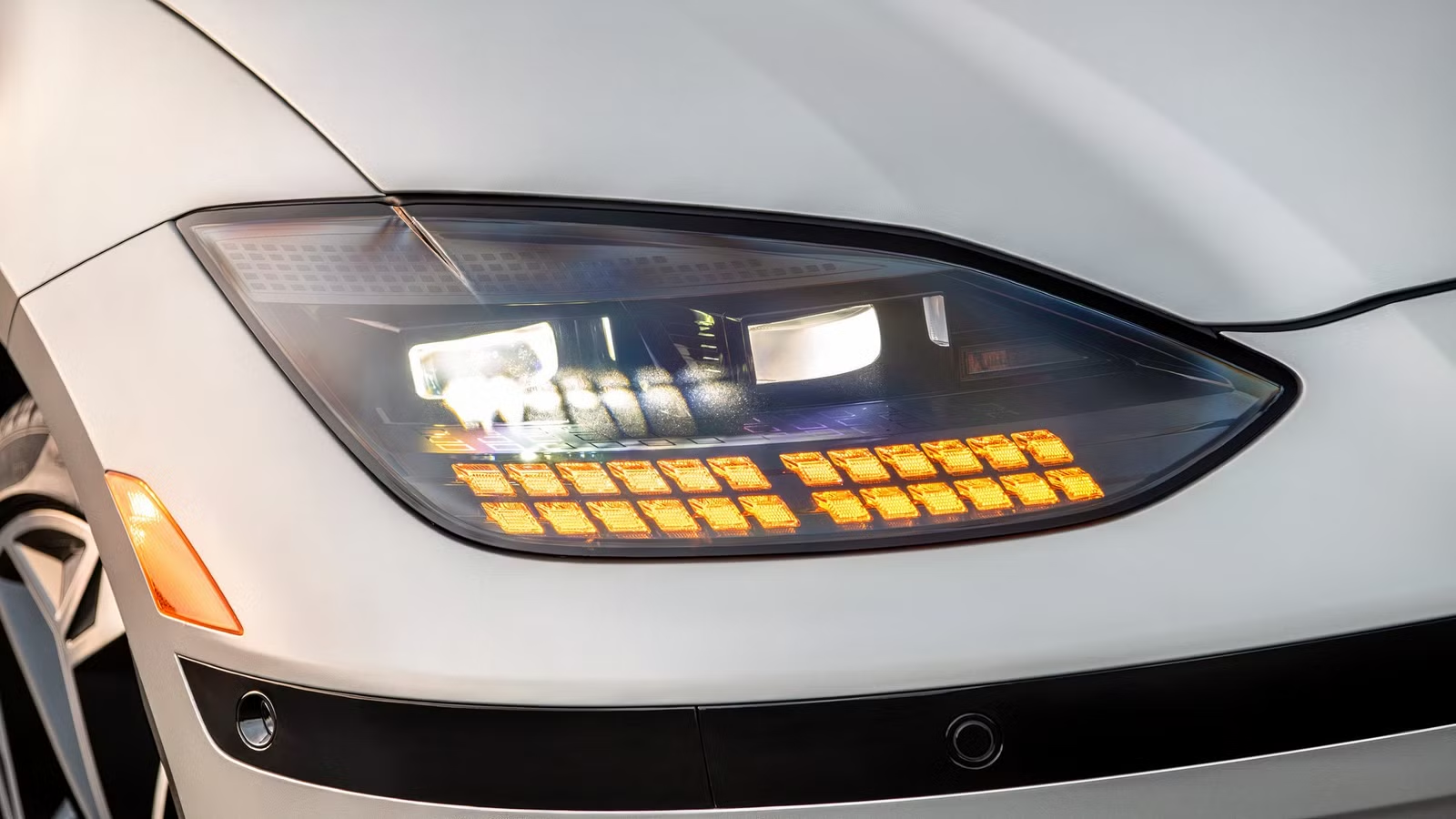
Aerodynamic efficiency is the defining engineering achievement for the Hyundai Ioniq 6’s range. Its exceptionally low drag coefficient makes the Ioniq 6 one of the slipperiest production vehicles currently on the market. Nearly every visible exterior detail was created to manage airflow—the sweeping roofline reduces turbulence, flush body and wheel surfaces allow air to sweep over them with minimal disruption, and active air flaps improve aerodynamic smoothness and optimize cooling efficiency.
Aerodynamics matter most at highway speeds, where resistance plays a big role in draining energy. Efficiency ratings show that many SUVs perform reasonably well in city driving but lose efficiency rapidly at highway speeds, mostly due to their blockier noses. Having better aerodynamics helps the Ioniq 6 retain its efficiency without having to compensate with larger batteries.
Powertrain Minimalism Aids In Creating Longer Range
Close-up detail shot of a gray 2025 Hyundai Ioniq 6 showing the lower front fasciaHYUNDAI
The Hyundai Ioniq 6 SE achieves its standout driving range largely because Hyundai resisted an EV-maker’s greatest temptation to overcomplicate the powertrain in pursuit of headline-grabbing acceleration. The RWD Ioniq 6 keeps things simple and efficiency top-of-mind with a rear-mounted 168-kW electric motor drawing power from a 77.4-kWh battery (the Standard Range model uses a 111-kW motor and 53-kWh battery).
Hyundai Ioniq 6
SE RWD
SE Dual Motor
SE Standard Range
Motor
168 kW
168 kW + 74 kW
111 kW
Power
225 hp
320 hp
149 hp
Torque
258 lb-ft
446 lb-ft
258 lb-ft
Driveline
Rear-wheel drive
All-wheel drive
Rear-wheel drive
Battery Capacity
77.4 kWh
77.4 kWh
53 kWh
Range
342 miles
316 miles
240 miles
Much like a traditional powertrain, adding complexity (in this case, a second motor) improves traction and straight-line acceleration, and also uses more energy during everyday driving and results in increased drivetrain losses. The single motor’s required energy goes directly to extending range, rather than some of that energy being used to feed more hardware. Add in the larger battery’s energy well, and you get substantially longer range than either the dual-motor setup or the less-powerful single-motor model.
The 2025 Hyundai Ioniq 6 SE RWD Is Korea’s Longest-Range EV
A red 2024 Hyundai Ioniq 6 Limited parked on a gravel desert clearing in front 3/4 viewHyundai
The 2026 Hyundai Ioniq 6 SE RWD became Korea’s EV range leader because it didn’t chase headlines, but focused on optimizing EV fundamentals better than its competitors. Hyundai started with aerodynamics, intelligent software calibration, lightweight efficiency, and drivetrain balance, and that allowed it to then work with right-sized motors and keep the battery smaller and lighter (counter to the typical EV range-extending philosophy of dropping in a larger battery).
2025 Hyundai Ioniq 6 Front CabinHyundai
As a sedan, the Ioniq 6 has different lifestyle requirements placed on it than the current crop of crossovers and SUVs that have become so popular. Sedans are more personal cars, desired for long-distance comfort, whereas compact SUVs are meant to be practical and versatile, fulfilling family tasks around town. As such, the Ioniq 6’s longer range is a welcome feature that translates directly into fewer stops along the way and less downtime. Still, if you want more versatility or luxury with your extended range, there are alternatives.
Larger Battery, Smaller Motor, And Increased Weight Can’t Shake The Hyundai Ioniq 9’s Range
A dynamic front-quarter tracking shot of the Hyundai Ioniq 9 Calligraphy Black Ink.Hyundai
Family buyers needing more space but still wanting long range can opt for the Hyundai Ioniq 9, the company’s largest EV. It comes close to the Ioniq 6 in range (335 miles vs 342), but does it with the combination of a smaller motor and larger battery, validating the argument made above that extending range is not always as easy as dropping in a 40-percent larger battery. Other things holding the Ioniq 9 back are the brick-like façade and increased weight.
Despite Sharing Platforms, The Hyundai Ioniq 6 And Kia EV6 Vary In Driving Range
2025 Kia EV6 GT from the front three-quarter angleJoel Stocksdale / CarBuzz / Valnet
The Kia EV6 may share the platform of the Hyundai Ioniq 6, but that’s about it. It looks different and acts differently, thanks to wholesale changes to aerodynamics (0.28 Cd), motor, and battery. The end result is a range that is considerably shorter than that of the Ioniq 6 (319 miles and 342 miles, respectively) despite the Kia’s 8.5-percent larger battery. The Kia’s crossover styling perhaps makes it a better choice as a single-car family conveyance, but it does make it more difficult to slice through the air.
The 2026 Polestar 4 Leans More Into Performance
Front three-quarters shot of a gold Polestar 4 in studioPolestar
If you thought the Polestar 4 was a Scandinavian EV, you’re not wrong—it’s a Scandinavian nameplate on a Chinese company crossover that’s built in South Korea. The Polestar 4 targets buyers seeking a more premium and performance-oriented EV without giving up too much efficiency. Its Scandinavian-inspired minimalist design helps with its drag coefficient (0.27 Cd), but it’s not enough to counter its bulk.
Base Trim Engine
EV
Base Trim Transmission
Automatic
Base Trim Drivetrain
Rear-Wheel Drive
Base Trim Horsepower
149 HP
Base Trim Torque
258 lb.-ft.
Base Trim Fuel Economy Equivalent (city/highway/combined)








No Comments