
The Kawasaki That Fixed The Bonneville Before Triumph Did
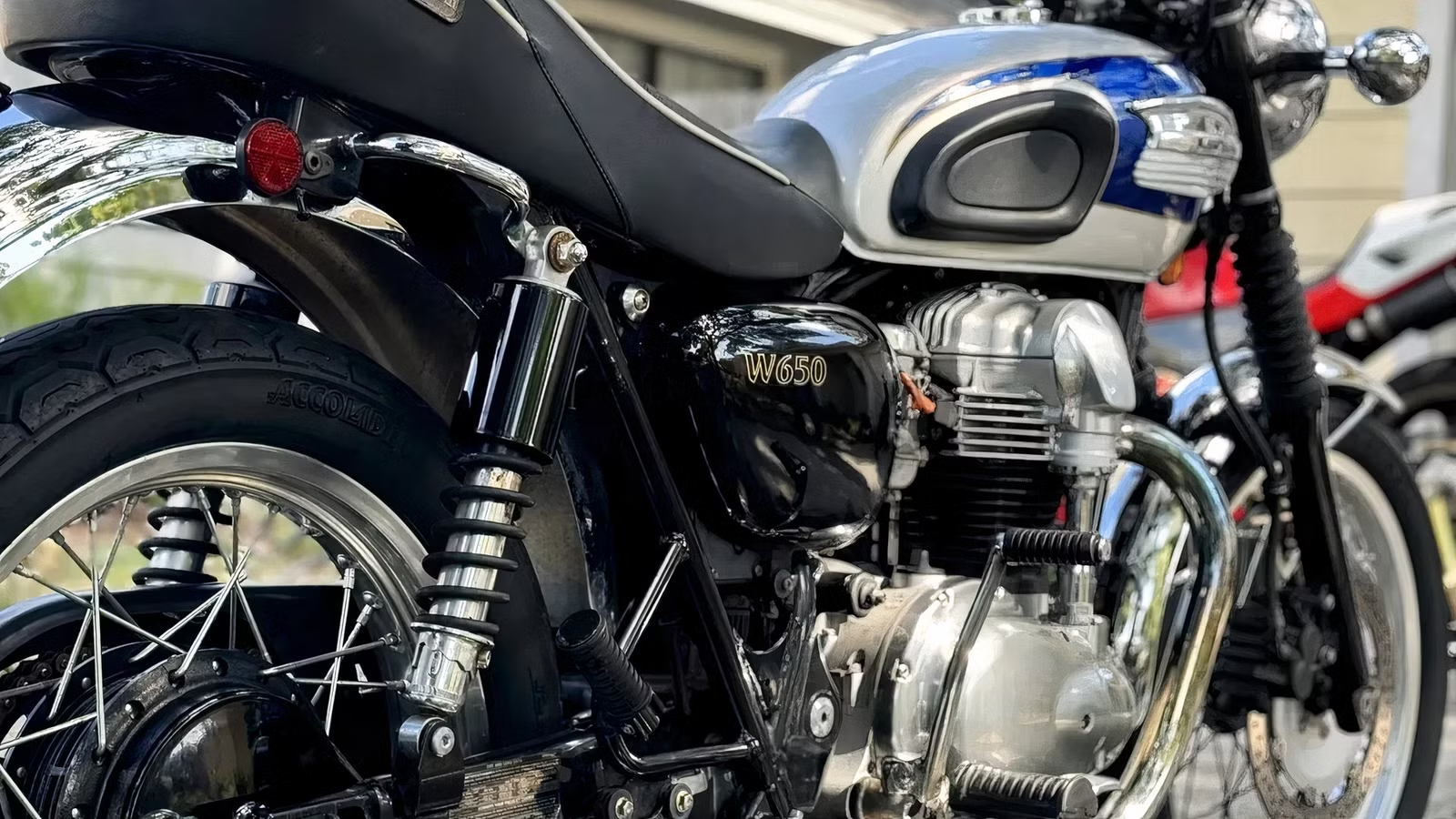
For a generation of riders, the British parallel twin was the motorcycle. It looked right, sounded right, and won races, but owning one meant living with vibration, oil on the garage floor, and electrics that quit at the worst moment. When Triumph finally rebuilt its most famous name for a new century, Kawasaki had already beaten it to the idea. The Japanese bike kept the looks and the sound, then quietly engineered out nearly every flaw that had defined the original. It went on sale before Triumph’s own revival, and for less money.
Why The Classic British Twin Needed Fixing

The Triumph Bonneville set the template for the British twin in the 1960s: a 650 cc air-cooled parallel twin with a 360-degree crank, a slim tank, and a seat built for two. It was fast for its day and handsome in any color, which is why riders still copy its look decades later.
The ownership experience was another story. A 360-degree twin with no balance shaft shakes hard at speed, and the vibration loosened bolts and numbed hands. Oil seeped from the pushrod engine’s joints, the electrics were notoriously unreliable, and every start came from the kickstarter. Owners accepted all of it as the price of the style.
Kawasaki’s Long History With The British Twin


Kawasaki knew the British formula better than most rivals. In the early 1960s, Kawasaki Aircraft took over Meguro, a Japanese maker that held a license to build BSA’s A7 twin. That design became the Kawasaki W1, a 650 cc twin sold in North America as a 1966 model and the largest engine built in Japan at the time.
The W1 and its W2 successors gave Kawasaki first-hand experience with every strength and weakness of the British layout. More than three decades later, Kawasaki revived the W name for a new classic twin built to keep the character and lose the headaches.
The Kawasaki W650 Explained

The Kawasaki W650 reached US dealers in early 2000 with a 676 cc air-cooled parallel twin, a 360-degree crank, and four valves per cylinder. A bevel-gear-driven single overhead cam gave the engine a tower on the right side of the cylinders, a mechanical detail that looks as vintage as it is precise. Kawasaki claimed 49 horsepower, and a period dyno test measured 43.6 hp at the rear wheel, with a 14.05-second quarter mile.
Each fix targeted a British twin complaint. A balance shaft and rubber mounts removed the shaking, digital ignition replaced points that drifted out of tune, and an electric starter did the work, with a kickstarter kept for authenticity. The styling borrowed straight from a 1960s Bonneville, down to the fork gaiters, short exhausts, and two-tone paint.
How The W650 Beat Triumph’s Reborn Bonneville To Market

Triumph’s own modern Bonneville arrived for 2001, a full model year after the Kawasaki. It used a 790 cc twin with double overhead cams, balance shafts, and more than 60 hp, giving it extra torque and a smoother feel. It also cost more, at a $6,999 sticker, against the W650’s US price of $6,499.
The two bikes split the classic twin market along clear lines. The Bonneville carried the name and more power, while the W650 was lighter, more compact, and kept the kickstarter that Triumph dropped. Kawasaki got there first, and its bevel-driven cam gave it an engineering story the Triumph’s chain-driven cams couldn’t match.
What A Kawasaki W650 Costs Today

The W650 remains one of the cheapest ways into a classic-styled twin. A 2000 example with about 4,000 miles sold for $3,300 in January 2025, and a 5,000-mile bike sold with no reserve for just $2,500 online in July 2025. Both prices sit well under half the bike’s original sticker.
The US only got the W650 for 2000 and 2001. Weak demand and the arrival of the reborn Bonneville led Kawasaki to pull it from North America and focus on Japan and Europe, where it stayed on sale until 2006. That leaves relatively few US-market bikes, but not enough buyers chasing them to push prices up.
Why The W650 Still Sells For Less Than It Cost New

Its short US run and modest power kept the W650 out of the spotlight, while the Bonneville name drew the attention and the higher prices. That works in a buyer’s favor. The Kawasaki offers the look, sound, and layout of a 1960s British twin with electric start, a balance shaft, and Japanese reliability, all for less than many new entry-level bikes.
Low-mileage, unmodified bikes are the ones to find, since many owners swapped exhausts and seats to chase a café racer look. A stock W650 with its original bevel tower, gaiters, and paint is the version that best shows how Kawasaki fixed the British twin before Triumph did.
Sources: Cycle World, Classic.com, Bring a Trailer.

Related posts


Latest Post


No Comments