Hyundai Ioniq 5: Range, Retro Design, and Charging Reality
10 minutes reading
Monday, 27 Jul 2026 15:00 0 75 autotech
The 2026 Hyundai Ioniq 5 occupies the precise sweet spot between Tesla’s extensive software ecosystem, Porsche’s high-end 800-volt charging architecture, and the South Korean brand’s accessible, value-driven pricing. It presents a bold design contradiction, blending a 1980s Giorgetto Giugiaro sketch aesthetic with state-of-the-art electric vehicle tech.
The midsize EV SUV is an appealing package that merges daily driver practicality with high-performance capability. Since its introduction, the Ioniq 5 has already proven its worth by outperforming the Tesla Model Y in its home market of South Korea. However, many North Americans still view it as an underrated option. The ultimate question for prospective owners is whether its striking retro looks and 318-mile estimated driving range deliver true long-distance freedom or merely clever marketing.
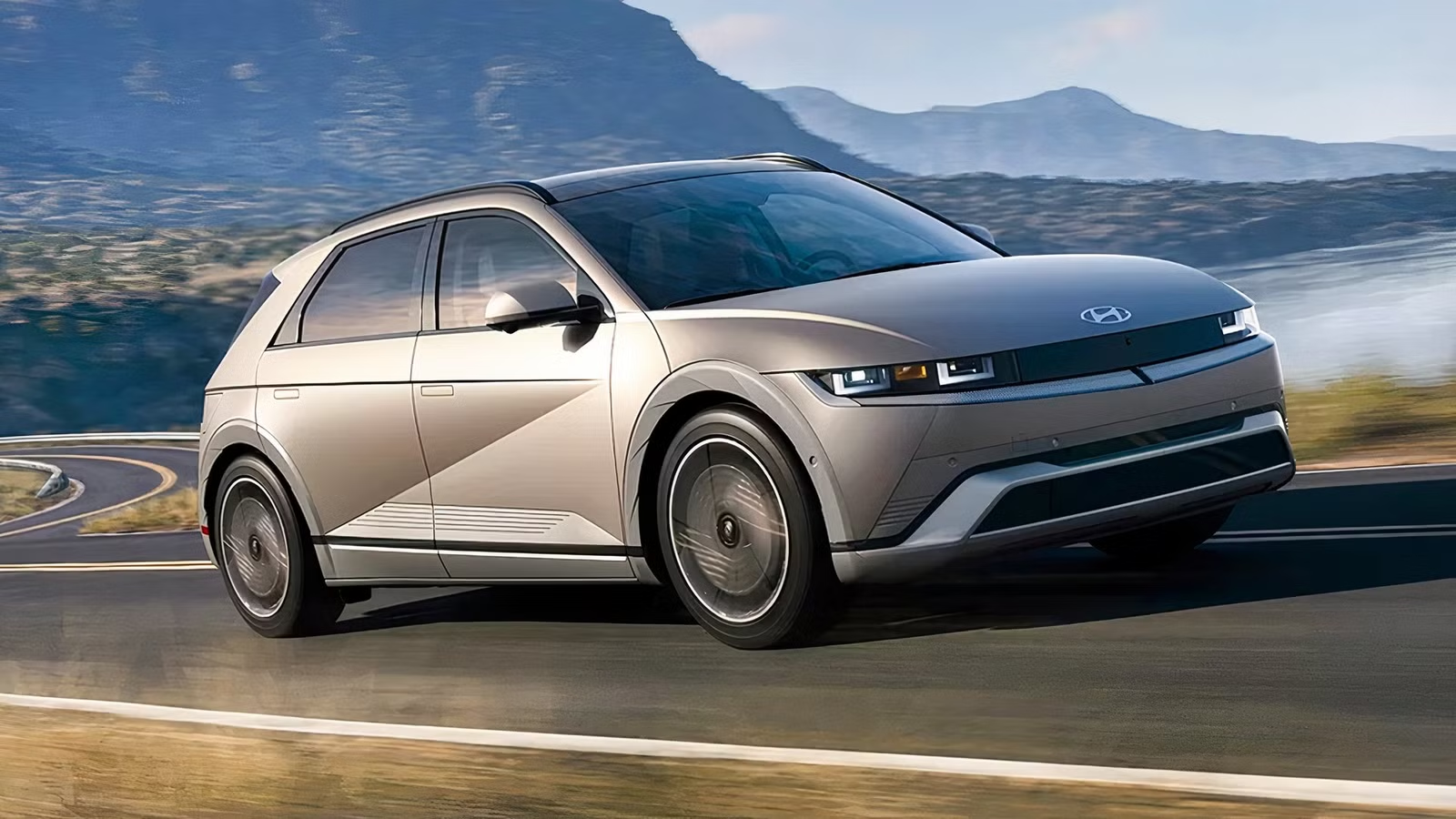
Front 3/4 view of a 2023 Hyundai Ioniq 5Isaac Atienza | TopSpeed
Underneath its parametric pixel exterior, the 2026 Hyundai Ioniq 5 sits on Hyundai Motor Group’s dedicated Electric-Global Modular Platform (E-GMP). This purpose-built architecture also underpins mainstream and premium siblings including the Kia EV6, Kia EV9, and Genesis GV60. The core advantage of E-GMP centers on its native 800-volt electrical system, a technical feature typically reserved for premium performance cars.
Pushing higher voltage allows the drivetrain to draw lower current, directly minimizing internal resistance and thermal build-up. This efficiency allows the battery to accept rapid energy inputs without immediate thermal throttling, preserving peak power delivery and extending overall battery longevity.
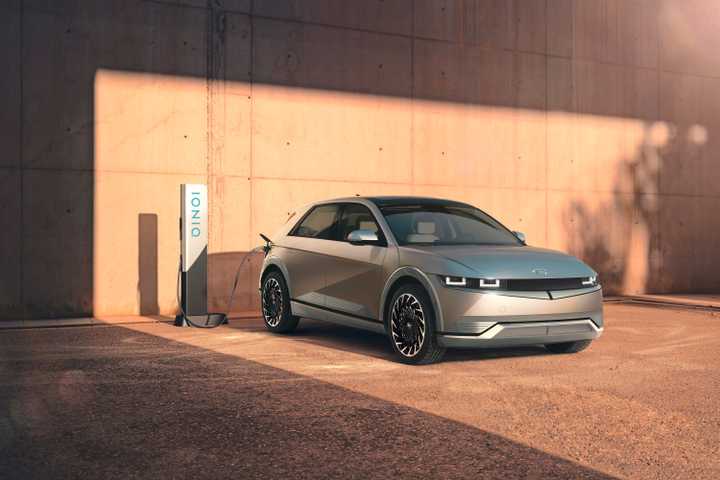
A shot of a Hyundai Ioniq 5 at a charging pointHyundai
Charging speed claims often steal headlines, but real-world execution depends heavily on external factors. Hyundai advertises a 10-to-80 percent charge in 18 minutes on a 350 kW DC fast charger. In actual road testing, hitting that benchmark requires ideal battery preconditioning and an unshared high-output charging station.
Connecting to a standard 150 kW DC fast charger or plug during winter conditions without pre-warming the pack increases the charging time to more than 25 minutes. North America’s public charging infrastructure still suffers from reliability gaps and uneven 350 kW charger distribution, meaning the car’s physical hardware often outpaces the surrounding network.
With a 350 kW DC charger, Ioniq 5 can charge from 10 percent to 80 percent in 18 minutes.Safet Satara|TopSpeed
Beyond raw power metrics, the structural execution of E-GMP dramatically shapes the driving experience. The low-slung, flat-floor battery pack acts as a stressed structural member, delivering high torsional rigidity. Compared to traditional unibody chassis adaptations, this low center of gravity keeps the crossover composed through fast corners while maintaining a compliant, comfortable ride over broken pavement. The platform’s engineering scalability is equally impressive, allowing Hyundai to build efficient single-motor daily commuters and fire-breathing, track-focused halo models on the same structural foundation.
Range, Efficiency, And Your Daily Driver: RWD Vs. AWD Reality
An image of a 2026 Hyundai Ioniq 5 in motionHyundai
Choosing between rear-wheel drive and all-wheel drive comes down to a direct trade-off between maximum driving range and instant traction. Official EPA estimates grant the extended-range single-motor RWD model up to 318 miles on a full charge. Opting for the dual-motor AWD variant drops those numbers down to 269 to 290 miles. That range drop stems directly from the added weight of the front electric motor and the parasitic mechanical drag introduced when engaging the front driveline. Highway commuting and changing weather conditions quickly expose the limits of official EPA figures.
2025 Hyundai Ioniq 5 rear driving shotHyundai
Cruising at 75 MPH increases aerodynamic drag, causing the Ioniq 5 range to drop faster than standard city drive cycles suggest. Cold weather causes the battery management system to expend extra energy to heat the passenger cabin and maintain battery chemistry within optimal operating temperatures, reducing range during winter by 15 to 25 percent.
Furthermore, using the built-in Vehicle-to-Load system to run external appliances slightly lowers total available driving energy, though its utility far outweighs the minor power draw. When comparing energy consumption against the Tesla Model Y, the American EV champion retains a clear efficiency edge. Thanks to superior aerodynamic slipperiness and tightly integrated drive units, the Model Y consumes fewer watt-hours per mile.
2025 Tesla Model Y Juniper DrivingTesla
Over a standard driving year of 12,000 miles, this efficiency gap translates to roughly $200 to $400 in extra home electricity costs for the Ioniq 5. However, the Ioniq 5 counters that running-cost penalty with its 800V fast-charging capability. When connected to adequate infrastructure, it replenishes range much faster than 400V rivals, turning potential Ioniq 5 charging downtime into a brief pit stop.
The inclusion of bidirectional V2L technology provides a distinct practical advantage over the Model Y. Equipped with an internal socket and an external charge-port adapter, the system delivers up to 3.7 kW of clean AC power. It easily runs high-draw equipment, power tools, camping gear, or sensitive electronics directly from the traction battery during power outages or outdoor excursions.
The Ioniq 5 N: Performance That Changes The Conversation
Front three-quarters motion photo of the 2025 Hyundai Ioniq 5 NHyundai
The release of the performance-focused Ioniq 5 N directly reframes Hyundai’s image within the enthusiast community. With its N Grin Boost mode active, the dual-motor powertrain generates an astounding 641 horsepower and 588 lb-ft of torque. Floor the accelerator, and this boxy crossover launches from 0 to 60 mph in just 3.5 seconds before reaching a top speed of 149 mph. As a halo model, the N proves that the core E-GMP architecture possesses serious engineering potential.
Rear three-quarters driving image of a white 2025 Hyundai Ioniq 5 NHyundai
It transforms the standard crossover into a legitimate track performer using structural body reinforcements, heavy-duty 15.7-inch front brakes, adaptive damping, and an electronically controlled rear differential. Software additions like N Drift Optimizer and programmable torque distribution let drivers tail-slide the vehicle safely on enclosed road courses. It also introduces simulated paddle-shift gear changes and synthetic powertrain sounds that give drivers crucial tactile feedback when approaching cornering limits.
Shot inside the cabin of a 2025 Hyundai Ioniq 5 N.Adam Gray | TopSpeed
The Ioniq 5 N commands a premium over lesser trims, sitting roughly $7,000 to $9,000 above a fully optioned standard AWD model or platform mates like the Kia EV6 GT. Rather than functioning purely as an aggressive track weapon like a Porsche Taycan, the N acts as a versatile family crossover that effortlessly doubles as a weekend track toy. It proves Hyundai can build an emotionally engaging, high-performance electric vehicle without compromising daily usability.
Hyundai Ioniq 5 Vs. Key Competitors: Where It Wins And Where It Doesn’t
Rear 3/4 view of the 2025 Hyundai Ioniq 5 Limited AWD
Hyundai
Evaluating the Ioniq 5 requires looking directly at its primary market rivals. When comparing the Ioniq 5 to the Tesla Model Y, the Hyundai wins on interior ergonomics, sound insulation, traditional tactile physical switchgear, and peak fast-charging speeds. Conversely, Tesla holds the advantage in absolute driving range, overall software integration, and effortless access to the Supercharger network.
A static front-quarter shot of a bronze Genesis GV60Genesis
When cross-shopping within the Hyundai Motor Group umbrella, the Genesis GV60 offers a step-up in cabin luxury, featuring higher-end interior trimmings, active road noise cancellation, and facial-recognition keyless entry on the same E-GMP platform. However, the Ioniq 5 provides significantly more usable rear cargo space and a lower entry price.
Christopher Chin | TopSpeed
Compared to the Kia EV6, which shares its core mechanical layout, the Ioniq 5 delivers a more compliant ride quality, a brighter cabin atmosphere, and an open interior layout complete with a sliding center console. To put key numbers into context, a standard Long Range Ioniq 5 RWD ranges from $37,500 to $45,000 depending on trim and model year pricing adjustments. It provides up to 318 miles of EPA range, 225 horsepower, an 18-minute 10-to-80 percent fast-charge time, and a 10-year or 100,000-mile powertrain warranty.
The Tesla Model Y Long Range starts at a comparable Ioniq 5 price point, delivering roughly 310 to 330 miles of range and faster 0-to-60 acceleration, but it takes around 27 minutes for a similar fast-charge session on its 400V architecture. The Kia EV6 mirrors the Ioniq 5’s fast-charging speeds and warranty coverage, but features a lower roofline and a firmer, sportier suspension setup.
Ownership Reality: Pricing, Incentives, And True Cost Of Ownership
A gray 2022 Hyundai Ioniq 5 small electric SUV is parked. Hyundai
Pricing across the Ioniq 5 lineup remains competitive, spanning from the baseline Standard Range trim up through the fully loaded Limited and performance N variants. Recent lineup updates and price adjustments lowered the entry point for standard models, with base MSRPs starting at $35,000 for standard range variants and stretching beyond $61,500 for the flagship Ioniq 5 N.
Federal tax credit eligibility continues to evolve based on manufacturing locations and localized battery component sourcing. Buyers often find the most straightforward way to capture full tax savings is through promotional manufacturer lease programs, where leasing companies pass federal incentives directly into reduced monthly payments. Strong factory residual values and aggressive lease offers make leasing an attractive strategy for hedging against rapid tech obsolescence.
Rear 3/4 view of a 2023 Hyundai Ioniq 5Isaac Atienza
Long-term reliability data for the E-GMP platform show positive trends as the architecture matures. Early production models experienced minor glitches, including software bugs and recall-backed service campaigns targeting the Integrated Charging Control Unit. Hyundai has actively resolved these issues through dealer updates and over-the-air software revisions. Coupled with low routine maintenance needs and a long factory warranty, true cost-of-ownership remains highly favorable over a multi-year ownership cycle.
According to J.D. Power, the Hyundai Ioniq 5 sits with a 75/100 consumer-verified overall score, which includes 75/100 for quality and reliability, 83/100 for the driving experience, 70/100 for resale, and 71/100 for the dealership experience.
iSeeCars has not issued the model with a full evaluation, but it does signify a 7.0/10 retained value and 10/10 safety score. Over five years and 60,000 miles, you can expect the model to lose $20,042 or 57.3 percent of its value, which is on par with the rest of the midsize EV segment.
Is The Ioniq 5 Worth Buying?
2025 Ioniq 5 Exterior Side Profile DrivingHyundai
For buyers looking for a performance-leaning EV that retains real-world practicality, the Hyundai Ioniq 5 delivers a compelling, balanced option. It successfully marries futuristic retro styling with some of the fastest charging tech on the market. It appeals directly to tech-forward drivers, performance enthusiasts seeking accessible thrills, and practical commuters who want to step away from mainstream minimalist interiors.
The base SE Standard Range comes standard with cloth seat upholstery, an eight-way power-adjustable driver’s seat, front seat heating, and a redesigned 12.3-inch touchscreen infotainment system that finally supports wireless Android Auto and Apple CarPlay. You also get dual-zone climate control and LED interior lighting.
2025 Hyundai IONIQ 5 XRT Interior William Clavey | TopSpeed
Upgrading to the SEL trim adds a heated steering wheel, Hyundai’s Digital Key 2 system, rear HVAC vents, H-Tex synthetic leather seat upholstery, a wireless smartphone charger, and an auto-dimming rearview mirror. The off-roading-focused XRT derivative builds on the equipment found in the SEL trim, adding functional exterior modifications like all-terrain tires, a suspension lift, and front tow hooks.
Taking both the standard trims and the high-output N model out for a thorough test drive remains the best way to evaluate its dynamics, validate home charging routines, and decide if this retro crossover is right for you.
Base Trim Engine
EV
Base Trim Transmission
Automatic
Base Trim Drivetrain
Rear-Wheel Drive
Base Trim Horsepower
168 HP
Base Trim Torque
258 lb.-ft.
Base Trim Fuel Economy Equivalent (city/highway/combined)
127/94/110 mpge
Base Trim Battery Type
Lithium ion (Li-ion)
Make
Hyundai
Model
Ioniq 5
Sources: Hyundai, J.D. Power, iSeeCars, and the EPA.














No Comments