
The Suzuki That’s The Perfect Blend Of On-Road And Off-Road Riding
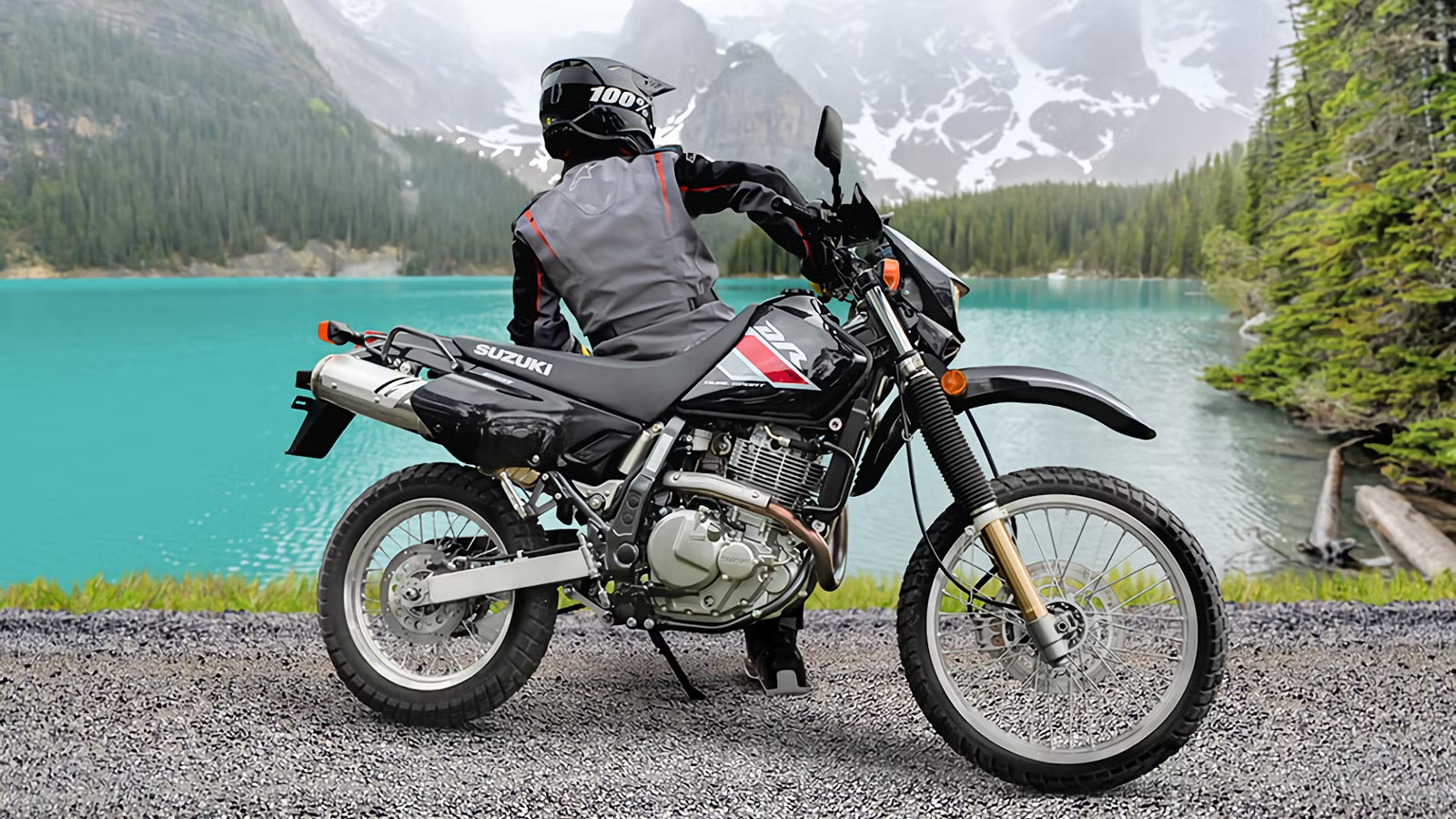
In a market flooded with adventure bikes boasting radar cruise control, semi-active suspension, and five-figure price tags, it’s worth stepping back and asking: do you actually need all of that? Dual-sport bikes were solving the on-road/off-road equation long before “adventure touring” became a genre, and they remain more capable in the rough stuff than virtually any ADV machine money can buy.

While manufacturers race to out-tech each other, one old-school Suzuki quietly keeps making the case that simplicity still has real value.
When it comes to riding on-road, adventure bikes are certainly a better fit, but which kind of bike you prefer to buy will depend largely on what kind of riding you want to do. If you are after the best of both worlds, Suzuki might have the answer. This bike offers an ideal blend of on-road and off-road performance.
The 2026 Suzuki DR650S Loves The Beaten Paths Just As Much As The Smooth Tarmac
MSRP: $7,299

Suzuki got us all worked up with the launch of the brand-new DR-4S. Unfortunately, it comes with a price tag to match its ability and is not the bargain we all hoped it would be. Rather surprisingly, the DR650S is still available as a 2025 model, which is remarkable considering how long it has been around and how closely related it is to the outgoing DR400S. While it is still around, it actually offers pretty decent value for money.
The only like-for-like alternative comes from Kawasaki, which has also been making the KLR650 for quite some time. It costs just as much but features a small fairing and commands a much bigger following. It is equally reliable thanks to its air-cooled single, though it is a bit heavier. Kawasaki has been cleverly marketing a kitted-out version of the bike as a budget adventure bike. Technically, you could achieve something similar with the DR650S at a lower cost with a little help from the aftermarket.

The other bikes competing with the DR650S (excluding the DR-400S, which remains technically available) are both from Europe. The 390 Enduro R from KTM is of particular interest and has the potential to upset the apple cart, as it costs considerably less yet promises modern performance and electronics. Beta is also set to join the dual-sport fray with the Alp 4.0, which has the potential to be the “unicorn” adventure enthusiasts crave, thanks to an impressive balance of performance, price, and capability. For now, both of these bikes remain an unknown quantity — the very antithesis of the big Suzuki.
Rivals
- Kawasaki KLR650
- KTM 390 Enduro R
- Beta Alp 4.0
The DR650S Has A Proven Air-Cooled Single
Power: 46 Horsepower

We often joked that the DR400S was the last surviving motorcycle sold with a carb, and now this bike has inherited that distinction. It isn’t the only new motorcycle still running a carburetor, but it does underscore just how old-school this machine is. What the big thumper lacks in sophistication, it more than makes up for in torque and ease of use. This proven single produces a healthy 46 horsepower — more than enough for a bike that is not particularly heavy.

It is also more than enough to reach and maintain highway speed when the need arises. Most of the torque arrives early, from around 2,500 RPM, which is a genuine advantage off-road and makes trail riding that much more enjoyable. While we love pointing out that Suzuki still builds a bike with a carb, it does make tuning considerably easier. The actual horsepower figure will also vary depending on where you live, as carburetion is affected more by elevation than fuel injection would be. The engine is also straightforward to work on and maintain for those who enjoy that side of ownership — though it’s not ideal if you don’t.
Engine Specifications
|
Engine Type |
Single-Cylinder, air-cooled |
|
Displacement |
644cc |
|
Max Power |
46 HP |
|
Max Torque |
40 LB-FT |
|
Transmission |
5-speed |
The DR650S Is A Blast From The Past
A Low-Cost Alternative

The only way to describe the suspension is dated. The conventional front fork looks straight out of the 1980s, but the link-type rear suspension is an underrated feature that makes a genuine difference off-road. You won’t find much in the way of adjustment, but it delivers plenty of travel. Speaking of travel, all that suspension travel results in a pretty tall seat height. At 35 inches, it will restrict the bike to riders who are either on the taller side or highly competent off-road riders who are not intimidated by such a figure. So it isn’t particularly beginner-friendly in that sense, but it certainly has its place in the market.

This is a bike that still exists because there is clearly a market for simple, back-to-basics motorcycles. It is affordable to buy and own, it can go anywhere, and with modest modifications, it can tackle just about any terrain. There is no wind protection, and adding any would be a fruitless exercise — it would simply get broken off-road. So it won’t be especially comfortable on the highway, but that isn’t what it was built for.
Dimensions And Weight
|
Length |
88.8 inches |
|
Width |
34.1 inches |
|
Height |
47.0 inches |
|
Seat Height |
34.8 inches |
|
Ground Clearance |
10.4 inches |
|
Weight |
366 lbs |
Being road legal is more of a necessary evil than anything, as the DR650S is far more at home in the dirt — able to plod along and navigate just about every obstacle in its path with relative ease. It certainly isn’t the lightest machine out there, but it is still significantly lighter than any adventure bike, and dropping it on the trail is far less distressing than dropping an expensive ADV loaded with electronics. While there will always be those who would prefer to see old bikes as the DR650S retired, the market is already full of great big, expensive, tech-heavy bikes for them to choose from. This offers the rest of us something simple and affordable.
Sources: Suzuki Motorcycles

Related posts


Latest Post


No Comments