Somewhere between the compact crossover crowd and the three-row family haulers sits a vehicle that’s quietly rewriting what buyers expect from a mainstream SUV. It doesn’t wear a German nameplate or a Lexus badge, and it doesn’t need to. For 2026, Honda has reworked its Passport into something that trades polish-for-polish’s-sake for genuine capability and a cabin that no longer feels like an afterthought. The result is an SUV that makes the case, convincingly, that luxury shopping is more a habit than a necessity. Here’s why.
For years, the luxury SUV segment operated on a simple premise. Pay more, get more: better materials, quieter cabins, sharper tech, a badge that signals arrival. That premise is cracking.
Mainstream automakers have spent the last several product cycles closing the gap in ways that matter to actual ownership: sound insulation, seat comfort, driver-assist suites, infotainment responsiveness. Meanwhile, luxury pricing has kept climbing, pushed by financing costs, feature bundling, and options packages that turn a $50,000 sticker into a $65,000 out-the-door number.
2026 Mercedes-Benz GLC Electric front 3/4 shotMercedes-Benz
The math has shifted enough that a growing number of shoppers are asking a pointed question before they sign anything. What am I actually paying for? Depreciation curves on luxury SUVs are notoriously steep, maintenance costs balloon once warranties expire, and the “premium” cabin experience often comes wrapped in a subscription-heavy infotainment system or a maintenance schedule that punishes owners who keep a vehicle past year five.
None of that is hypothetical anymore. It shows up in resale data, in dealership trade-in numbers, and in the used-luxury glut that’s made three-year-old German SUVs some of the fastest-depreciating vehicles on the market.
What’s Filled The Gap Isn’t A Cut-Rate Alternative
2025 Audi Q7 front action shotAudi
It’s vehicles that borrow the parts of luxury that actually matter—cabin quality, ride comfort, tech that works—while skipping the parts that don’t. The badge tax, the maintenance anxiety, the options-list gouging. Honda’s answer is the 2026 Passport — but the question is whether it actually closes the gap where it counts, or just on paper.
The Honda Passport Blends Rugged Capability With An Upscale Cabin Experience
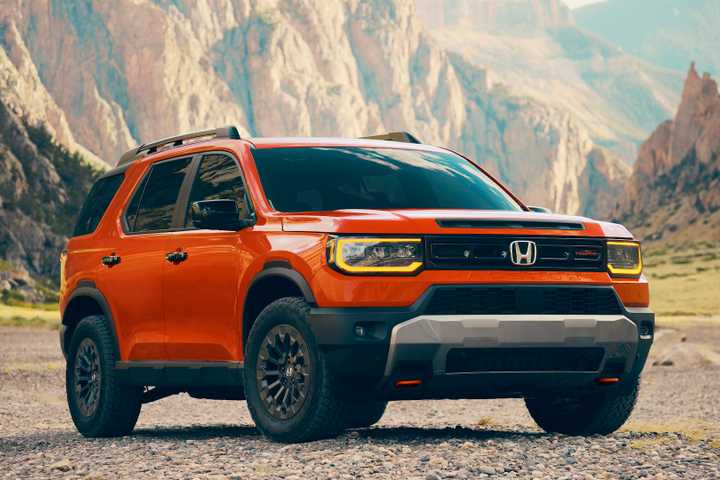
2026 Honda Passport front 3/4 shot parked off-roadHonda
The 2026 Honda Passport doesn’t look like a car playing it safe. Honda gave it a boxier, more angular redesign—short overhangs, a squared-off nose, higher ground clearance—that puts it visually in the same conversation as the Toyota 4Runner, Ford Bronco, and even the Land Cruiser, rather than the softer, crossover-leaning shape it wore before. Honda calls it “the ultimate Honda adventure SUV” in its own marketing, and the design changes back that claim up rather than merely gesturing at it.
Step Inside, Though, And The Story Shifts From Trail-Ready To Genuinely Upscale
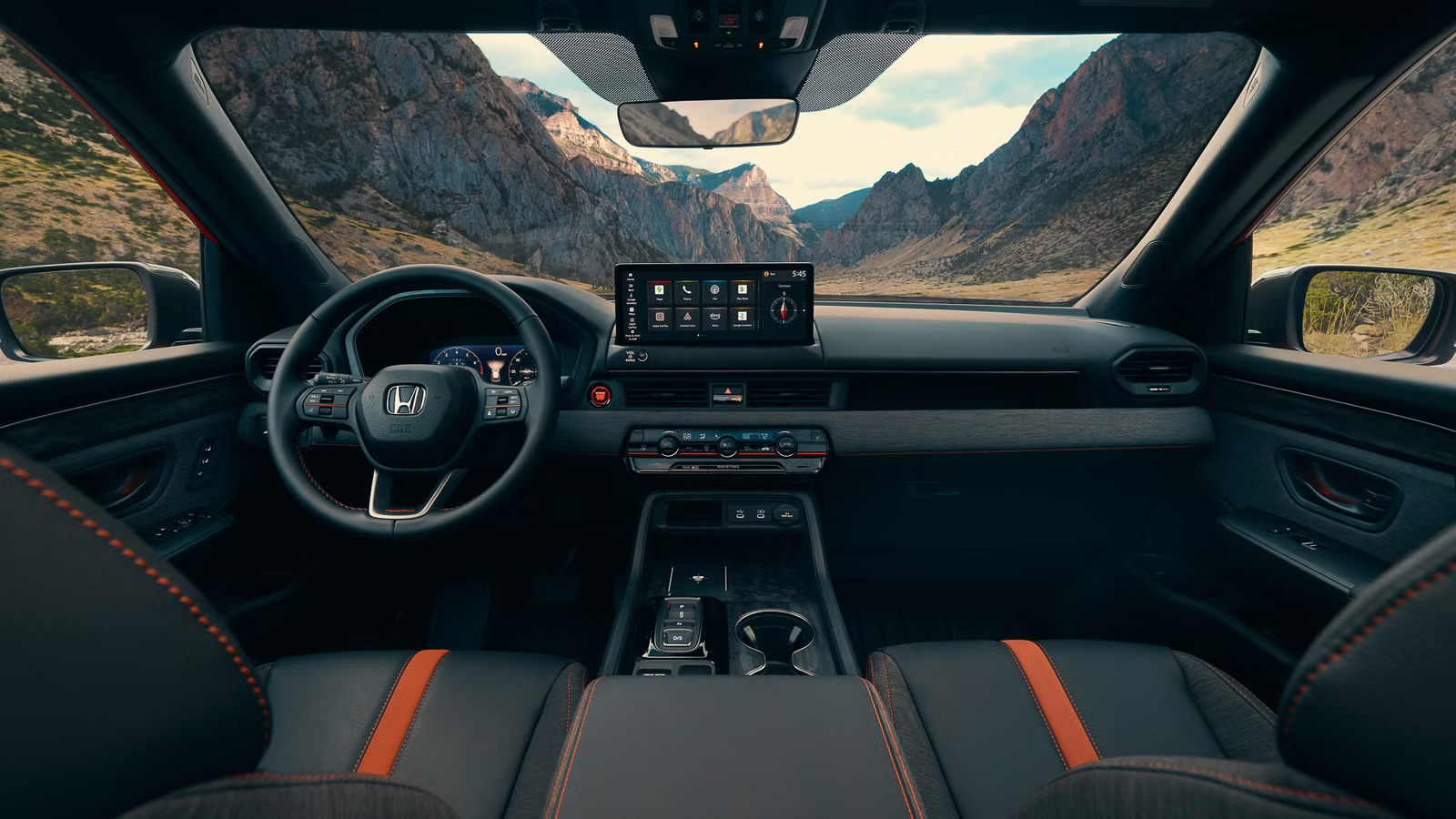
Front seats of the 2026 Honda PassportNicole Wakelin/CarBuzz/Valnet
The cabin has been reworked with better materials, a cleaner dashboard layout, and the kind of fit and finish that used to be reserved for a trim or two above where the Passport sits. It’s not pretending to be a Range Rover. But it no longer feels like the compromise mainstream buyers used to accept in exchange for a lower price.
Trail-focused capability and cabin polish have historically pulled in opposite directions in this segment—you got one or the other. The new Passport is one of the more convincing arguments yet that you don’t have to choose. But the cabin story is only half of it — what’s under the hood makes an equally strong case for skipping the luxury lot.
A Naturally Aspirated V6 And Standard AWD Keep Things Simple And Confident
The black engine bay of a 2019 Honda Passport with a 3.5-liter V-6.Honda
While much of the industry has shifted midsize SUVs toward smaller turbocharged four-cylinders in pursuit of fuel economy numbers, Honda has held its ground. Every 2026 Honda Passport comes with a 3.5-liter naturally aspirated V6, now making 285 horsepower, up from 280 in the outgoing model, paired for the first time with a 10-speed automatic transmission. Torque lands at 262 pound-feet at 5,000 rpm, and towing capacity tops out at 5,000 pounds when properly equipped.
There’s a case to be made for the turbo-four approach: better efficiency, smaller displacement, more torque lower in the rev range. But there’s also something to be said for a big, unstressed six-cylinder that doesn’t rely on a turbocharger to do its job, doesn’t need premium fuel, and has decades of Honda reliability data behind the basic architecture. It’s the kind of engine choice that rewards owners who keep a vehicle for a decade rather than three years.
Front 3/4 high angle in orange while driving off-road 2026 Honda Passport TrailSportHonda
All-wheel drive is standard across the lineup, andfor 2026 it’s the second generation of Honda’s i-VTM4 torque-vectoring system, now able to tolerate 40 percent more torque and respond 30 percent faster than the outgoing setup. In practice, that means the system can send up to 70 percent of the V6’s output rearward, then further shift it to an individual left or right wheel—the kind of trail trick that used to be reserved for far pricier off-road-badged SUVs. Seven drive modes round out the package, giving the Passport a genuine claim to off-pavement competence rather than a checkbox all-wheel-drive system bolted on for peace of mind.
Practical Features And Everyday Comfort Make It Feel More Expensive Than It Is
2026 Honda Passport HRC interiorHonda
None of the mechanical upgrades would matter much if daily life in the Passport felt like a step-down from a luxury SUV, and it largely doesn’t. The cabin carries genuine cargo flexibility, seats that hold up on long drives, and a Honda Sensing suite of driver-assist tech standard across the lineup—the kind of safety net that luxury brands often gate behind an options package. Ground clearance sits at 8.3 inches, with approach angles of 23 degrees—numbers that matter less on a school run and more on the gravel road to a campsite—but they contribute to a driving position and visibility that feel confident either way.
Where the Passport really closes the gap with pricier rivals is in the details that owners notice after the new-car smell fades. A quiet highway ride, an infotainment system that doesn’t require a subscription to unlock basic functionality, and materials that hold up to years of car seats, dog hair, and gear hauling without looking tired. It’s not trying to out-luxury a luxury SUV on ambiance. It’s making sure nothing about the daily experience feels like a downgrade, which, for most buyers, turns out to be the part of “luxury” that actually gets used.
The clearest case for the Passport shows up in trade-in lines, not on spec sheets. Consider the driver stepping out of a three-year-old Acura MDX, watching it get appraised for thousands less than they expected, while a comparably equipped Passport TrailSport sits within a few thousand dollars of the used MDX’s original sticker, minus the depreciation hit already taken.
Or the family cross-shopping a Lexus GX, drawn to its off-road-luxury pitch, until the build sheet crosses $65,000 for the trim with the features they actually want. The Passport TrailSport Elite gets them real off-road hardware, a genuinely nice cabin, and standard AWD for tens of thousands less, with a maintenance schedule that doesn’t come with the anxiety of an expired luxury warranty.
Close-up shot of 2026 Honda Passport interior showing dashboardNicole Wakelin/CarBuzz/Valnet
It’s not the right call for someone who wants a badge on the tailgate to do social work, or who needs air suspension and massaging seats to feel the money was well spent. But for buyers cross-shopping the Passport against an MDX, a GX, or even a loaded Grand Cherokee, and asking whether the extra $10,000 to $20,000 buys anything they’ll actually use day to day, the honest answer is often no. The 2026 Passport doesn’t ask buyers to give anything up. It just asks them to stop paying for a badge they were never going to lean on anyway.







No Comments