
The Honda Prologue Becomes Latest EV Casualty In Market Meltdown

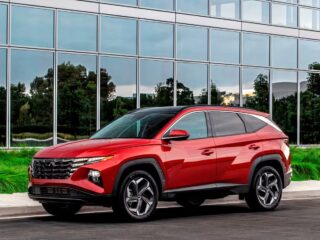
Honda has confirmed the Prologue will be discontinued at the end of the 2026 model year, closing the book on a two-year experiment that saw the automaker lean on General Motors to get an EV to market quickly. The announcement, confirmed today after Honda dealers were notified, marks the end of the Prologue’s short run and the effective collapse of Honda’s GM-platform EV strategy in the United States.

The Prologue isn’t alone. Ford’s F-150 Lightning, the Hyundai Ioniq 6, the Nissan Ariya, the Volkswagen ID.4, the Kia Niro EV, the Volvo EC40 and EX30, and even Tesla’s Model S and X have all been discontinued this year as the US electric-vehicle market buckles under tariff pressure, the elimination of federal EV tax credits, and a regulatory environment increasingly tilted back toward internal combustion. Honda is simply the latest automaker to read the room.
72,000 Prologues Sold, Then The Floor Fell Out
By raw numbers, the Prologue was never a disaster. Honda moved more than 33,000 units in 2024 and another 39,000 in 2025 — a respectable showing for a first-generation EV entering a crowded segment. Through the first half of 2026, though, sales have collapsed to just 8,400 units, roughly half of what the same period last year produced. That trajectory made the math impossible to ignore.

The Prologue starts at $47,400 and produces 220 horsepower and 243 lb-ft of torque in base front-wheel-drive trim. Specs aside, vehicles built at GM’s Ramos Arizpe plant in Mexico — which is where the Prologue is assembled, alongside the Chevrolet Equinox EV and Cadillac Optiq — are now subject to tariffs as high as 25% depending on US content levels. That kind of cost pressure, layered on top of vanishing federal purchase incentives, is a brutal combination for any EV’s profit margins.
The GM Partnership That Quietly Unraveled

General Motors Ultium EV Platform
The Prologue was always a bridge vehicle — Honda’s way of getting an EV into US showrooms while its own next-generation platform came together. GM manufactured both the Prologue and the Acura ZDX using its Ultium battery architecture, a setup that made sense when the partnership was formed but has since frayed at every seam.
GM has already moved past Ultium toward next-generation battery and motor technology, and three years ago the two automakers quietly shelved plans to jointly develop affordable EVs. Earlier in 2026, they wound down a shared hydrogen fuel-cell manufacturing venture in Brownstown, Michigan. Honda is now developing its next-generation fuel-cell technology on its own. The ZDX was pulled from production last September; the Acura RSX EV was canceled in March before it ever launched. The Prologue is the last domino.
For GM, the Ramos Arizpe plant now needs a new tenant for that production capacity. The facility is expected to begin building the Chevrolet Groove — sold exclusively in Mexico — and the Aveo for Latin American markets starting next year.
Where Honda Goes From Here

Honda’s history with electrification is longer and more complicated than the Prologue’s two-year run suggests. The company’s Insight hybrid beat the Toyota Prius to the US market back in 1999, and Honda has offered hydrogen fuel-cell vehicles in various forms since 2002 — the FCX and its successors, through three generations of the Clarity. Battery-electric cars, by contrast, have always been an awkward fit: the Fit EV was a California-only lease special from 2013 to 2015 and never went mainstream.
Honda’s official statement keeps the door open without making any promises: “Prologue customers will continue to receive full support through our dealer network, including service, parts, and warranty coverage.” The automaker sells other EVs in Japan, Europe, the UK, and China through a joint venture, but in the US the near-term path points toward hybrids, efficient gas engines, and hydrogen — not another battery-electric crossover. Tesla and the legacy players with deeper EV infrastructure will largely own that space for now. Honda is betting its strength lies somewhere else.
For gearheads who never warmed to the Prologue’s rebadged origins, this may not sting much. But the broader picture — a growing list of discontinued EVs, a retreating Honda, and a US market reshaped by tariffs and regulatory reversal — is worth watching. The next Honda EV sold here, whenever it arrives, will almost certainly be built on Honda’s own terms.
Sources: CarBuzz

Related posts



Latest Post


No Comments