
The Honda CR-V Hybrid Versus The Toyota RAV4 Hybrid: The Difference Buyers Should Care About
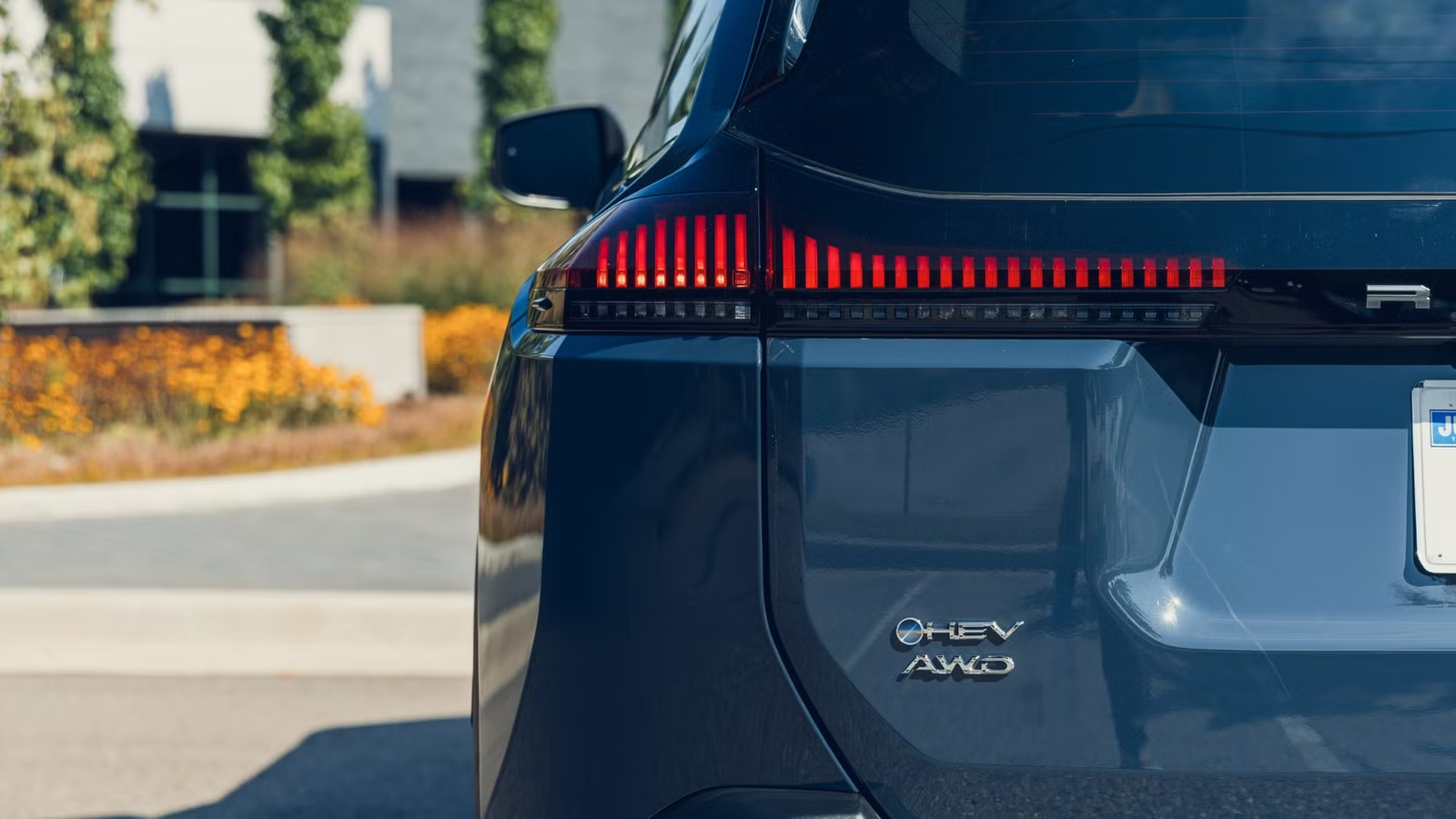
The Honda CR-V and Toyota RAV4 are intrinsically tied together. They were developed and launched at about the same time by powerhouse Japanese companies, and have spent decades competing for the same buyers: families that need a stylish, reliable vehicle with room to grow into and the versatility to be a jack-of-all-trades, commuters who need to see above traffic and want reasonable, predictable fuel bills, and weekend day-trippers who can venture off-road or travel for hours to hunt down and bring home antiques.

Now in their sixth generations, both have benefited from hybrid powertrains, continue to offer reasonable purchase prices, supply desirable features, temper their respective performance with efficiency, and offer predictable ownership costs. However, there is one stand-out difference between the two, and it might surprise you to learn what it is, though when you line them up one beside the other, it’s readily apparent.
How The Honda CR-V And Toyota RAV4 Stack Up On Paper

Introduced in 2023, the latest generation Honda CR-V heads into 2027 in seven trims and two powertrains—LX, EX and EX-L gasoline-only models, and four hybrids (Sport, TrailSport, Sport-L and Sport Touring)—starting at $31,520 and ranging to upwards of $42,950. The CR-V Sport Hybrid starts at $36,030 in FWD. The now exclusively-hybrid RAV4 (in its sixth generation and second hybrid generation) starts at $31,900 for 2026, with the FWD LE, and proceeds in steps (SE, XLE Premium, Woodland and XSE) to the range-topping Limited (starting at $43,300).
Size, Space, And Versatility


The 2027 Honda CR-V is marginally bigger than the 2026 Toyota RAV4, about three inches longer and a half-inch wider, but both ride on identical wheelbases. Theoretically, that should give them nearly identical interior space, but the CR-V Sport Hybrid’s boxier cabin gives it a slight advantage in the cube, providing seven more cubic feet of passenger space (106 cubic feet versus 99 for the RAV4), and six more feet of cargo volume when the rear seats are folded (76.5 versus 70.4, respectively).
Lengthy Equipment Lists Are Uniquely Similar

Though the hybrid CR-V starts $5,000 higher, they top out at roughly the same price (the top of the line CR-V Sport Touring starts at $42,950; the RAV4 Limited at $43,300) with similar lists of features, though they arrive there by taking different paths. The CR-V comes standard with floor mats, but the RAV4 treats them as add-ons. The RAV4 has a larger screen and wireless connectivity, but the CR-V also includes a wireless charger. Both come with comprehensive suites of safety features.


Powertrain is the primary difference between the 2027 Honda CR-V and 2026 Toyota RAV4, with the former holding on to an efficient small ICE (1.5-liter four-cylinder turbo) that made the company famous, and the latter now exclusively using a hybrid powertrain (2.5-liter four with two or three electric motors, depending on driveline) that created an alternative automotive powerplant around the turn of the century.
Powertrains Suit Different Needs
The CR-V Sport Hybrid uses a dual-motor hybrid (2.0-liter four-cylinder) as a step-up in power and efficiency from the ICE-only model, which falls short of the RAV4’s 226 horsepower in combined power, efficiency, and driving range. Though the CR-V has ample power to handle everyday driving chores, the RAV4 is better over the long run.
Year-Round Traction For Buyers Who Need It

Both models start off in front-wheel drive versions, with AWD optional (for $1,500) on CR-V Sport and Sport-L Hybrids, and standard on TrailSport and Sport Touring. The RAV4 offers AWD on all models for an added $1,400 (standard on the XSE, Woodland, and Limited). The standard transmission in both models is a CVT, and both come with selectable driving modes for regular and challenging traction conditions.
Hauling Assets
Not all Honda CR-V and Toyota RAV4 drivers need to just get kids to school or after-school activities, run around town on errands or commute to the office. Some will want it to tow some kind of trailer. Although most cars will at least handle a small trailer for items like garden supplies or a personal watercraft, SUVs are often expected to haul a larger load. The CR-VSport Hybrid keeps it basic at just 1,000 pounds, while the RAV4 handles 1,750 pounds in FWD, and doubles that for AWD models.
Going Head-To-Head With The Honda CR-V And Toyota RAV4

As mentioned at the start, the Honda CR-V and Toyota RAV4 have been linked since the beginning of (their) time, as have many Honda and Toyota products. And as with the others, neither the CR-V nor the RAV4 have a clear advantage over the other, overall. Rather, the biggest difference between the two is their owner, so here is how they each benefit their respective owners.
Power And Efficiency


The Honda CR-V Sport Hybrid uses a 2.0-liter four-cylinder engine aided by two motors to produce combined outputs of 204 horsepower and 247 pound-feet of torque (0–2000 rpm), getting closer to the RAV4 than the ICE-only models’ 190 horsepower and 179 pound-feet. The 2026 RAV4 counters with an established 2.5-liter four-cylinder and two electric motors (in FWD) for a combined power rating of 226 horsepower (236 in AWD, with a motor added to the rear axle for AWD) and torque rating of 163 pound-feet (peaking at 3,600 rpm), though Toyota doesn’t factor in the traction motor’s 170 pound-feet.
The real-world result is that the RAV4 is quicker from zero to 60 mph by about half a second (Edmunds clocked the CR-V Sport Hybrid at eight, and the RAV4 at 7.5), and its tow rating is more than double that of the CR-V, as noted earlier. Economically, the RAV4 edges out the CR-V Sport Hybrid’s 35–40 mpg, with an EPA combined rating of 38–43 mpg (all depending on driveline). On a full 14.5-gallon tank, the RAV4 will also go 25 miles farther than the CR-V Sport Hybrid (with a 14-gallon tank). So, if power and efficiency are the priorities, the RAV4 is the choice.
Cost Of Ownership
As with other factors detailed above, the 2027 Honda CR-V Sport Hybrid and 2026 Toyota RAV4 are nearly identical when it comes to overall ownership costs over five years, according to Edmunds. Both are rated at about $42,000 in their entry-level models, though the CR-V controls its costs better in its higher-end models, rising by about $4,500 over the five-year term, whereas higher-trim RAV4 costs are projected to rise by about $6,000. Lower trim RAV4s hold their value slightly better than lower-trim CR-V hybrids.
Conclusion: Buy For The Life You Envision

The 2026 Honda CR-V Sport Hybrid and Toyota RAV4 appeal to buyers in different ways. The CR-V’s versatile cabin space and gasoline-only powertrain are attractive to families who value flexibility and want to control the initial purchase price, but once buyers decide on a hybrid, the Toyota’s modern cabin likely gives it the edge for those looking for technology and efficiency.
The CR-V is a strong choice for year-round practicality and dependability, but you can’t beat the efficient daily driving in the RAV4. Over the long run, neither the 2027 Honda CR-V Sport Hybrid nor the 2026 Toyota RAV4 has a standout advantage over the other, except on purchase price in the entry-level trim. The best choice is the one that fits the buyer’s routine, not the one with the longest equipment list or more impressive specs.
Sources: Honda, Toyota, Edmunds, the EPA

Related posts






Latest Post


No Comments