
The Full-Size Mercury Sedan That Ran The Same 428 As The Shelby GT500
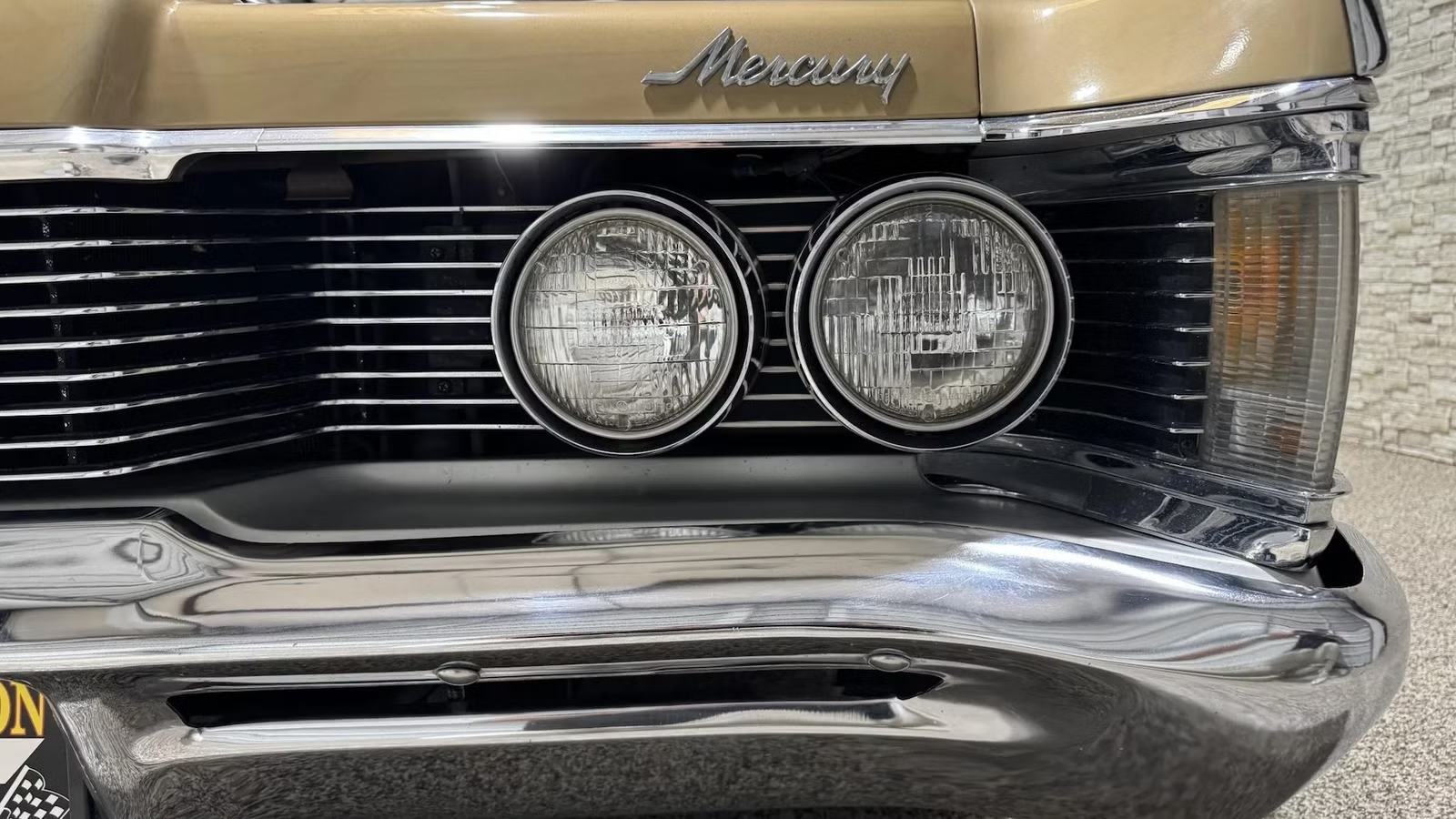
Why spend Ford Shelby GT500 money when a sleeper model has the same 428 engines hidden in a plain wrapper? The best part is that the overlooked muscle car was created by accident due to government regulations. As a result, the hot whip quickly became a favorite among police officers, and it wasn’t even created for marketing. Now surviving examples sit beside vintage Shelby GT500 models at a fraction of the cost.
Options Like The Ford Galaxie Couldn’t Meet Law Enforcement Requirements

Ford has been in the police interceptor game for decades. In fact, the first https://www.hotcars.com/reliable-mustang-v8-powered-police-cars-for-decades/Ford police car was born in 1915, and the automaker launched the first factory police package in 1950. Then in 1952, the Detroit automaker introduced the Interceptor name, and the designation became a prominent staple in the lineup of high-performance pursuit options in 1954.
However, Ford was still subject to laws and regulations related to police fleet vehicles. In the 1960s, prominent law enforcement agencies, such as the California Highway Patrol (CHP), enforced an incredibly strict minimum wheelbase requirement of 122 to 124 inches with a base curb weight of 2,800 lbs for primary patrol and pursuit vehicles.
Longer and heavier vehicles provide enhanced control and stability during high-speed emergency runs and chases. Plus, full-size cars provided better structural protection before modern crumple zones and safety regulations were implemented. Also, officers needed more space for their gear, such as radio equipment, sirens, and gear without rear seat space.


Sadly, smaller models known for reliability and durability, like the Ford Galaxie, didn’t make the cut. The 1968 Galaxie only has a wheelbase of 119 inches. So, Ford needed to put stout V8 power, heavy-duty brakes, suspension upgrades, and other police package features in a larger vehicle.
The 1968 Mercury Monterey 428 PI Was Ready To Catch Bad Guys

Bad boys, bad boys, whatcha gonna do when you? Whatcha gonna do when a Mercury Monterey comes after you? If you’re like criminals in the late 1960s, then you would probably be surprised because it was the factory sleeper that no one expected to see with flashing lights in the rear view mirror.
The 1968 Mercury Monterey 428 Police Interceptor came with the high-performance 428-inch “Super Marauder” (7.0-liter) V8 engine. It provides 340 to 360 hp and 459 lb-ft of torque. This pursuit vehicle accelerated from 0 to 60 mph in about 7.5 seconds and finished a quarter mile in about 15.6 seconds, with a top speed of 132 mph.
You could find the same GR-series big-block engine in the 1968 Ford Shelby GT500 with 360 hp and 420 lb-ft of torque. It reaches 60 mph in about 6.5 seconds with a 14.8-second quarter-mile time and a top speed of 130 mph. The GT500 is a bit faster because it’s lighter and has more aggressive gearing.

Other parts of the Mercury 428 Police Interceptor package that help bring the heat include engine upgrades such as a high-rise aluminum intake manifold, a reinforced bottom end with heavy-duty connecting rods, an aggressive street-performance camshaft, and a 10.5:1 compression ratio. Plus, it came with a heavy-duty suspension, power-assisted front brakes, and a heavy-duty three-speed automatic C6 transmission.
The Monterey 428 PI Didn’t Have An Aggressive Style

The 1968 Mercury Monterey 428 PI became lost to collectors over time as an overlooked model because it’s the ultimate sleeper model. People completely missed what’s under its frame due to its plain styling features. It was only offered in muted shades of paint, had dog dish hubcaps, and black wall tires to match other boring and unassuming government fleet vehicles like taxis. It even lacked badging to flaunt its specs.
Meanwhile, options like the 1968 Ford Shelby GT500 stood out with aggressive features like functional ram air hood scoops, louvered cooling vents, a large grille that’s framed by chrome, a rear decklid spoiler, high-visibility side stripes, and plenty of bold badges. It wasn’t associated with being a large and boring grocery getter at all.
The Mercury Monterey is a massive full-size sedan or coupe with similar styling elements as the Lincoln Continental. To others at stoplights, it looked like a sensible business car or comfortable family option instead of a high-performance weapon. Plus, the interior usually only carried the basics such as a bench seat and vinyl floor mats.

The Monterey was able to avoid being written off as just another tarted-up Ford, though by deleting superficial luxury trim items. It quickly became a highly coveted favorite of police officers, especially in Indiana and Missouri, as it was able to hunt down Dodge Charger models at triple-digit speeds.
Now The 1968 Mercury Monterey 428 PI Is An Overlooked Bargain

About 30,272 Mercury Monterey models were built in 1968, but it’s unclear how many 428 PI variants were made. Plus, because police officers loved them, many could have been driven into the ground or wrecked in the line of duty. So coming across a surviving example is pretty rare. There is no official registry count for survivors.
Models found in project condition often sell for between $3,000 and $10,000. Then Monterey models in average or good condition, with the 428 engine fetching between $12,000 and $20,000. Next, examples in pristine condition will cross the auction block for $35,000 to over $45,000. The 428 four-barrel engine typically increases the potential value by 10%. Also, the convertible body style may hold more value.
But 1968 Ford Shelby GT500 428 PI models found in project condition will sell for between $19,000 and $88,000. Shelby GT500 428 PI cars in good condition fetch between $88,000 and $115,000. Then examples in pristine condition sell for between $155,000 and over $180,000, even though the Cobra Jet variant came out during the same year!

So, the sleeper car is available at a fraction of the cost while still packing a massive punch because it doesn’t carry the Carroll Shelby brand name. Full-size Mercury sedans and cruisers do their best as they primarily appeal to niche collectors. It also fails to escape its reputation as a comfortable family cruiser.
Source: Hemmings, CarBuzz, Curbside Classic

Related posts

Latest Post



No Comments