
The Forgotten Mazda Sports Car That Makes The MX-5 Miata Look Big
Forget the latest wave of retro-styled city cars and electric micros — the most thrilling small car story ever told came out of Japan in the early 1990s, and most people still haven’t heard it. It involves gullwing doors, a mid-mounted turbo engine, a race-car personality, and a badge so obscure that even hardcore Mazda fans sometimes draw a blank. The Autozam AZ-1 is a genuine pocket supercar, and it deserves a far bigger spotlight than history has given it.

The car world didn’t miss a trick. Cities like Tokyo were becoming densely populated metropolises where parking was next to impossible, so auto manufacturers began creating so-called ‘kei cars’ which would skirt tax legislation, cut congestion, and fit into tiny parking spaces. These vehicles could be no more than 3.4 meters long and 1.5 meters wide, with no more than 660cc three-cylinder turbocharged engines and a maximum of 64 horsepower.
All of the above may have sounded a bit boring, especially compared to the kind of gas-guzzling performance machinery on offer in the States at the time, but it wasn’t. This was the era when Japanese carmakers were hitting their stride, with hot rally-bred road cars and useable sports and supercars such as the iconic Acura NSX and Toyota Supra hitting the scene.
Tiny engines and minuscule bodies were no barrier to Japanese car culture — and fans of these cars were in for a treat, as carmakers constantly outdid each other with ever-wilder creations that pushed the limits of what was possible with these tiny sports cars. One Mazda, however, stands alone as probably the coolest kei car ever made. It’s dinky, it didn’t sell well, and hardly anyone will have heard of the brand behind it — but it’s a mini supercar for the masses.

The Underrated Autozam AZ-1 May Just Be The Coolest Kei Car Ever
In the ’80s, Mazda was diversifying. The company decided on a multi-brand strategy that would break up models into more focused badges and allow Mazda to operate in different demographics. In 1989, Mazda created Eunos and Autozam — the former used to market what the US would come to know as the Miata MX-5. Mazda wasn’t messing about, adding 140 Eunos dealers and 810 Autozam dealers in 1989 to support the new brands.
We all know what happened to the Miata. That car has become an icon in the automotive world, selling more than 1.2 million units, and still going strong. The car that came to represent the wonderfully named Autozam brand, however, didn’t sell quite so well. It did, nonetheless, become a cult classic that is today highly sought-after by a devoted group of loyal fans.
The Gullwing Doors Give The AZ-1 Millionaire Looks
The Autozam AZ-1 is the ultimate expression of the kei car formula. Arriving in September 1992, it was a two-seater sports coupé with gullwing doors, the type you’d find on a Mercedes-Benz 300SL or a Tesla Model X. The car had originally been previewed as the AZ-550 — the numbers representing the previous maximum displacement under kei car rules — and the AZ-1 had actually been the most conservative proposal among the concepts shown. One design that was put forward, called the Type C, was a mini Group C racer for the road.
The AZ-1 Is A Pocket-Sized Supercar
It may have been the less daring choice, but the production AZ-1 was one of the most exciting-looking cars on the road — and it still is. There are shades of Lamborghini Diablo about the rear, hints of the Ford RS200 in the front three-quarter view, and the toll-booth windows mimic a DeLorean. At just 129.7 inches long overall, it’s around two feet shorter than a current Mazda Miata, and its 88-inch wheelbase is just over a foot and a half longer than a Harley-Davidson V-Rod motorcycle.
A Closer Look At The Autozam AZ-1
Autozam AZ-1 Specs
|
Engine |
Turbocharged 660cc inline-3 |
|
Power |
63 hp |
|
Torque |
63 lb-ft |
|
Drive |
RWD |
|---|
Source: Mazda
The Autozam AZ-1 was designed by Tatsumi Fukunaga and featured plastic body panels and a midship layout, with a Suzuki-sourced 660cc turbo engine placed just behind the driver’s seat that produces 63 horsepower and 63 lb-ft of torque. The car benefits from a low center of gravity, a kerb weight of around 1,600 lbs, and, according to Mazda, direct and sharp steering that makes it feel like a go-kart.
The Autozam AZ-1 May Only Have Lawnmower Power, But It Drives Like A Race Car
There was even a special sports version called the Mazda M2 1015, which featured rally-style integrated lights at the front, along with a Mazdaspeed variant. The horsepower figure might sound puny, but the engine revs to a 9,000 rpm limiter and the tiny tearaway is celebrated for its race-car feel. The Mazda/Autozam AZ-1 was offered until December 1995, with total production of just 4,392 units, according to Mazda. Suzuki also sold a near-identical model called the Cara.
The AZ-1 Is Rare And Sought After On The Used Market

Autozam AZ-1 Average Prices
- 1992 Autozam AZ-1: $20,931
- 1993 Autozam AZ-1: $22,861
- 1994 Autozam AZ-1: $18,821
Source: Classic.com
The Autozam AZ-1 may not be a widely known car, but its rarity and cult status in the kei car world mean that when these Mazdas do come up for sale in the USA, they command strong prices. Classic.com records an average selling price of $20,931 for a 1992 model and $22,861 for a 1993 car. For context, a 1992 Miata is valued at around $9,500 in good condition, according to Hagerty.
The bottom line is you’ll need at least around $15,000 to get hold of an AZ-1, such as this 45,000-mile example, while this heavily modified 1993 Autozam sold for a whopping $40,500. With such a niche market, condition and the availability of rare aftermarket parts both play a large role in determining value.
Anyone Fancy Turning Their AZ-1 Into A Ferrari F40?

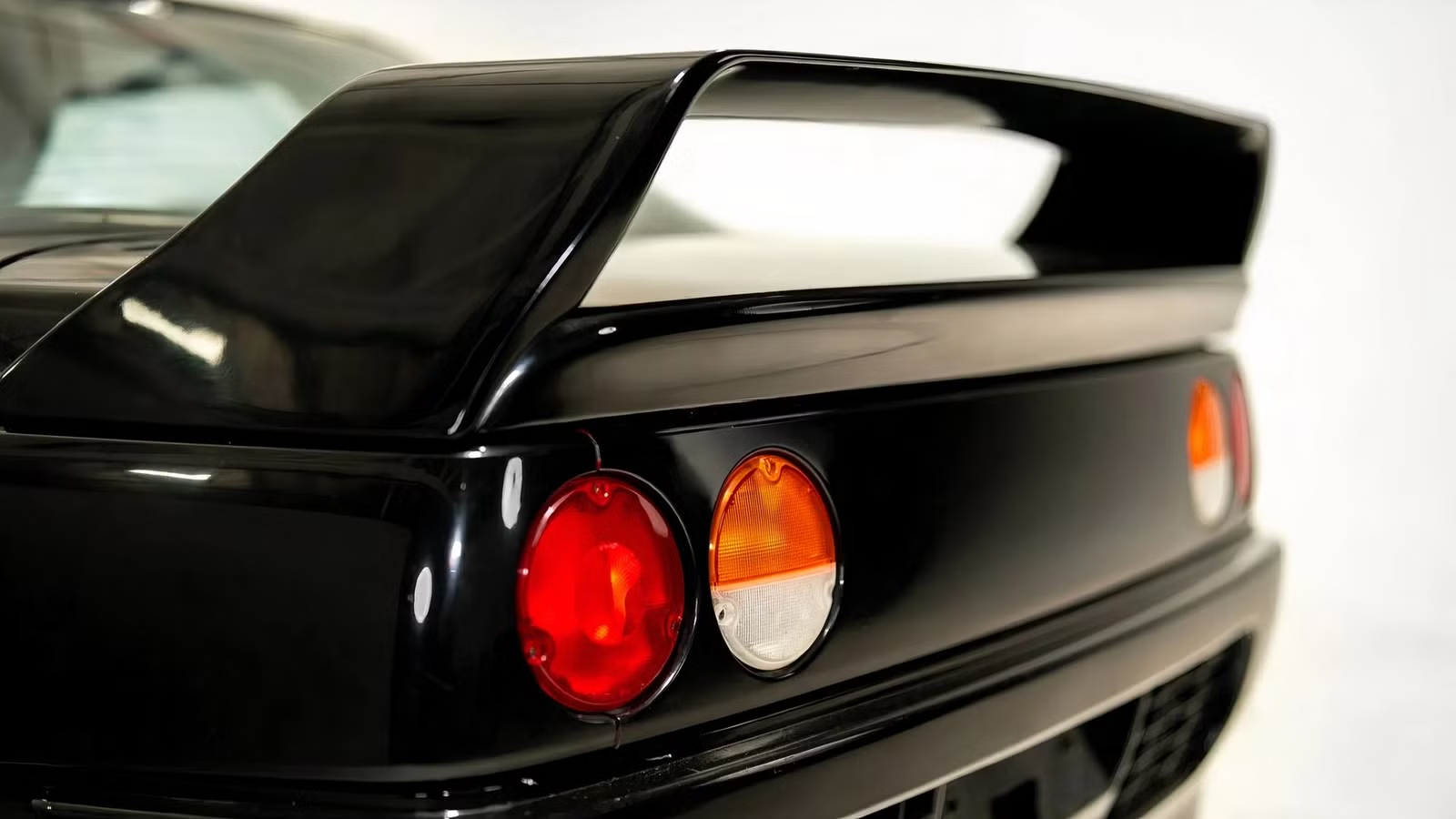
So you just shelled out 40 large for your rare kei car — what to do next? The logical step is to call the team at Liberty Walk and ask them to transform it into a mini Ferrari F40. Alongside a modified Lamborghini Countach, Liberty Walk unveiled an AZ-1-based Ferrari F40 replica at the 2024 Tokyo Auto Salon, which turned out to be one of the stars of the show.
This Ferrari Lookalike Could Cost You $65,000 Or More
For around $25,000, you can buy the LB WORKS LB40 body kit for the Autozam AZ-1, which includes a front cowl, light cover, front canard, side skirts, door panel, rear fender, rear wing, rear bumper and reflector, and rear diffuser. The result is a car that looks uncannily like Ferrari’s iconic supercar (Liberty Walk also does a body kit for the real thing), with the finished project potentially costing $65,000 or more including the donor car. Get your kit over at Liberty Walk.
Sources: Mazda.com; Classic.com

Related posts





Latest Post


No Comments