
The Family SUV That Owners Rarely Worry About In The Long Run
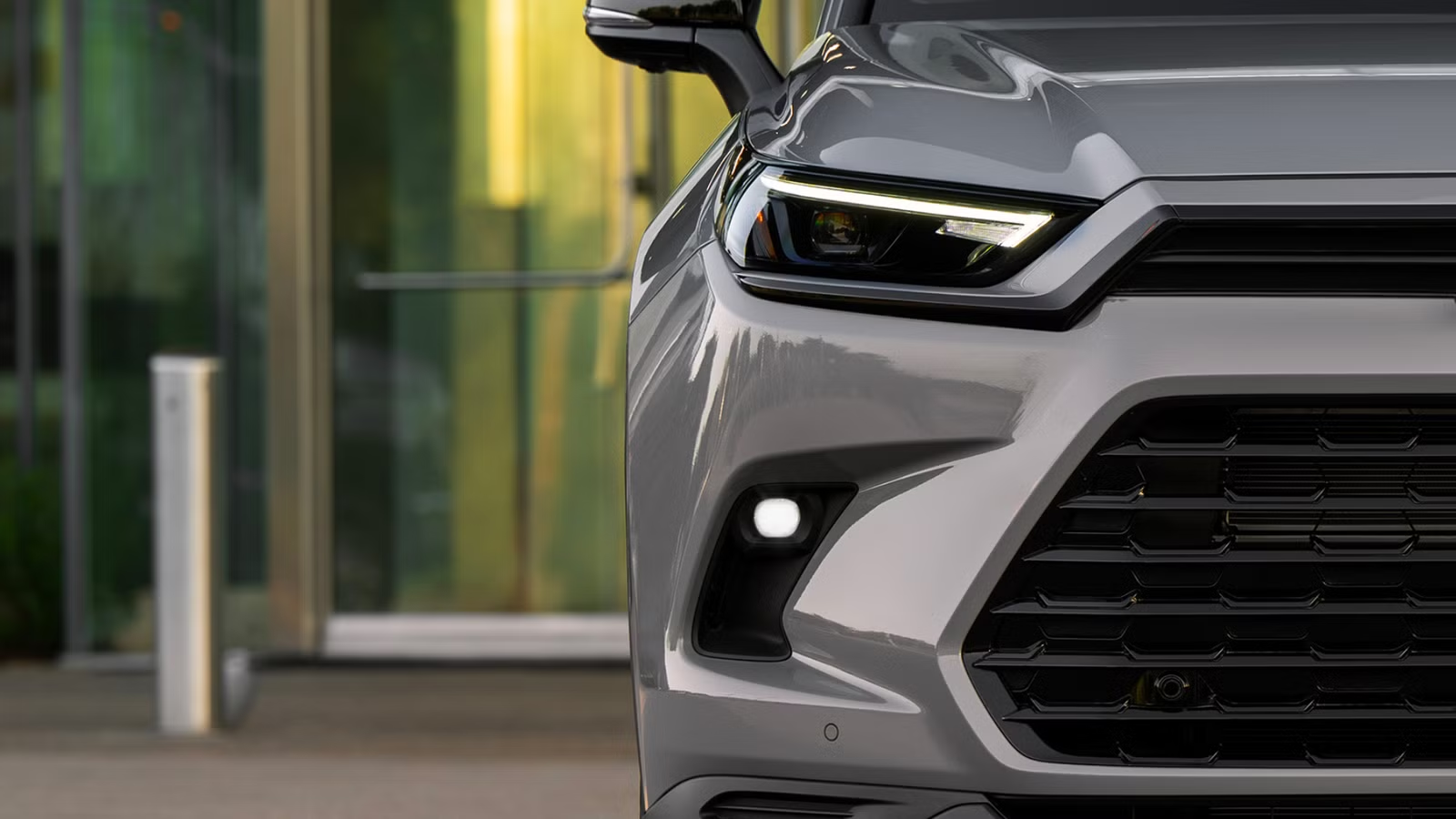
Modern family SUVs have never been better. They’re faster, safer, more efficient, and packed with technology. Massive touchscreens, advanced driver-assistance systems, and turbocharged engines have become the norm. But there’s a catch. More technology means more complexity, and as these vehicles age, that can translate into higher repair costs.

Not every SUV ages gracefully. What feels impressive in the showroom can become expensive to own years later. That’s why long-term dependability now matters more than flashy features. Most families simply want an SUV that starts every morning, gets them from A to B without fuss, and keeps ownership stress to a minimum.
Why Modern Family SUVs Are Getting More Complicated
More Features, More Potential Problems
Today’s average family SUV resembles a luxury vehicle from a decade ago. Digital instrument clusters, large infotainment screens, wireless smartphone connectivity, over-the-air software updates, and semi-autonomous driving features have become common across the segment. Vehicles have undoubtedly become smarter. While these innovations improve convenience and safety, they also introduce more systems that can become expensive to repair once the warranty expires.


Software glitches, sensor failures, and complex repairs to advanced driver-assistance systems (ADAS) can add stress to ownership. According to Autobody News, ADAS-related repairs can increase repair costs by as much as 37 percent. Replacing a front-facing radar sensor after even a minor collision can cost more than $1,500, while recalibrating a windshield camera after replacing the glass can add several hundred dollars to an otherwise routine repair. That’s why many buyers are shifting priorities. Reliability isn’t simply a bonus anymore. It’s become one of the biggest deciding factors when choosing a family SUV. After all, there’s little point in having every imaginable feature if you’re constantly worrying about expensive repairs a few years down the road.

The SUV With Toyota Reliability And Range Rover-Level Comfort
The Lexus LX delivers the plush ride and prestige of a Range Rover while quietly offering the bulletproof dependability buyers expect from Toyota.
The 2026 Toyota Highlander Hybrid Quietly Built A Reputation For Dependability
A Family SUV Built Around Peace Of Mind

The 2026 Highlander Hybrid doesn’t try to reinvent the formula with all the flashy gimmicks and tech. Instead, Toyota refined it. Its hybrid system pairs a 2.5-liter four-cylinder engine producing 175 pound-feet of torque with electric motors for a combined 243 horsepower, prioritizing smooth, efficient performance over outright speed.
That consistency isn’t accidental. Toyota has been refining its Hybrid Synergy Drive technology for more than two decades since the original Prius debuted. While many manufacturers have only recently embraced hybrid powertrains, Toyota has spent years perfecting the balance between efficiency, durability, and ease of ownership. That experience is difficult to replicate and has helped establish the company as the benchmark for hybrid reliability.
That Reputation Is Reflected In Independent Research

J.D. Power awards the 2026 Highlander an 82/100 Quality & Reliability score, indicating fewer reported problems than many competitors. Consumer Reports is equally confident, stating: “We expect the Toyota Highlander Hybrid will be more reliable than the average new vehicle.” That confidence isn’t limited to owner surveys. It shows up in long-term ownership data as well. According to iSeeCars: “Toyota is the longest-lasting car brand.” The automotive research firm also found that Toyota has one of the highest probabilities of producing vehicles capable of exceeding 250,000 miles.
|
2026 Toyota Highlander Hybrid |
|
|---|---|
|
Engine |
2.5-liter naturally aspirated four-cylinder hybrid |
|
Combined Output |
243 hp |
|
Torque (Engine) |
175 lb-ft |
|
Drivetrain |
AWD (available/standard depending on trim) |
|
Transmission |
Electronic CVT |
|
Fuel Economy |
Up to 35 mpg combined (EPA) |
|
Seating |
Up to 8 passengers |
|
Cargo Space |
Up to 84.3 cu ft |
|
Safety Suite |
Toyota Safety Sense 2.5+ |
|
J.D. Power Reliability |
82/100 |
|
Expected Reliability |
Above Average (Consumer Reports) |
That kind of longevity doesn’t happen by accident. It’s built over decades of engineering refinement, conservative development, and continuous improvement. Many people can still recall a Toyota owned by their parents or grandparents that simply refused to quit. That reputation has been earned one dependable mile at a time, and the Highlander Hybrid continues that tradition.
Why Families Continue Choosing The Highlander Hybrid
Comfort, Practicality, And Low-Stress Ownership

Reliability is only part of the story. The Highlander Hybrid also delivers where families spend most of their time: everyday usability. Inside, the focus is on simplicity rather than gimmicks. The controls are logically arranged, visibility is excellent, and there’s plenty of storage throughout the cabin. Rather than overwhelming occupants with unnecessary complexity, the layout is straightforward.
Reviewers consistently praise that approach. Consumer Reports echoes those sentiments, describing it as: “A smart choice for families looking for a do-it-all, super functional vehicle.” Fuel economy is another standout. The Highlander Hybrid returns up to 35 mpg combined according to EPA estimates, making it one of the most efficient three-row SUVs on sale today.

Many similarly sized rivals with conventional gasoline engines struggle to better the mid-20 mpg range. That difference may not seem dramatic during a single tank of fuel, but over several years of school runs, family vacations, and daily commuting, the savings quickly begin to add up. With fuel prices continuing to fluctuate globally, lower fuel consumption remains one of the easiest ways to reduce the overall cost of ownership.
Running Costs Extend Beyond Fuel, Though

The Highlander has also earned a reputation for holding its value exceptionally well. Kelley Blue Book consistently ranks Toyota among the strongest mainstream brands for resale value, meaning owners often recover more of their investment when it’s time to sell or trade in. For families who replace vehicles every five to seven years, that stronger residual value can make ownership considerably more affordable.
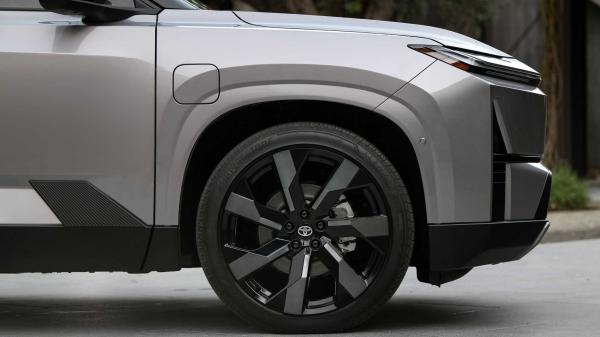
This SUV Is A New Benchmark For Affordable Luxury
This new futuristic SUV sets a new standard for entry-level luxury.
On The Road: Calm, Predictable, And Easy
The Highlander Hybrid Doesn’t Aim To Be Sporty

It aims to be effortless. And it succeeds. If a zippy sports car is your cup of tea, there are plenty of alternatives. But families aren’t chasing lap times. They’re looking for comfort after a long day at work, confidence on a rainy school run and a cabin quiet enough that conversations don’t require raised voices.
Independent testers have praised exactly those qualities. Edmunds commended the Highlander Hybrid’s composed ride and well-insulated cabin, while Car and Driver noted that its smooth power delivery and predictable handling make it particularly easy to live with day after day. Those attributes rarely dominate marketing brochures, yet they’re often the ones owners appreciate most after several years behind the wheel.

It is no coincidence that search-interest data shows “Highlander Hybrid” remains the most searched Highlander configuration in the United States, consistently outperforming trims such as the XLE and Limited. This sustained interest comes despite overall Highlander sales declining following the introduction of the Grand Highlander in 2023. Rather than signaling reduced interest in Toyota’s hybrid technology, the shift reflects changing buyer preferences toward the larger, more spacious Grand Highlander, which has quickly become one of Toyota’s fastest-growing family SUVs.
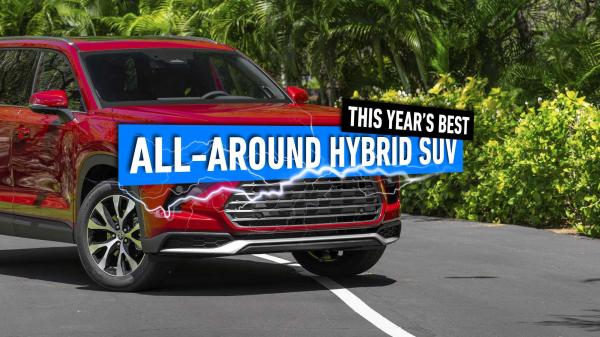
The Perfect All-Round Hybrid SUV You Can Buy In 2025
This vehicle has three rows of seats, can carry a whole lot of cargo, returns impressive fuel efficiency, and doesn’t cost a bomb to own.
The Highlander Hybrid Isn’t Perfect
Trade-Offs Still Exist

No SUV is flawless. The Highlander Hybrid’s third row remains tight for adults on longer trips, and its performance won’t match some turbocharged rivals. Competitors like the Kia Telluride and Hyundai Palisade offer more eye-catching interiors, while the Mazda CX-90 brings sharper styling and stronger performance. Yet those rivals often prioritize showroom appeal over long-term dependability. The Highlander Hybrid takes a different approach. Its cabin may be more conservative, but the layout is intuitive, the controls are easy to understand, and Toyota hasn’t sacrificed safety in the process.
Every Highlander Hybrid comes equipped with Toyota Safety Sense 2.5+, which includes adaptive cruise control, lane departure alert with steering assist, automatic emergency braking with pedestrian detection, road sign assist, and automatic high beams as standard. Rather than overwhelming drivers with technology, Toyota has focused on making these systems work quietly in the background, assisting only when needed.

The Highlander Hybrid has also earned strong crash-test ratings over the years, further reinforcing its family-first credentials. For many buyers, that peace of mind is worth far more than an extra few horsepower or a larger touchscreen. And, as the evergreen Sir Mick Jagger at 80 would probably tell you, first impressions don’t always lead to lasting satisfaction.
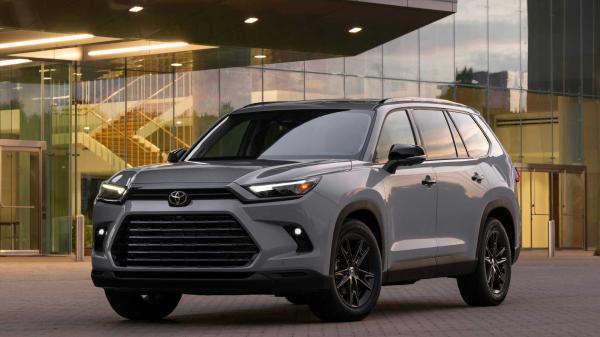
Every Toyota 7-Seater SUV You Can Buy Today
Toyota’s rugged and roomy SUVs deliver modern comfort, convenience, tech, and more. Here are the ones that seat seven.
Why The Highlander Hybrid Makes So Much Sense Long-Term
The SUV That Gets Out Of Your Way

The Highlander Hybrid doesn’t try to wow buyers with flash. Instead, it focuses on something that becomes valuable the longer you own it. Consistency. Its hybrid system has already proven itself across millions of Toyota vehicles worldwide. That matters because most families don’t buy an SUV for the next twelve months. They buy it for the next decade. Strong reliability ratings, proven hybrid engineering, excellent fuel economy, and straightforward usability all contribute to an ownership experience designed to minimize stress.
There are no gimmicks here. No unnecessary fluff for the sake of appearing futuristic. Just thoughtful engineering that works exactly as intended. Consumer Reports perhaps sums it up best when describing the Highlander Hybrid as: “A comfortable, functional and likely reliable choice among midsize three-row SUVs.”
The Highlander Hybrid Continues To Resonate With Buyers
While some rivals chase increasingly complex technology, Toyota has remained focused on the fundamentals: comfort, dependability, efficiency, and ease of ownership. According to iSeeCars, Toyota is among the brands most likely to produce vehicles capable of reaching 250,000 miles or more. The Highlander Hybrid reflects that philosophy, offering families lasting peace of mind. Sometimes, the smartest family SUV isn’t the flashiest—it’s the one that quietly starts every morning and simply gets the job done.
Sources: Toyota, J.D. Power, iSeeCars, Autobody News, Edmunds, Kelley Blue Book

Related posts


Latest Post


No Comments