The EV That Leaves Surprisingly Little To Complain About
7 minutes reading
Monday, 27 Jul 2026 16:00 0 73 autotech
The U.S. electric car market in 2026 has entered a notable cooling phase, marked by a stabilization of new EV market share at roughly six percent. According to Cox Automotive‘s analysis, this is a significant downswing compared to its 10.6 percent peak in late 2025. This deceleration in mainstream consumer demand stems from several colliding factors, most notably the sunsetting of federal clean vehicle tax credits, persistent gaps in public charging infrastructure, and a broader consumer pivot toward conventional hybrids.
Furthermore, strict regulatory battery sourcing mandates and rising production tariffs have kept initial manufacturer costs high. Despite these headwinds, EVs remain an exceptionally compelling option for premium buyers who prioritize ultimate energy efficiency. Because automakers have significantly improved thermal management and aerodynamics, real-world highway range and fast-charging capabilities are better than ever. For those willing to absorb the higher upfront MSRPs, the combination of unmatched thermal efficiency, reduced operating and maintenance costs, and a progressively smoother daily driving experience still provides an excellent long-term ownership proposition.
While first-year ownership satisfaction has actually hit record highs for those who embrace the technology, American electric vehicle owners still voice a distinct set of grievances regarding daily usability. The most widespread complaints center around software and electronic glitches. New EV owners frequently report troublesome infotainment setups, failed over-the-air updates, and laggy smartphone apps that fail to maintain a reliable connection to the vehicle. Additionally, despite notable expansions in public charging access, infrastructure anxiety remains a core frustration.
There remains a common issue of broken public chargers, confusing payment interfaces, and sluggish charging speeds that fail to meet advertised peak rates. Finally, practical and climate-related limitations continue to trigger buyer’s remorse. Drivers in colder regions face severe winter range degradation, sometimes losing up to 32 percent of their driving range in freezing temperatures. EV truck owners frequently complain that towing heavy loads cuts their battery range straight in half, severely compromising the utility of electric pickups.
Nissan’s Pragmatic American EV Strategy
2026 Nissan LeafTopSpeed | Michael Frank
Nissan’s approach to electrification in the U.S. targets sensible and value-oriented commuters. Tech-conscious suburban buyers looking for a straightforward, fuss-free transition away from internal combustion engines are also a key demographic. Its pricing strategy relies heavily on affordability, aiming to undercut premium competitors by positioning its electric lineup as accessible entry points into the EV segment. Nissan frequently takes advantage of aggressive regional leasing incentives to counteract the loss of some federal clean vehicle tax credits.
However, according to the company’s Q1 2026 U.S. sales report, this strategy has faced severe headwinds. While the brand’s conventional internal combustion SUVs and trucks saw healthy retail momentum, its electric vehicles performed exceptionally poorly, suffering a steep decline in volume as consumer interest sharply dropped. One of its primary, long-standing electric options plunged by over 70 percent year-over-year to just 668 examples, and its newer flagship electric crossover achieved a mere fraction of its prior-year volume.
Nissan’s Intelligent New Take On The Leaf
TopSpeed | Michael Frank
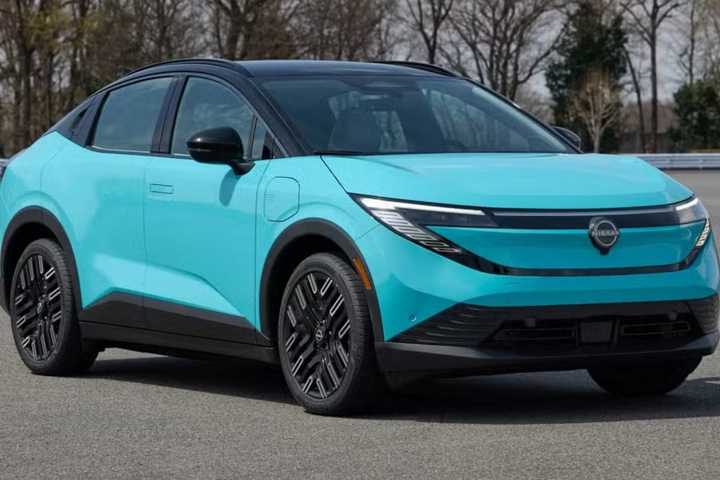
The 2026 Nissan Leaf anchors the brand’s electrification strategy as its foundational, high-volume entry point, filling a vital slot just below the larger Ariya SUV. Fully redesigned for 2026, the model shifts from its traditional compact hatchback shape into an aerodynamically optimized subcompact crossover. This signals a modern and highly competitive approach to budget-friendly electric mobility. With a starting MSRP of just under $30,000 for the base trim, it aggressively addresses modern entry-level electrification by serving as one of the most affordable brand-new EVs available in the U.S.
Nissan pairs this value with crucial, contemporary upgrades, including a liquid-cooled battery pack for vastly superior winter thermal management, drastically increased driving range, and native compatibility with the North American Charging Standard. For Nissan, the Leaf acts as a defensive volume play designed to retain loyal, budget-conscious buyers and attract first-time EV adopters at a time when rising segment prices risk alienating mainstream consumers.
Performance Remains Accessible And Modest
Nissan
The front-wheel-drive powertrain of the 2026 Nissan Leaf features a permanent-magnet synchronous electric motor that generates 214 horsepower and 261 pound-feet of torque. This is able to achieve a 0 to 60 MPH acceleration time of 6.9 seconds before hitting an electronically governed top speed of 102 MPH.
Nissan does not recommend towing with the Leaf. While the rear subframe can support aftermarket bolt-on receivers for lightweight bike racks or cargo trays, the factory warranty does not cover trailer towing.
Great Energy Consumption Estimates
2026 Nissan Leaf side shot driving through cityNissan
The 2026 Nissan Leaf is available with three wheel options, all of which yield different energy consumption estimates. Based on the EPA’s testing, Leaf models with the base 18-inch steel wheels return a combined 28 kWh per 100 miles and 303 miles of range on a single charge. Your annual electricity cost likely comes in at $650. Upgrading to 18-inch alloys worsens consumption to 30 kWh per 100 miles and cuts range to 288 miles. This will add $50 to your annual charging budget. The flagship’s 19-inch wheel increases consumption to 33 kWh per 100 miles and reduces range to 259 miles. This will cost $750 to keep charged throughout the year.
The Leaf’s Troublesome Market Launch
Nissan
The 2026 Nissan Leaf is a new take on the brand’s hallmark budget EV, but it hasn’t been the best reboot. J.D. Power gives the newcomer a respectable 72/100 consumer-verified overall score, including 76/100 for quality and reliability and 85/100 for the dealership experience. Unfortunately, it only gets 57/100 for the driving experience and 67/100 for resale.
iSeeCars gives the Leaf a 7/10 score for reliability, indicating that it will cover an average lifespan of just nine years or 69,862 miles. In terms of value retention, the publication suggests that it will lose $17,706 or 62.9 percent of its value after five years of ownership. Being a niche newcomer, the 2026 Leaf only has three review submissions on the Edmunds consumer review portal, resulting in a 4.3/5 overall score. Key strengths include its visual presence, driving experience, and interior, but there have been some concerns regarding build quality.
Three Well-Balanced Trims
2026 Nissan Leaf dashNissan
The entry-level S+, priced at $29,990, serves as the modern tech-forward baseline for the lineup, focusing heavily on digital real estate and seamless connectivity. The dashboard plays host to a pair of 12.3-inch widescreen displays. One acts as a configurable instrument cluster and the other as a highly responsive infotainment touchscreen. The system includes standard wireless Apple CarPlay and Android Auto integration, two front USB-C ports, and a standard four-speaker audio system. In terms of comfort and convenience, the S+ comes equipped with an energy-efficient cabin heat pump to preserve winter range, cloth-trimmed six-way manually adjustable front seats, automatic climate control with rear foot ducting, and the convenience of ProPILOT Assist alongside an approach-unlock and walk-away auto-locking keyless entry system.
TopSpeed | Michael Frank
Stepping up to the mid-tier SV+ trim costs $34,230, but adds the benefit of a more premium and connected cabin ambiance. The digital landscape expands via dual 14.3-inch widescreen displays that feature Google built-in, natively integrating Google Maps, Google Assistant, and Google Play directly into the vehicle’s ecosystem. Charging convenience is upgraded with a front wireless phone charging pad and the addition of two rear charge-only USB-C ports, while the audio experience expands to a clearer six-speaker layout. Comfort sees a major lift with the introduction of heated TailorFit synthetic leather front seats, a leather-wrapped steering wheel, a sunglasses holder, and steering-wheel-mounted regenerative braking paddles that give the driver manual control over energy recuperation.
Nissan
The range-topping Platinum+ trim for $38,990 delivers a more luxurious experience. The defining interior centerpiece is a segment-first electrically dimming panoramic roof that alters its transparency from clear to near-opaque at the touch of a button, entirely eliminating the need for a physical sunshade. There’s also a class-exclusive 10-speaker Bose Personal Plus Audio System, which features innovative speakers embedded into the front headrests to isolate navigation instructions or phone calls directly to the driver. The luxury treatment is rounded out by TailorFit upholstery across both the front and rear rows, heated rear seats, a heated steering wheel, automatic rain-sensing windshield wipers, customizable 64-color ambient interior lighting, and two household 120-volt power outlets capable of delivering up to 1,500 watts of Vehicle-to-Load electricity for external devices.
Base Trim Engine
Electric
Base Trim Transmission
Single-speed Automatic
Base Trim Drivetrain
Front-Wheel Drive
Base Trim Horsepower
174 hp
Base Trim Torque
254 lb-ft
Base Trim Battery Type
lithium-ion
Make
Nissan
Model
Leaf
Segment
Compact Hatchback
Sources: Nissan, Cox Automotive, The EPA, J.D. Power, iSeeCars, and Edmunds.












No Comments