
The Toyota Crown Signia Loyal Highlander Owners Are Eyeing Next
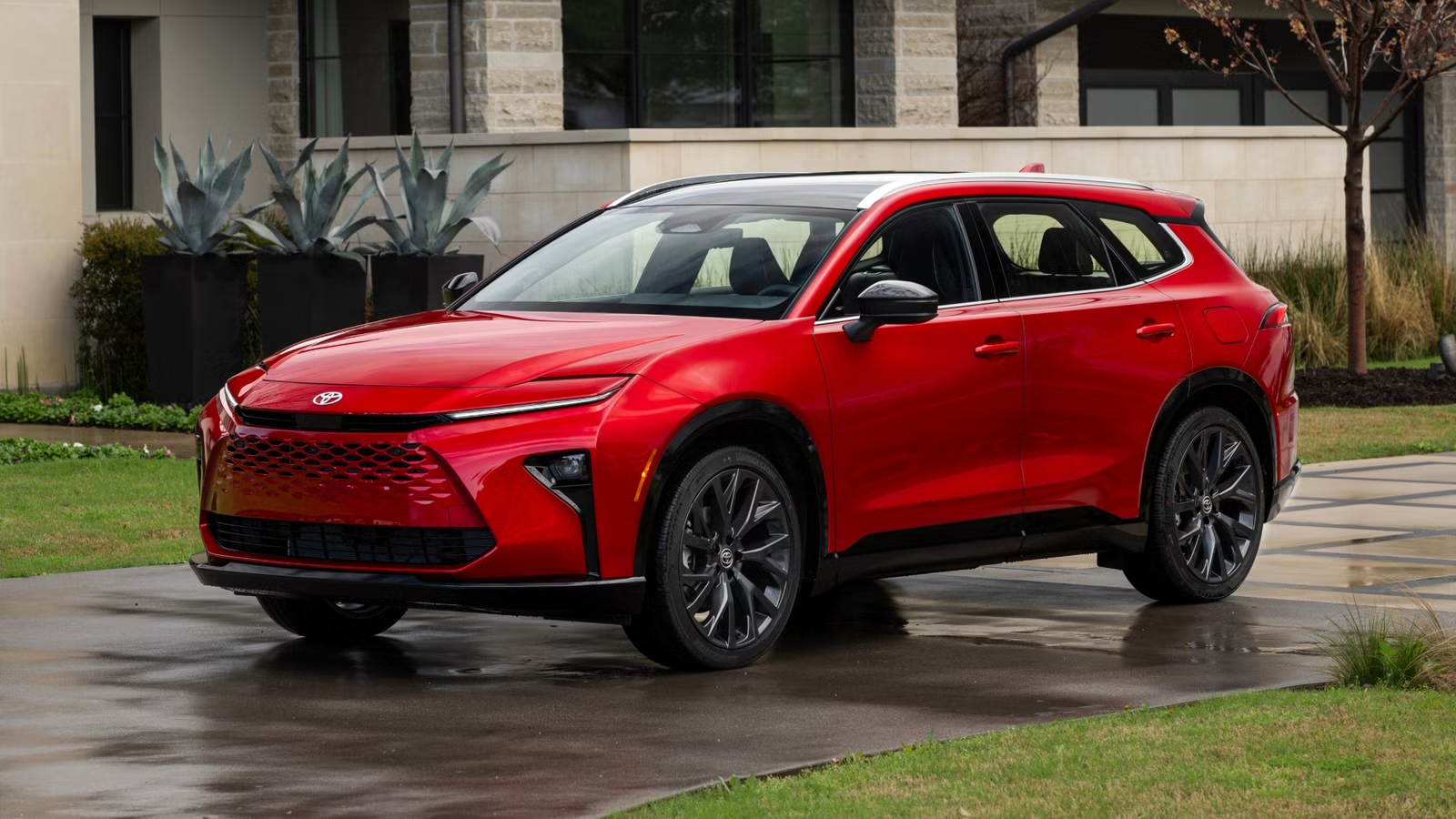
Your next Toyota could feel more expensive while costing less than another Highlander Hybrid, but there is a catch you need to settle first. The Crown Signia is a two-row, five-seat crossover with wagon proportions, while the Highlander gives you three rows and seating for seven or eight. That makes the Signia a potential upgrade in cabin refinement and efficiency, accompanied by a clear reduction in passenger flexibility.

If your Highlander’s third row spends most of its life folded, that exchange deserves consideration. The Signia offers a familiar Toyota hybrid experience wrapped in a more upscale interior, but the smarter purchase depends on what you actually carry.
The Highlander Hybrid Sets A High Bar For Its Replacement
Seven Or Eight Seats: Why The Configuration Choice Matters More Than You Think
The Highlander Hybrid makes a persuasive ownership case because it handles several jobs without demanding much adjustment from you. It can carry the family during the week, accommodate extra passengers when necessary, and deliver the efficiency you expect from a Toyota hybrid. For 2026, the Hybrid XLE combines a 2.5-liter four-cylinder hybrid system producing 243 horsepower with standard AWD and an EPA rating of 34 mpg combined.

Its seating configuration needs attention when you shop. Second-row captain’s chairs give you seven seats, while an available bench increases capacity to eight on the Hybrid XLE. If your current Highlander regularly carries grandparents, visiting relatives, or your children’s friends, those extra seats remain a meaningful advantage.
An Empty Third Row Changes The Shopping List

A vehicle that suited your household five years ago might offer more passenger capacity than you need today. If your children now drive themselves, or if most trips involve only you and one passenger, another three-row vehicle becomes a choice rather than a requirement.
That does not make the Highlander obsolete for your needs. Its folded third row creates useful luggage space, and occasional seating can still justify keeping it. However, an unused third row gives you permission to consider where a different Toyota puts its priorities and whether you would appreciate those differences every day.
The Crown Signia Offers A Different Kind Of Toyota Upgrade
Its Cabin Makes The Premium Case


The 2026 Crown Signia XLE makes its strongest argument through equipment you would usually associate with a higher trim. Leather-trimmed seating, heated and ventilated front seats, heated rear outboard seats, and a heated leather-trimmed steering wheel are standard. Its 12.3-inch touchscreen also gives you a larger standard display than the Highlander Hybrid XLE’s eight-inch unit.
The design reinforces that equipment advantage. Bronze-colored accents, stitched upholstery, and a horizontally arranged dashboard give the Signia a more deliberate premium identity. The Highlander XLE’s SofTex upholstery and practical cabin remain appealing, but the Signia puts more of its purchase price into the surfaces and features surrounding its five occupants.
You should still judge the cabin with your hands rather than its feature list. Sit in the driver’s seat, operate the climate controls, and check the materials around your knees and elbows. An attractive dashboard only earns its premium positioning if the seating and controls work comfortably for you.
Its Lower, Wagon-Like Shape Changes The Drive

The Signia’s long roof and lower stance suggest a wagon more than a conventional family SUV. Toyota markets it as a crossover, but its proportions explain why it appeals to buyers who want utility without the appearance of another tall three-row vehicle. Both Toyotas use unibody construction; the Highlander is not a truck-based SUV.
Edmunds lists approximately 4,210 pounds for the Signia XLE and 4,515 pounds for the Highlander Hybrid XLE, though weight alone cannot establish which vehicle rides better. Suspension tuning, tires, and road surfaces all influence the result.
Independent feedback supports the Signia’s highway-comfort pitch with qualifications. The Automobile Protection Association praised its suppression of wind and road noise, while a Signia Limited owner describing a Detroit-to-Florida trip praised the ride but wanted more front-seat cushioning and adjustment for taller occupants. Those observations give you something specific to test rather than a blanket promise of luxury.
Five Seats Are The Trade-Off You Cannot Option Away
The Cargo Numbers Tell Two Different Stories

With its rear seats upright, the Crown Signia XLE provides 25.8 cubic feet of cargo space. The Highlander has 16.0 cubic feet behind an upright third row, so the Signia gives you more luggage room in that particular comparison. However, the Highlander is also accommodating two or three additional passengers.
Fold the Highlander’s third row, and its cargo capacity expands to 48.4 cubic feet behind the second row. That is substantially more than the Signia offers while keeping its five seats available. If you currently use your Highlander as a two-row vehicle with a large luggage compartment, the Signia is a reduction in cargo volume. Maximum capacity tells a similar story. The Signia XLE offers up to 68.8 cubic feet with its rear seats folded, compared with 84.3 cubic feet in the Highlander with both rear rows down.
The Highlander keeps the stronger case when passenger numbers fluctuate, or you regularly travel with substantial gear. It also offers up to 3,500 pounds of towing capacity, versus 2,700 pounds for the Signia. Losing that extra 800 pounds matters if your existing trailer already approaches the Signia’s limit.
The Price And Fuel Math Favor A Careful Comparison
The XLEs Are Close In Price, But They Buy Different Things

Toyota’s original 2026 newsroom announcements listed the Signia XLE at $44,390 and the Highlander Hybrid XLE at $47,020 before delivery charges. Current Toyota model pages show higher base MSRPs: $44,690 for the Signia XLE and $48,020 for the Highlander Hybrid XLE. Using those current figures, the Signia starts $3,330 lower before delivery, options, taxes, and fees.
That reverses the assumption that a more upscale Toyota necessarily requires spending more. The Highlander’s price buys additional passenger and cargo capacity, while the Signia’s standard equipment concentrates on comfort for fewer occupants. Neither approach is inherently better value until you decide which capabilities you use.
The Signia Limited starts at $49,090 before delivery, a $4,400 increase over its XLE. It adds equipment including a fixed panoramic glass roof, 11-speaker JBL audio, and 21-inch wheels. The XLE already includes the seating features central to the upgrade argument, so the Limited deserves a separate justification rather than an automatic recommendation.
Take Both Toyotas On The Same Test Route

Choose the Crown Signia if five seats are sufficient, its luggage area handles your normal load, and the cabin improvements are features you will appreciate regularly. Choose the Highlander Hybrid if you use the third row, need its larger cargo area, or depend on its higher towing limit. Keeping that capability can be the more satisfying purchase even when the Signia feels more upscale.
Drive both over the same rough pavement and highway stretch, then check visibility while parking and changing lanes. Bring your regular passengers and luggage, and ask the dealer to identify each vehicle’s seating configuration, standard equipment, and complete out-the-door price. The Signia earns the switch when it fits your life as comfortably as it fits your idea of an upgrade.
Sources: Toyota, Lexus, Edmunds, Car and Driver, Kelley Blue Book

Related posts
Latest Post


No Comments