
The Cruiser Owners Are Surprisingly Reluctant To Sell
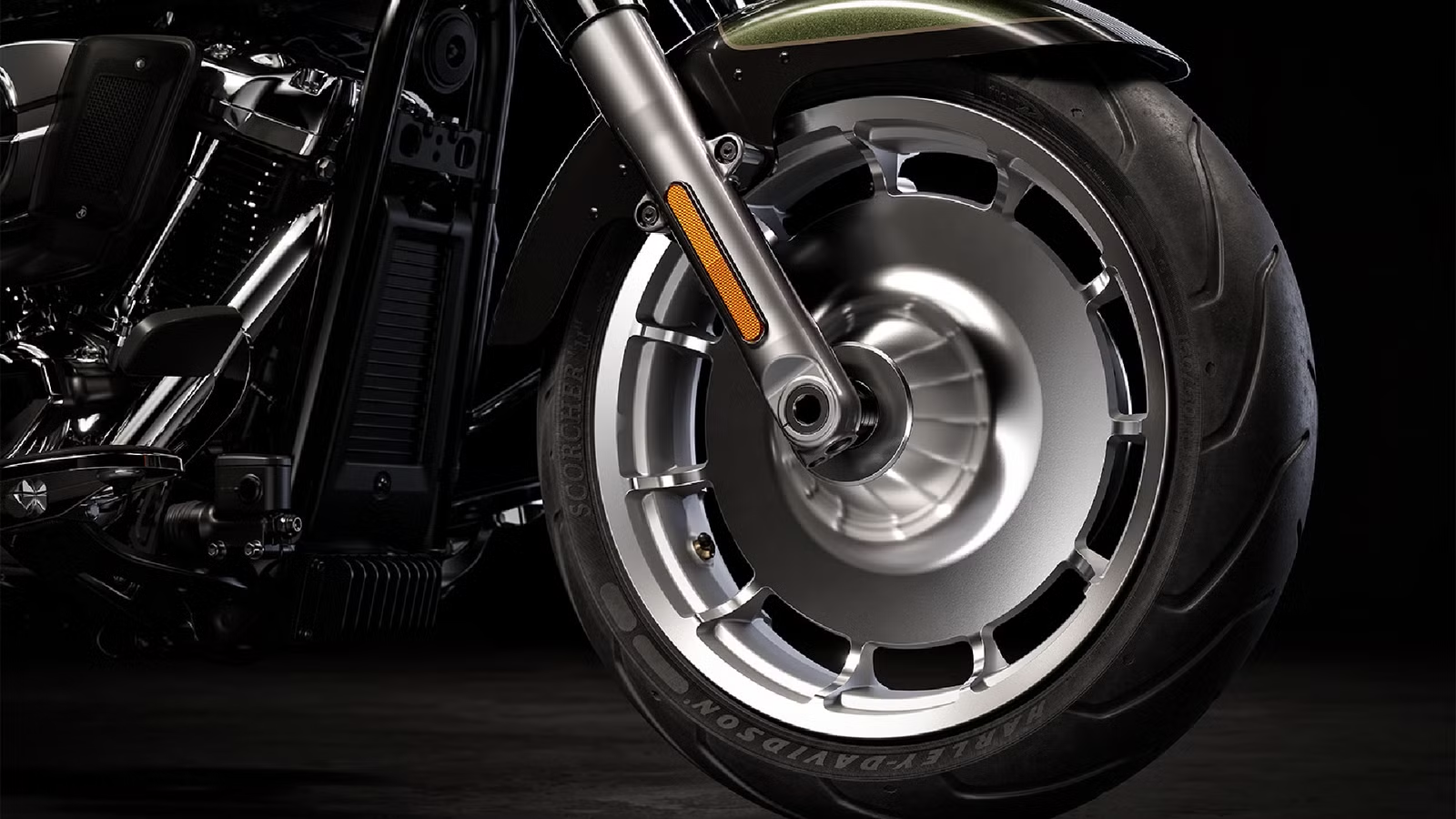
There’s a ritual that happens with certain motorcycles, and it has nothing to do with riding them. It’s the walk back after you’ve already shut the light off — one more look before the garage door comes down, because something about the shape of the thing in the shadows is worth a second glance. For a certain kind of owner, that bike stops being a means of transportation somewhere along the way and becomes something closer to a piece of furniture you’re proud to own, or a photograph you never took down.

Most motorcycles don’t earn that treatment. They get ridden hard for a couple of seasons, and are traded in when the next generation shows up with a few more horsepower and a shinier dash, ultimately being cycled back into the used market like clockwork. But there’s one cruiser motorcycle that barely surfaces on the used market at all, and the reason has less to do with what it does on the road and more to do with what it means once it’s sitting still.
Sport Bikes Chase The Next Model — Cruiser Owners Don’t
Depreciation in this industry usually follows a predictable script. A new generation model drops, the electronics get an update, the styling shifts enough to make last year’s bike look dated, and suddenly owners start chasing the upgrade. Sport bikes are the worst at it. A Japanese liter-bike can lose a huge chunk of its value in the first couple of years simply because the next generation makes it look and feel obsolete by comparison. The bike didn’t get worse. It just stopped being new.
Harley Cruisers Hold Value Like Trucks, Not Motorcycles


Cruisers, and Harley-Davidson’s in particular, tend not to play by that script. Owners hang onto them for a decade or more, not because they’re stuck, but because there was never a compelling reason to leave. Industry depreciation data backs this up in a fairly stark way: Harley cruisers routinely retain somewhere around 60 to 70 percent of their value after five years, a curve that looks more like a pickup truck’s than a motorcycle’s. Compare that to a small-displacement sport bike, which can shed more than half its value in the same window, and the gap starts to explain why these cruiser bikes don’t churn through the used market the way others do.
The Fat Boy Has Aged Like Fine Wine

The easiest example to describe this phenomenon is the Harley-Davidson Fat Boy. It first showed up in a Harley showroom in 1990 with a silhouette that was already fully formed — the solid disc wheels, the thick front end, the unmistakable stance that looked like nothing else on the road — and simply became a permanent part of the decor. Harley has spent the thirty-plus years since then refining what’s underneath that silhouette without ever touching the parts that make it recognizable from two blocks away.
Three Engine Generations Later, It Still Looks Exactly The Same

To be able to span more than three decades of motorcycling culture, the Fat Boy has a quiet trick that keeps it relevant. It’s been powered by the Evolution engine, then the Twin Cam, and now the Milwaukee-Eight — three completely different generations of Harley powertrain spanning three completely different eras of motorcycling. Yet the bike never stopped looking like itself through any of it.
A 1990 Fat Boy and a 2026 Fat Boy are separated by more than three decades of engineering, yet you’d know both of them at a glance from across a parking lot. That kind of visual continuity is rare, and it’s a big part of why owning one never starts to feel like owning last year’s model. In short, a Fat Boy is not just a motorcycle; it’s the type that people think of when they look up the word ‘motorcycle’ in a dictionary — timeless, spanning decades and maintaining visual continuity through generations of motorcyclists.
What Keeps The Fat Boy Running Is Part Of Why It Stays

The current Fat Boy runs the Milwaukee-Eight 117, a 1,923cc V-twin making a claimed 103 horsepower but, more relevantly, 126 pound-feet of torque delivered as low as 3,000 rpm. That number matters more than the horsepower figure ever will on a bike like this, because the whole point of the Fat Boy isn’t chasing the redline. Instead, it’s rolling off idle with an enormous, unhurried shove that never asks the engine to work particularly hard to produce it.
That low-stress delivery is exactly the kind of thing that ages well. An engine that spends its life loafing along under peak torque rather than screaming toward its limiter tends to rack up miles without drama, and a motorcycle that isn’t constantly being pushed to its edge doesn’t develop the mechanical resentment that makes owners start shopping for a replacement. The Milwaukee-Eight isn’t trying to impress anyone with a spec sheet. It’s just quietly doing the same job, the same easy way, for as long as the owner wants to keep it.
A Motorcycle Built To Be Kept, Not Just Bought

At $22,599, the Fat Boy isn’t priced like an entry point into cruiser ownership, and Harley doesn’t seem to be selling it as one. It reads more like a long-term purchase. It is the kind of number that makes more sense when you’re not planning on trading the bike in three years down the line, but instead treating it the way someone treats a first house rather than a starter apartment.
The Trade-In Math Doesn’t Add Up

Run the numbers on what that purchase actually costs over time and the case for holding onto it gets stronger. A Harley-Davidson cruiser bought today for around $22,000 to $25,000 is likely still worth somewhere in the $15,000 to $18,000 range five years out, while a comparably priced sport bike can lose more than half its sticker price in that same stretch. That means, spend the same money on a sport bike, and you are left with about $11,000 after five years. Ultimately, trading in a Fat Boy early just doesn’t pencil out the way it does with most other motorcycles. The depreciation curve after the first couple of years is flat enough that there’s rarely a financial reason pushing an owner toward the door.
A Bike With No Performance Successor Can Never Be Made Obsolete

Eventually, math stops being the point at all. A cruiser like the Fat Boy was never built to chase a lap time or a quarter-mile number, which means there’s no faster, sharper successor waiting in the wings to make this year’s bike feel behind the curve. It doesn’t get out-performed into obsolescence, because performance was never really the argument. It becomes part of the weekend, part of the garage, part of the version of yourself that exists on two wheels, and none of that gets old the way a spec sheet does.
A Club, Not Just A Customer Base

Part of what keeps owners in the fold is that buying a Fat Boy rarely feels like a solo transaction. Harley Owners Group chapters turn a purchase into a calendar full of rides and rallies, and it’s common enough for these bikes to get handed down rather than sold. A father’s Fat Boy becomes a son’s first big cruiser, the title changing hands but the bike never actually leaving the family. That kind of culture doesn’t exist around most motorcycles. It’s one more reason these bikes tend to stay put.
Sources: Harley-Davidson

Related posts

Latest Post


No Comments