
The Chinese Motorcycle That Is Getting Too Good To Ignore
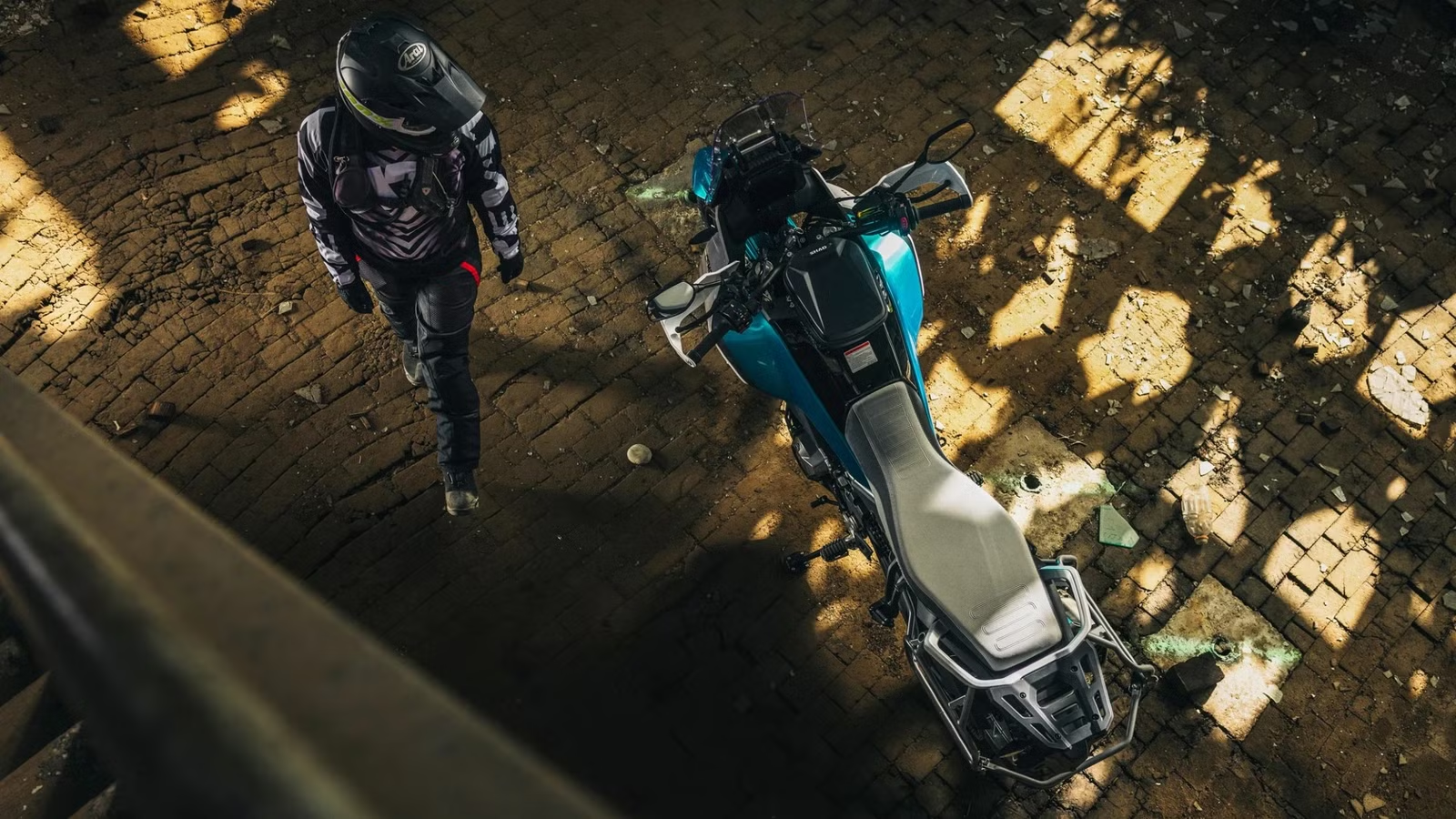
China has long manufactured credible components for some of the world’s most renowned brands. Yet, its motorcycles have never shared that reputation. Unlike renowned brands, Chinese motorcycles have struggled to establish a global presence. They have mostly been associated with affordable alternatives, which for years led to the ‘assumption’ that they were the opposite of dependable, reliable, and long-lasting.

However, this perception has changed of late, with years of research showing what Chinese motorcycles are capable of. Their products are rapidly catching up to global standards of engineering, design, technology, and reliability. And with the unrivaled pricing right up their sleeve, they are producing some of the best motorcycles that are difficult to overlook.
Getting More Motorcycle For Your Money Is Easier Via China
The reputation Chinese motorcycles have built stems from early relationships they established with brands worldwide. These ‘legacy’ brands used Chinese production facilities to cut manufacturing costs for small and mid-sized engines. Meanwhile, Chinese brands used that knowledge to raise their own standards.

A few examples can be seen in QJ Motors’ collaboration with Harley-Davidson, which produced the X350 and X500. Loncin’s long-standing partnership with BMW introduced Chinese craftsmanship worldwide through the parallel-twins powering the F900 series, among others. With the blueprint in hand, Chinese companies applied it to their lineups. Not only did they produce bikes of similar quality, but they completely undercut them on price.

While many options exist now, one that has been growing fast globally is CFMoto. Their partnership with KTM has given them access to world-class manufacturing standards and European DNA (through Kiska design), granting people premium credentials at a slashed price. With an in-house-developed parallel twin mixed with the KTM standards, the entry-level Ibex is a perfect example, and it’s hard to ignore.
The CFMoto Ibex 450 Has More To Offer Than Its Price Suggests

CFMoto introduced the Ibex 450 at EICMA 2023, challenging the entry-level mid-size motorcycles. With a segment slowly gaining pace and competition ripe for disruption, CFMoto targeted the sweet spot to establish its presence. The brand utilized the established parallel-twin architecture from its existing 450 lineups. They also avoided compromising on quality by sourcing premium parts from trusted global suppliers, allowing the Ibex 450 to compete with established segment leaders.
The Price Drop Makes The Bike Even More Enticing

On paper, features like the parallel-twin, fully adjustable suspension, and tubeless cross-spoke wheels make the bike feel like a five-figure middleweight. However, CFMoto launched the motorcycle at a jaw-dropping $6,499 MSRP, cranking up the heat. The deal got even sweeter with a $500 price drop as the 2027 Ibex 450 launched at a slashed price of $5,999. With a proven engine and loaded spec sheet, the motorcycle is completely set to dominate the entry-level adventure segment.
The Ibex 450 Is No Slouch On Paper

One of the Ibex 450’s talking points is its parallel twin. The entry-level adventure bikes usually feature a single cylinder or the traditional 180- or 360-degree firing order. The Chinese motorcycle completely disrupted that by putting in a 270-degree crankshaft. This setup mimics the heavy hitters, providing a similar feel, sound, and response.
The 449.5 cc liquid-cooled engine produces 44 horsepower at 8,500 rpm. With a class-leading 32.5 pound-feet of peak torque at 6,250 rpm, it delivers unmatched pulling power. Unlike its ‘thumper’ rivals, the Ibex 450 delivers punchier mid-range performance, and the distinct spaced-out power delivery gives the rider huge traction on trails.
Defying The Budget Label With Fully Adjustable KYB Suspension

Just as the engine was becoming the crowd-puller, CFMoto added more factors that make the price tag look like an absolute steal. The standout is the KYB suspension. The front features 41mm upside-down KYB forks, providing a generous 7.9 inches of travel. The fully adjustable preload and rebound options make it even sweeter. The rear gets a progressive multi-link setup with a fully adjustable KYB monoshock with similar travel to the front.
The chassis has been engineered to withstand off-road stress. The chromoly steel perimeter chassis’ strategic positioning lowers the center of gravity, which provides exceptional highway stability. Plus, the 8.7-inch ground clearance gives you plenty of clearance to avoid obstacles on rough terrain.

Best of all, CFMoto added a removable bolt-on rear subframe; this noticeable engineering detail lets you replace the part instead of totaling the bike if it’s damaged. The inclusion of tubeless 21-inch front and 18-inch rear tires may seem subtle, but it is a value-for-money feature that punches above its price point.
CFMoto uses Brembo’s trusted Spanish subsidiary, J. Juan Brakes, to handle the stopping duties of the 419-lb motorcycle. The front features a single 320mm floating disc squeezed by a radial-mount, four-piston caliper delivering excellent bite. Out back, a single 240mm disc coupled with a single-piston floating caliper provides optimized overall braking performance.
The Tech Package Is Modern Enough To Entice New Riders

While not extreme, the CFMoto Ibex 450 packs enough punch to stand above competitors in the segment. The motorcycle packs a five-inch TFT display featuring seamless Bluetooth connectivity and the CFMOTO RIDE App. Beyond maps, the app offers anti-theft and security telemetry, data collection and ride analytics, and vehicle health. The Ibex 450 features two active ride modes — Road and Off Road — that adjust the throttle response and the respective electronics accordingly. Bosch’s switchable Dual Channel ABS and Traction Control System are present, too.
The Ibex 450 Takes On Its More Established Rivals Well

Coming to rivals, the twin-cylinder competitors — the KLE500 and NX500 — are the toughest to beat in brand image. The Honda NX500 comes with a street-biased cast-aluminum wheel setup, while the Kawasaki still relies on tube-tire wire-spoke wheels — both also lack the luxury of adjustable front suspension. These trade-offs, coupled with their hefty price tag — $6,599 for the Kawasaki and $6,899 for the Honda — put CFMoto at the top of the priority list.

In comparison, the biggest advantage over the KTM 390 Adventure R and the Himalayan 450 is its extra cylinder. This significantly reduces vibrations at cruising speed, which are more noticeable in the Himalayan. The torque figure also works in CFMoto’s favor, as it kicks in earlier in the rev range than the high-revving KTM, providing the linear punch. Beyond that, the factory-standard tubeless cross-spoke and fully adjustable KYB suspension leave no competition.
Source: CFMoto

Related posts






Latest Post


No Comments