
The Chevy Camaro Returns 3 Years After Discontinuation As A Criminal’s Worst Nightmare
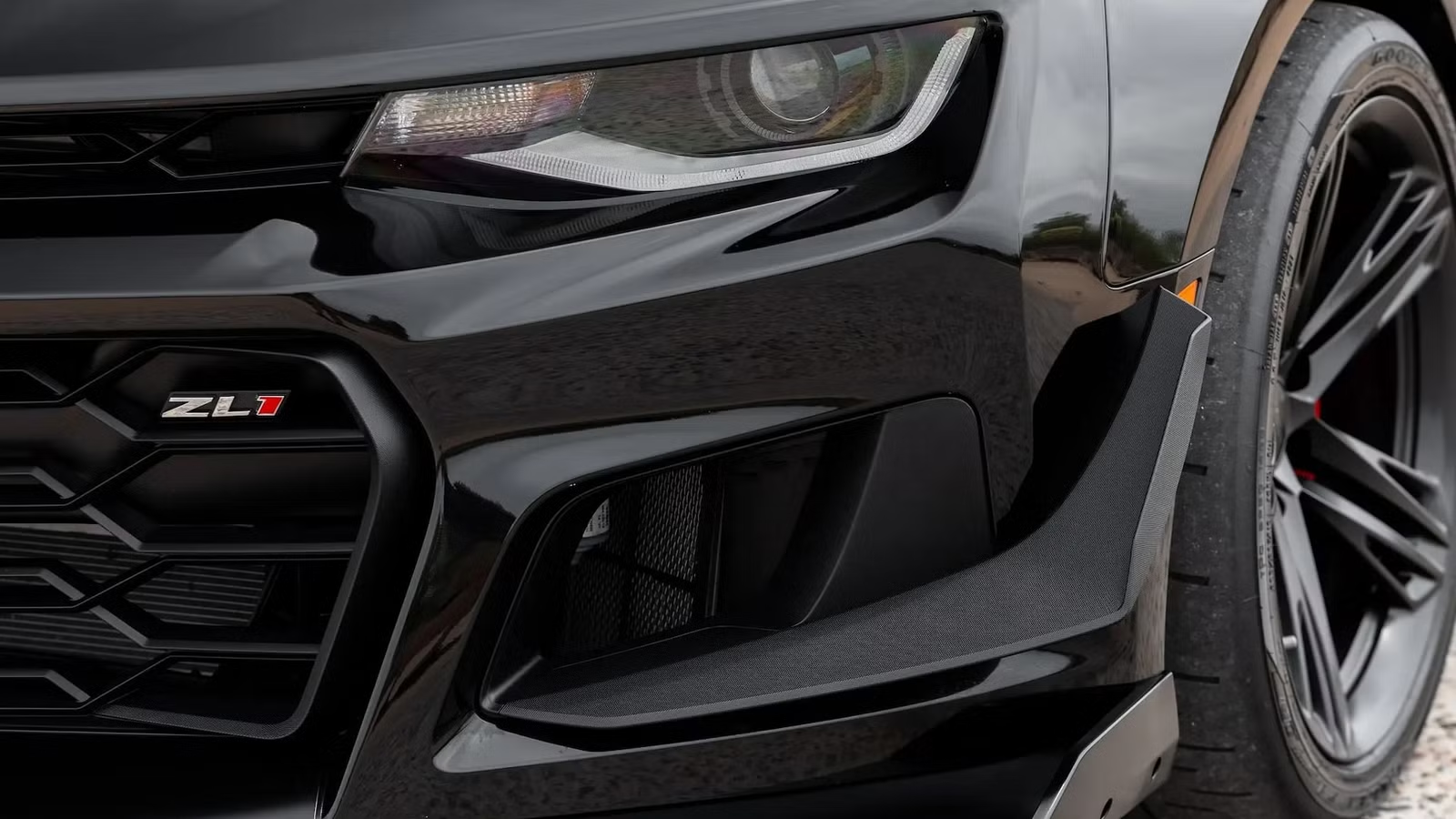
Someone recently got the opportunity to sit behind a brand new Chevrolet Camaro even though the iconic muscle car was discontinued back in 2023. However, you’re more likely to end up in the back seat unless you buy a used model. While many fans wish that the Chevy Camaro would hurry up and make a comeback, this 2026 model is the last one that you want to see in your rearview mirror. And it’s unlikely you could outrun it.
Why Was The Chevy Camaro Discontinued?

The insane decision to kill the Chevy Camaro came in 2023, after General Motors had produced it for 57 years. The brand just let the car fall by the wayside as its biggest rival, the Ford Mustang, continued to grow with modern advancements. The Chevrolet Camaro was largely left unchanged since 2016.
Compared to the Mustang, it felt old and dated from the driver’s perspective, especially in terms of technology. This shouldn’t have been a major issue, since technology takes away from the pure driving sensation and a true connection to the road. But apparently, drivers wanted more features and technology.
On top of that, critics claim that the Camaro wasn’t heavily marketed or advertised like its competitors. Also, people were shifting away from cars in favor of SUVs, and General Motors wanted to experiment by going electric. This created the perfect storm for the Camaro, and sales began to sink.


Sales started to decline at a rapid rate from roughly 80,000 down to the lower tens of thousands. No intervention came to reverse the decline, and it was put out to pasture. Now we are left with the Mustang and Corvette while Mopar fans celebrate the return of the Dodge Challenger.
One Chevy Camaro Just Suited Up For Duty

The California Highway Patrol (CHP) is likely enjoying a significant advantage in pursuits, as it just rolled out the final Chevy Camaro police interceptor. It’s a bit of a mystery as to where the model came from. However, one thing is certain. This patrol car looks incredibly menacing with a classic black and white paint scheme surrounded by patrol lights.
It’s a Chevy Camaro SS 1LE model that’s wearing tons of upgrades. Under the hood, you’ll find the naturally aspirated 6.2-liter LT1 V8 engine with 455 hp and 455 lb-ft of torque. To some folks’ disappointment, it’s paired with the 10-speed automatic transmission instead of the six-speed manual.
The 1LE is a track-focused package with upgraded cooling, unique suspension tuning, wider tires, heavy-duty Brembo brake calipers, an electric limited-slip differential, magnetic ride control, and five-spoke black aluminum wheels. It also has a push bar on the front and a whip antenna, a throwback to vintage police cruisers from the 1970s.
I’d love to know its power-to-weight ratio compared to a standard civilian model. The extra equipment and hardware must add considerable weight. But the plastic bench in the rear could help shave a few pounds off. Its acceleration figures would be impressive to witness in person, provided it isn’t in pursuit.
Chevy Has A History Of Building Police Interceptors

It may feel like all we can do is hope that the Chevy Camaro makes a triumphant return, so new interceptors and track models can be built. But we can also appreciate the history of Chevrolet and police packages while we wait. It all started with General Motors in the 1920s as police departments started ordering specialized options with radio equipment, lighting, and enhanced brakes.
The first Chevy factory-installed police package came out in 1955 with the One-Fifty sedan and Two-Ten station wagon. They were powered by the 265 cubic-inch (4.3-liter) Turbo Fire V8 with 205 hp. The package also included heavy-duty chassis upgrades, beefier brakes, and performance enhancements.
Then the first Chevy Camaro police interceptor was tested by the California Highway Patrol in 1979. A small group of Z28 muscle cars was used during an 18-month test period. They were powered by a 350 cubic-inch (5.7-liter) V8 engine with 175 hp and 270 lb-ft of torque. It had a 308 axle ratio, Nova brakes, and heavy-duty tires. But nine of the test vehicles suffered engine failure, so the CHP transitioned to Ford Mustang models instead.

Next, the third-generation Chevy Camaro got the B4C Special Service Package in 1991, and it lasted until 2002. It paired the unassuming style of a base Camaro with the high-performance hardware of the Z28 and 1LE racing packages, such as anti-roll bars, computer-selectable coil springs, and gas-charged monotube shocks. This cruiser was available with the 5.7-liter V8 LT1 engine that delivers 300 hp and 340 lb-ft of torque, and the LS1 5.7-liter V8 with 350 hp and 365 lb-ft of torque.
Source: General Motors, Hemmings

Related posts

Latest Post


No Comments