The American SUV Nobody Considers That Quietly Beats Every German Rival On Value
9 minutes reading
Tuesday, 4 Aug 2026 20:00 0 56 autotech
Walk into a luxury showroom with three rows of seats on your must-have list, and the shortlist writes itself. BMW X5. Audi Q7. Mercedes-Benz GLE. The badges do the thinking, and you brace for the sticker that rides along with them. Somewhere north of sixty grand you sign, and you tell yourself the roundel, the four rings, or the three-pointed star earned the premium.
Here is the part the badge never advertises. For that money, the German you just drove home starts you on a four-cylinder. A smooth, hard-working four-cylinder, but a four all the same, hauling around two and a half tons of luxury SUV. And there is another three-row luxury SUV parked in a showroom you cruised right past, one that quietly does the thing none of the Germans manage at this price. It gives you a real V6. Four hundred horsepower of it. Standard.
Three-Row German Luxury SUVs Ask A Lot For What They Start With
Front 3/4 shot of 2025 Mercedes-Benz GLE Class SUV in silver parkedMercedes-Benz
The German three-row establishment has earned its reputation, and it charges for it. Prestige is the product as much as the engineering, and the entry price reflects a badge before it reflects a spec sheet. Look closely at what that opening number actually delivers, and the math gets harder to defend.
The Badge Premium Baked Into Every Entry Price
Dynamic shot of the 2026 BMW X5 xDrive50eIsaac Atienza | TopSpeed
The Mercedes-Benz GLE opens at $62,250. The BMW X5 asks $68,300 to start. The Audi Q7 is the value pick of the trio at $62,000, and even that comes with standard quattro all-wheel drive doing some of the heavy lifting on the value pitch. These are strong machines with cabins that feel special and resale that holds. But the entry fee buys you the name on the hood first and the hardware second, and the base hardware is where the story turns.
Base Four-Cylinder Engines In The GLE And Q7
2025 Audi Q7, front 3/4Audi
Slide into a base GLE 300, and you get a 2.0-liter turbocharged four making 255 horsepower. The entry Q7 45 counters with a 2.0-liter four of its own, good for 261 horsepower. Both are refined, both are perfectly fine in traffic, and both ask a small four-cylinder to move a heavy luxury SUV while you pay luxury-SUV money for the privilege. The X5 is the exception that proves the point. Its base xDrive40i runs a genuinely lovely 375-horsepower inline-six, but you pay close to seventy thousand dollars to get it.
The Lincoln Aviator Brings A 400-Horsepower V6 For German Four-Cylinder Money
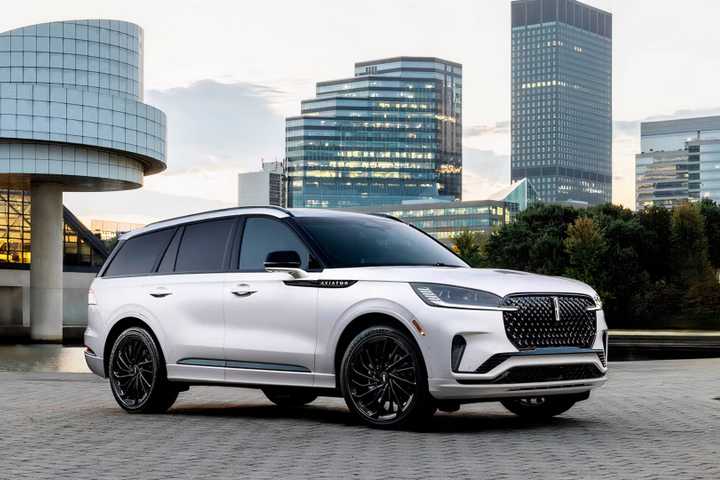
Front 3/4 shot of 2025 Lincoln Aviator in white parkedLincoln
This is where the 2026 Lincoln Aviator walks in and rearranges the table. Lincoln does not carry the badge gravity of Munich or Stuttgart, which is exactly why almost nobody cross-shops it against the Germans. That oversight is the buyer’s loss, because the Aviator answers the segment’s central compromise with the one thing the entry Germans withhold: displacement, cylinders, and power you do not have to option your way up to reach.
One Twin-Turbo V6 Across Every Aviator Trim
Lincoln Aviator Reserve side shotLincoln
Every Aviator, from the base Premiere to the top Black Label, runs the same 3.0-liter twin-turbocharged V6. It makes 400 horsepower and 415 pound-feet of torque through a 10-speed automatic, and it shoves this three-row to 60 mph in under six seconds. There is no engine tier to climb, no performance trim to unlock, no upcharge to reach the good motor. The cheapest Aviator on the lot and the most expensive one share the same heart. That alone sets it apart from a segment built around making you pay more for power.
400 Horsepower Standard Reframes The Power-Per-Dollar Math
Rear 3/4 shot of 2025 Lincoln Aviator in white parkedLincoln
Now line the numbers up. The Aviator Premiere starts at $56,910, or $59,410 with all-wheel drive. That AWD figure undercuts all the Q7 and GLE, yet it hands you 400 horsepower where they hand you 255 and 261. This is the heart of the pitch, and it is worth being precise about it. The Aviator is not merely cheaper, though it usually is. It gives you a large-displacement V6 and all its muscle for the money a German four-cylinder costs, and that flips the segment’s whole value equation on its head. It is also part of a bigger pattern.
The Lincoln Aviator’s Standard Equipment Undercuts German Options Lists
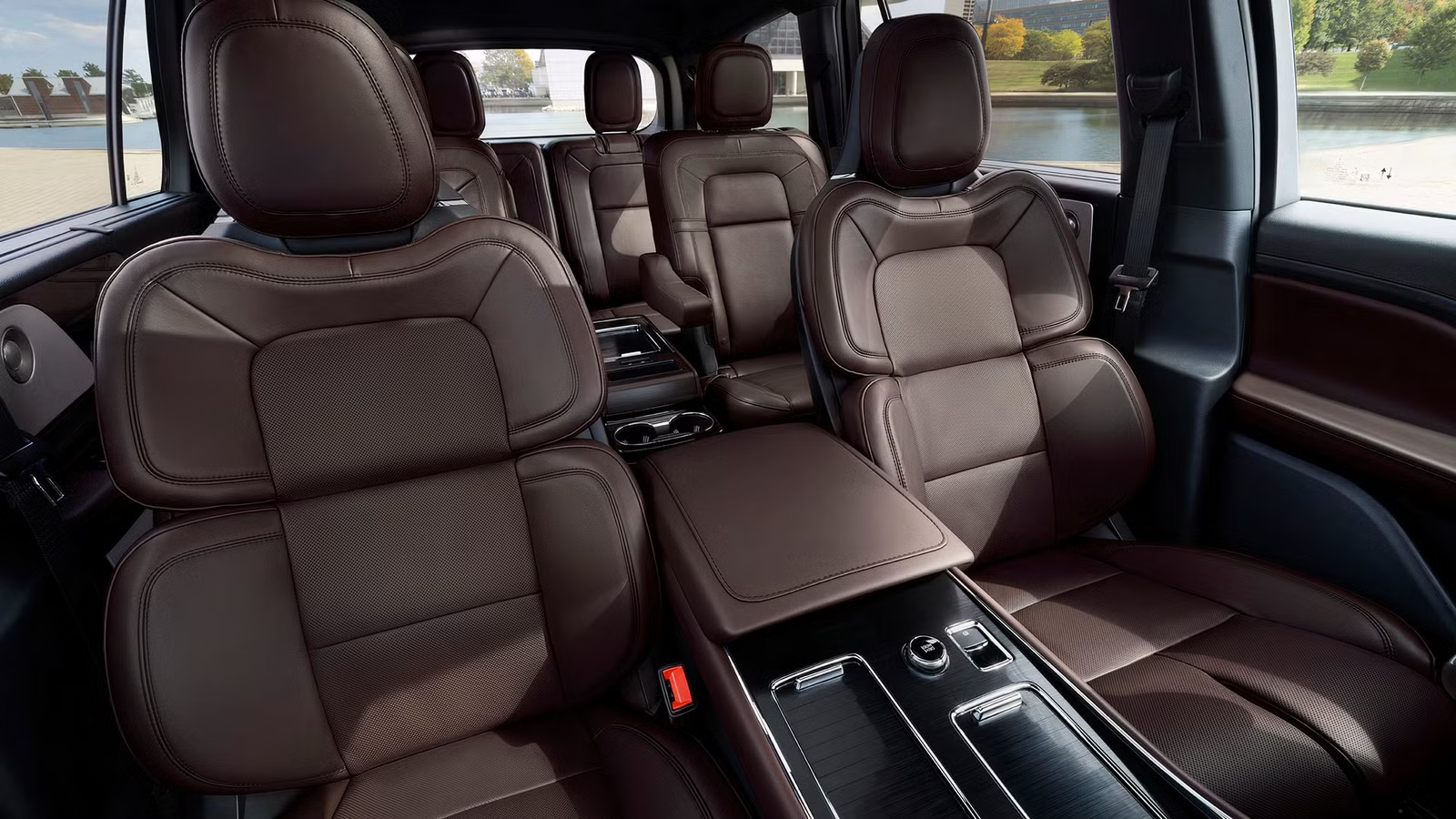
The interior of a 2025 Lincoln AviatorLincoln
The 13.2-inch infotainment of a 2025 Lincoln AviatorLincoln
Power is the headline, but the Aviator’s value case runs deeper than the engine bay. The Germans are masters of the options sheet, where the sticker you saw becomes the sticker you actually pay only after a long climb through packages. Lincoln takes the opposite approach and loads the base car.
Hands-Free BlueCruise And Ventilated Seats Come Standard
The interior of a 2025 Lincoln AviatorLincoln
The entry Premiere arrives with BlueCruise, Lincoln’s hands-free highway driving system, bundled with four years of service. It brings ventilated and heated front seats, a heated steering wheel, adaptive cruise control, a 360-degree camera, wireless charging, a power-folding third row, a 13.2-inch touchscreen, and a 14-speaker Revel audio system—all standard. Ventilated seats alone are a paid option or a package add-on across most of the German field, and hands-free driving assistance from BMW, Mercedes, or Audi tends to arrive bundled into pricier trims or tied to a subscription. On the Aviator, that equipment is simply there on the cheapest car Lincoln sells.
Quiet Flight Cabin Comfort, With Materials That Trail The GLE
Lincoln Aviator Reserve interior shot showing hands-free drivingLincoln
Lincoln built the Aviator around a design idea it calls Quiet Flight, and the cabin delivers on the promise. Road and wind noise stay hushed, the ride leans soft and long-legged, and the whole thing is tuned to glide rather than carve. It is a restful place to cover big miles, and that comfort-first character is the point rather than an accident. It is also where the honest caveats live.
Push into the details and the top-tier Germans still pull ahead on the finer materials, the damped precision of the switchgear, and the sense of occasion a fully specced GLE cabin serves up. The base Aviator leans on convincing simulated leather rather than the real hide, and a driver who wants the X5’s body control and tied-down composure will find the Lincoln too relaxed for the job. The Aviator trades the last ten percent of German polish for space, quiet, and value, and it does that on purpose.
How The Aviator’s Price And Running Costs Stack Up
2025 Mercedes-Benz GLE front 3/4 shotMercedes-Benz
Put the contenders side by side and the value argument stops being a claim and starts being arithmetic. The Aviator does give ground in a couple of places that matter, and an honest tally has to count those too.
Aviator Entry Price Versus The X5, Q7, And GLE
2025 BMW X5 Hybrid rear 3/4 shotBMW
At $56,910 to start, the Aviator opens below every German rival here while carrying the most powerful standard engine of the group. The Q7 45 asks around $62,000 for 261 horsepower. The GLE 300 wants roughly $62,250 for 255 horsepower. The BMW X5 xDrive40i climbs to about $68,300, and only there do you finally out-muscle the Lincoln, at a price nearly thirteen thousand dollars higher and still without the Aviator’s standard seven-seat third row. Measured as power and equipment per dollar at the point of entry, nothing in the segment gets close.
Fuel Economy And Resale Value Are The Real Trade-Offs
A 2023 Lincoln Aviator passing through a curvy roadLincoln
The V6 wants feeding. The Aviator carries an EPA rating of 21 mpg combined and prefers premium fuel, and real-world driving tends to pull that into the high teens, a few mpg behind the thriftier German fours. Resale is the other soft spot. Lincoln badges do not hold their value the way a three-pointed star does, and KBB’s used-market data shows a recent Aviator shedding close to a third of its value inside the first year. The value you bank here is front-loaded. You win big on the way in and give some of it back on the way out, which makes the Aviator a stronger case for a buyer who plans to keep it than for one who flips cars every couple of years.
The Lincoln Aviator Is The Three-Row Luxury Value Play Badge Shoppers Miss
The side fender badge of a 2025 Lincoln Aviator Black LabelLincoln
Be clear-eyed about what the Aviator is not. It does not carry the social currency of a German badge, it will not thrill a keen driver the way an X5 does, it drinks more fuel, and it hands back more of its value over time. If your priority is prestige, cornering bite, or the strongest resale in the driveway, the Germans still earn the check, and nobody should talk you out of one.
But that is a narrow slice of what most three-row buyers actually want. The rest want power, space, a genuine seven-seat third row, and a cabin stocked with the good stuff, all without a five-figure badge tax. On that brief, the Aviator does not just compete. It wins, and it wins on the exact metric the Germans use to justify their prices. Four hundred horsepower, standard, for the money a German four-cylinder costs—that is not a compromise you settle for. It is the smartest value in the class, hiding in a showroom nobody thinks to visit.













No Comments