
The American Motorcycle Owners Never Stop Talking About
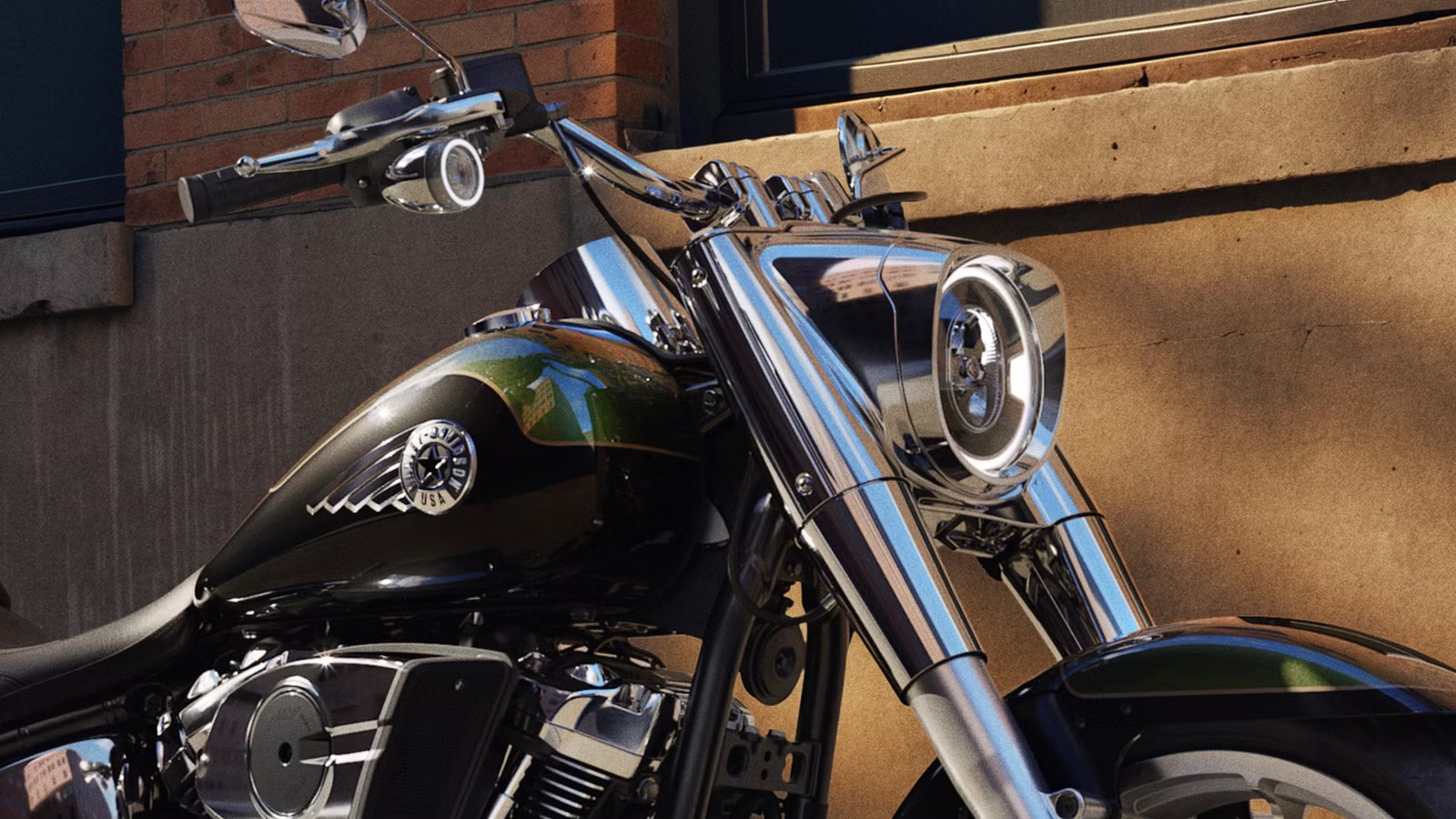
American motorcycles have always carried a little more weight than their specifications suggest. They are machines shaped by highways, small-town streets, long-distance rides, and a culture that treats motorcycles as much as symbols as transportation. Because of this history, manufacturers created motorcycles that valued character, presence, and legacy. American cruisers, as we call them. Some became famous for speed, others for technical prowess, and some gained glory through pop culture. One of these bikes, however, has its owners constantly fawning over it. And no matter where the conversation starts, it eventually ends up here, on this Harley.
The American Motorcycle Has Always Been About More Than Speed
A Cruiser Has Its Own Personality

American motorcycles have developed around a very different idea of what makes a great ride. Where European manufacturers often chased cornering speed and Japanese brands pushed engineering efficiency, American cruisers built their identities around torque, comfort, styling, and the open road. Large V-twins became an important part of that identity, mainly because they delivered the kind of low-revving character that suited long highways.
Bikes became something to settle into rather than something to constantly extract power out of. Big tanks, wide bars, relaxed ergonomics, and substantial engines all contributed to this formula. Now, this does not mean that these bikes can’t handle slightly more interesting roads, far from it. But it builds itself around something different: an experience where you need not pay attention only to the road ahead, but also to the scenery passing by.
Harley-Davidson Helped Define American Motorcycle Culture

Few manufacturers have influenced this culture more than Harley-Davidson. The company has been building motorcycles in Milwaukee since its founding, giving it more than a century to become intertwined with American motorcycling. That history is visible in the motorcycles themselves, sure. But you will also see it in clubs, rallies, customization, clothing, and the enormous community that has grown around the brand.

Harley-Davidson motorcycles have become recognizable pieces of American pop culture. But it’s not all about legacy and tradition. Modern Harleys use electronic fuel injection, sophisticated suspension, rider aids, LED lighting, and increasingly powerful engines while retaining the visual language that the brand is famous for. This is also why Harley owners talk about their bikes with such passion, and one model that dominates those conversations is the Harley-Davidson Fat Boy.
Harley-Davidson Fat Boy: A Cruiser Built Around Its Own Identity
We Can’t Stop Talking About The Fat Boy

The Harley-Davidson Fat Boy arrived in 1990 and, according to Harley’s historical materials, became one of the most iconic models. The original styling was built around elements that were unusual for the period, including its solid-disc wheels and broad front tire. Even today, the Fat Boy isn’t just a large cruiser with a Harley badge. It has its own identity and its own history, and has continued evolving without abandoning a formula that made it famous.
A Milwaukee-Eight Powers The Fat Boy

Sitting at the heart of the Fat Boy is Harley-Davidson’s Milwaukee-Eight 117 Custom engine: a 1,923cc V-twin with a massive 4.075-inch bore and 4.5-inch stroke, and a 10.3:1 compression ratio. Harley claims 103 horsepower at 4,800 rpm and 126 pound-feet of torque at 3,000 rpm. This is a very low-revving engine, and the torque is what matters. The engine is designed around the kind of effortless thrust that makes a big cruiser enjoyable.
There’s a six-speed gearbox transmitting power to the rear wheel via a belt final drive. The soundtrack of this big V-twin comes from the 45-degree firing interval, and it remains central to the bike’s character. The Milwaukee-Eight platform, of course, also brings modern engineering into the mix. You have to remember, though, the Fat Boy isn’t made for chasing the redline. Instead, its appeal lies in massive torque at low rpm, giving you enough thrust to get moving from a stop without any throttle-revving drama.
The Fat Boy’s Classic Shape Hides Modern Control


The bike is built on a mild tubular Softail frame suspended by a 49 mm dual-bending-valve telescopic front fork and a hidden coil-over rear monoshock. This gives the Fat Boy clean Softail styling while still hiding thoroughly modern suspension underneath. Wheelbase measures 65 inches; couple that with a 30-degree rake and a 4.1-inch trail, and you have a motorcycle that loves a straight line.
Contact patches are provided by a 160/60-R18 tire at the front and a massive 240/40-R18 tire at the rear. This forms part of the visual appeal of the Fat Boy, and we will get to that. Braking duties are handled by a 300 mm disc up front and a 292 mm disc at the rear. Lean angle, too, is limited to 25.6 degrees, so you know that the bike doesn’t really love tight bends. The Fat Boy forces you to take the calmer, straighter route, allowing you to settle into the ride and watch the view passing by instead of chasing the next corner.
It Is Built Like A Steamroller

The Fat Boy’s greatest trick is that its styling has remained recognizable over the decades with minor changes to keep the bike still looking and feeling modern. The original bike had solid discs as wheels. The new design isn’t quite as solid, but it’s very close. It features machined Lakester cast-aluminum wheels paired with a 160-section front and 240-section rear tire, giving it that signature steamroller stance. There is LED lighting throughout, and the signature chrome headlamp nacelle fits the bike’s butch character really well. The bike is very substantial with a wet weight of 694 pounds and a 40-inch width. It fits the “Fat Boy” moniker quite well.
How Does The Fat Boy Stack Up Against Rivals
Harley-Davidson Fat Boy Price: $22,599

The first thing to acknowledge is that the Fat Boy sits in an extremely contested space, but it is still a very niche bike. Its closest rival comes from Indian in the form of the Chief Dark Horse with its 1,890cc air-cooled Thunderstroke 116 V-twin producing 120 pound-feet of torque.
The Triumph Bonneville Bobber could also be considered a rival to the Fat Boy because of its similarly massive-looking tires. But most of these bikes approach the cruiser formula from different angles. Even a simple comparison makes the Fat Boy distinctive. It isn’t the fastest, or the most technologically advanced cruiser out there, but it is one of the most recognizable silhouettes in American motorcycling.

Owners across forums talk about the Fat Boy as a legendary motorcycle, and that’s true. The Fat Boy is one of Harley-Davidson’s legacy models with a cool 3.5-decade-long life. It launched as a completely new interpretation of the cruiser language and has, over time, turned into a classic design.
Source: Harley-Davidson

Related posts
Latest Post


No Comments