
The Adventure Bike That Makes Every Detour Worth Taking
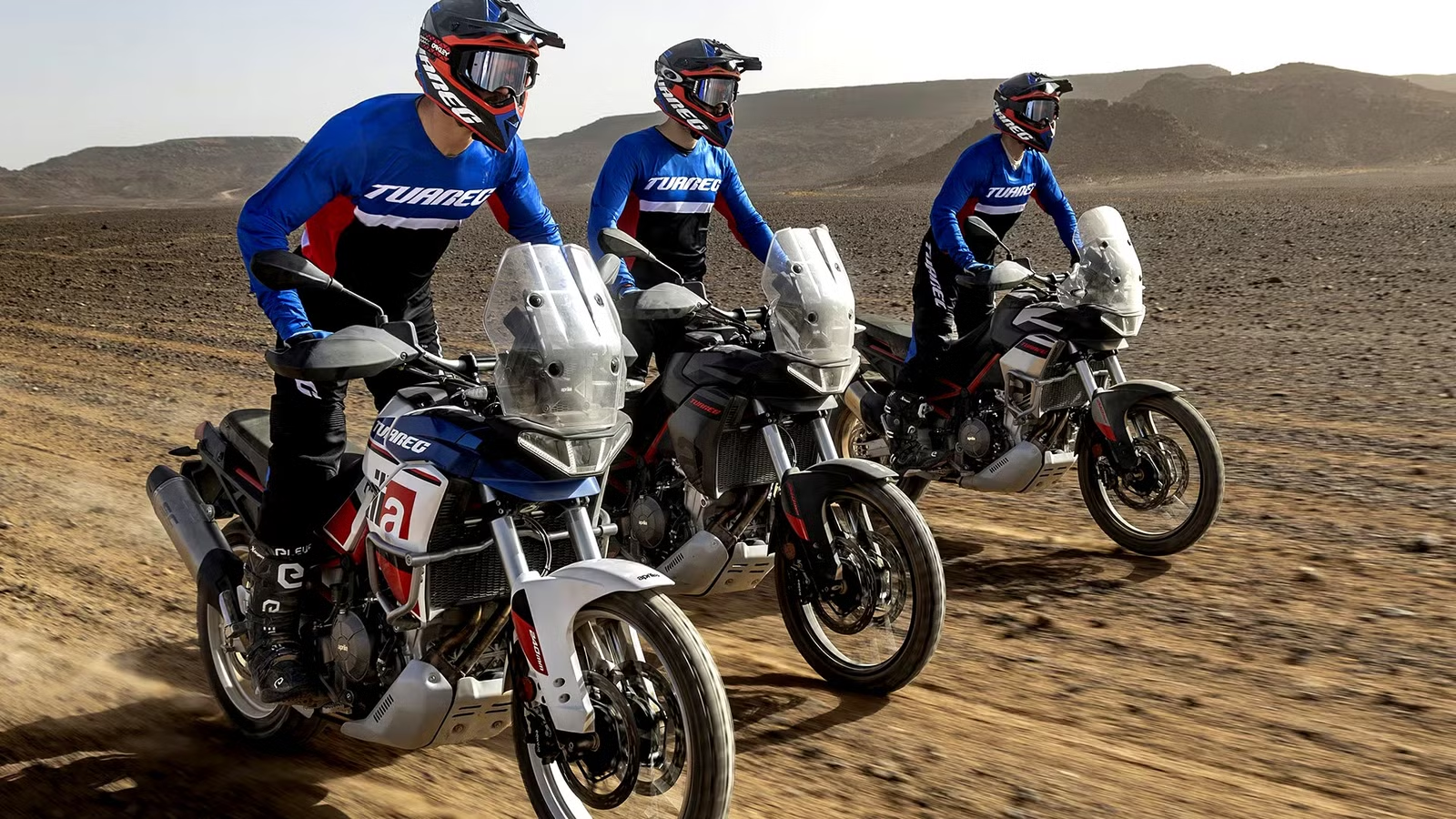
Adventure bikes are supposed to make you curious about where the pavement ends, but the category has spent years making that proposition increasingly intimidating. Engines have gotten bigger, electronics have become more elaborate, and some flagship ADVs now carry enough mass that turning around on a narrow dirt road deserves its own training course. They’re spectacular machines, but when dropping your motorcycle could mean lifting well over 500 pounds, exploration starts requiring considerably more commitment. That’s when you realize something more agile and smaller is a better bet. We’re talking about one such machine.
Adventure Bikes Have Become Victims Of Their Own Success

The original appeal of the adventure bike was relatively straightforward. You had a motorcycle that could cover serious road miles, carry some luggage, tolerate bad surfaces, and continue down whatever questionable road appeared along the way. But manufacturers eventually discovered riders also wanted superbike power, giant displays, electronically controlled suspension, radar, heated everything, and enough touring equipment to cross a continent without ever leaving the interstate.
More Motorcycle Isn’t Always More Adventure

That’s why weight matters differently on an adventure bike than it does on almost anything else. A machine can hide its mass beautifully while moving, but gravity eventually collects its debt. Put a foot down on uneven terrain, stall halfway up a climb, or realize the trail ahead is impassable, and another hundred pounds becomes impossible to ignore. It’s especially relevant when you’re alone, and there’s nobody around to help wrestle the thing upright.
The sweet spot, then, isn’t simply the smallest bike possible. A genuine travel motorcycle still needs enough engine to sit comfortably at highway speeds, pass traffic, haul luggage, and cover hundreds of miles before reaching anything interesting. What you want is enough motorcycle to cross a state without wishing you’d brought something bigger, but not so much motorcycle that an unmarked gravel road makes you keep riding straight.

The Middleweight ADV Segment Is Harder To Nail Than It Seems

That compromise explains why middleweight adventure bikes have become such an important part of the market. On paper, the formula looks obvious. Cut some weight, use a reasonably powerful twin-cylinder engine, fit long suspension, bolt on a 21-inch front wheel, and call it done. In reality, pushing the design too far toward dirt can make highway travel miserable, while adding too much touring equipment simply recreates the heavyweight ADV problem on a slightly smaller scale.
There’s no shortage of serious competition. The Yamaha Ténéré 700 leans heavily into simplicity and off-road capability, and KTM’s 890 Adventure takes a more hardcore and pricey approach, while Honda’s Transalp emphasizes everyday versatility. Each gets a different part of the equation right, which makes declaring an obvious winner surprisingly difficult.

Maybe that’s because the best all-round adventure bike doesn’t need to dominate every individual category. It needs to make the compromises between those categories almost disappear. And that raises an interesting question: What happens when a manufacturer known far more for superbikes, sharp chassis geometry, and carving pavement decides to apply the same obsession with handling to a machine intended to get absolutely filthy?
The Aprilia Tuareg 660 Makes Every Detour Worth Taking

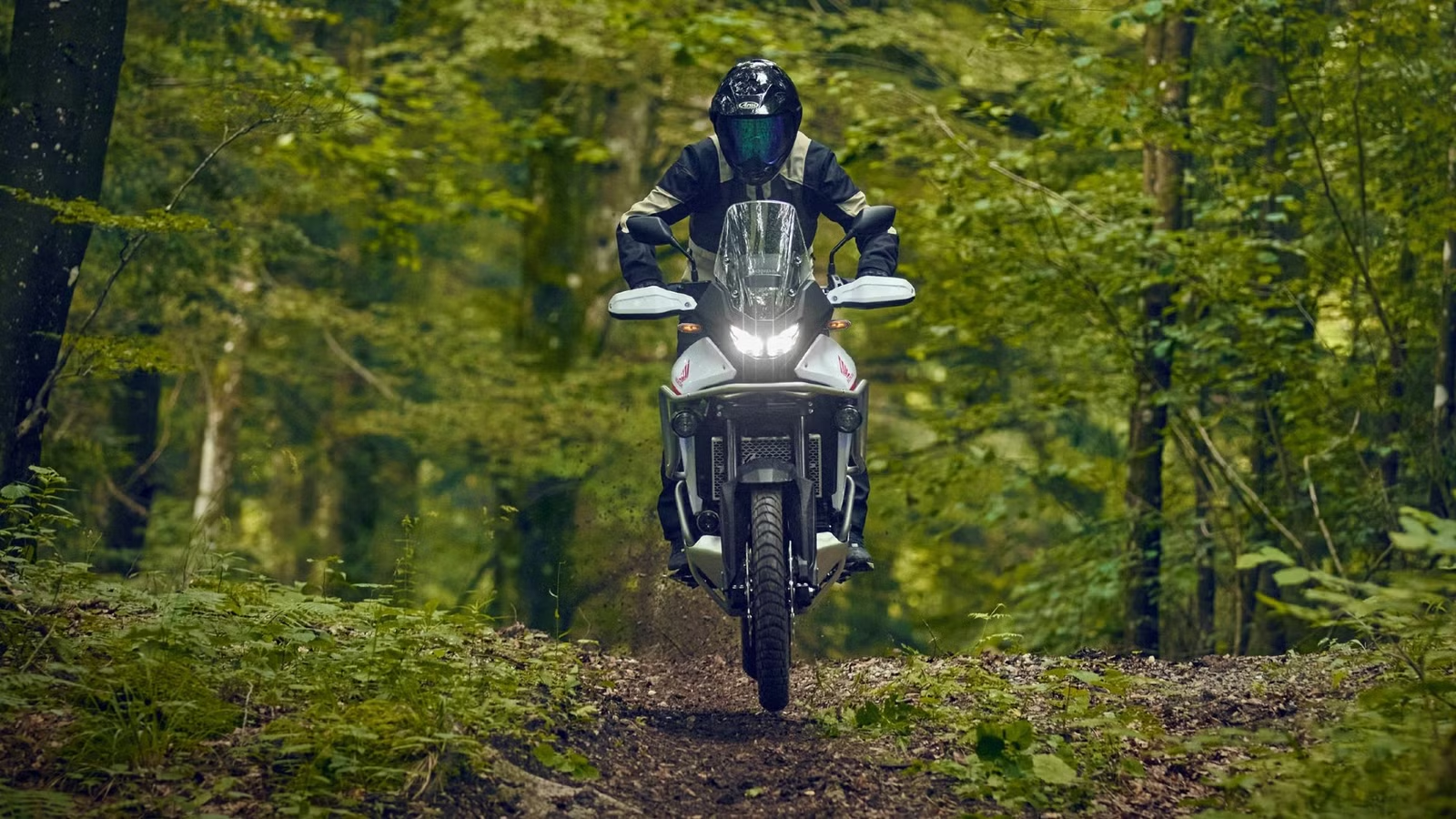
The answer is the Aprilia Tuareg 660, and its greatest trick may be how little drama surrounds its versatility. The Tuareg doesn’t try to be a shrunken luxury tourer, nor does it pretend a street-legal rally bike is everyone’s idea of comfortable transportation. Instead, Aprilia built a genuinely off-road-capable middleweight around a relatively light chassis, then gave it enough road performance, fuel capacity, technology, and comfort to make getting to the trail part of the fun.

The current Tuareg carries an MSRP of $12,499, placing it above some mainstream middleweights but well below the prices attached to today’s premium heavyweight machines. Aprilia also sells the more specialized Tuareg Rally for $13,999 (shown above), complete with additional off-road-focused hardware. For the broader kind of riding we’re talking about here, however, the standard version arguably makes the stronger case because it doesn’t require turning every weekend into a Dakar audition.
A 659cc Twin With Enough Performance For The Highway

At its center is Aprilia’s 659cc liquid-cooled parallel twin, producing 80 horsepower at 9,250 rpm and roughly 52 pound-feet of torque at 6,500 rpm. The current Euro 5+ version uses larger 52-mm throttle bodies and a revised generator with reduced rotational inertia, changes intended to improve throttle response and make the engine more eager to react. This isn’t a gigantic power number by modern ADV standards, but that’s exactly why it works here.
80 horsepower gives the Tuareg plenty for freeway cruising, overtaking, mountain roads, and traveling with luggage without supplying another 50 horsepower you rarely need once the surface turns loose. The six-speed transmission feeds that output through chain drive, and the parallel twin’s compact architecture helps Aprilia keep the entire package narrow. It’s enough motor that reaching some distant trail doesn’t become a chore, without overpowering the chassis once you actually get there.
Real Off-Road Hardware Without Heavyweight Bulk

The chassis is where the Tuareg’s intentions become impossible to mistake. It rides on tubeless wire-spoke wheels measuring 21 inches up front and 18 inches at the rear, proper adventure-bike dimensions that open the door to serious off-road tire choices. Fully adjustable suspension provides a generous 9.4 inches of travel at both ends, while substantial ground clearance gives the bike room to negotiate rocks, ruts, washouts, and the other things paved-road suspension would prefer not to meet.
Yet the figure that ties everything together is its 449-pound wet weight. That’s with a useful 4.7-gallon fuel tank rather than some tiny enduro-sized reservoir, so the Tuareg doesn’t achieve its manageable proportions by sacrificing the ability to disappear for an afternoon. Aprilia claims the bike’s lightweight construction as one of its defining characteristics.
Electronics That Help Without Taking Over

Aprilia didn’t pursue simplicity by deleting useful technology, either. Its APRC electronics package works with ride-by-wire throttle and offers selectable ride modes, adjustable traction control, engine-braking management, engine maps, cruise control, and configurable ABS behavior for pavement or off-road riding. The current mapping has also been revised for smoother throttle response, an especially useful change when small inputs matter on loose terrain.
Information runs through a 5-inch TFT display with automatic brightness adjustment. Cruise control deserves particular mention because it’s the kind of seemingly ordinary feature that becomes priceless after hours on the freeway. It’s a good example of the Tuareg’s philosophy: give the rider technology that expands what the motorcycle can comfortably do without making the electronics themselves the point of the experience.
The Best Adventure Bike Might Be The One That Changes Your Route
There are faster adventure bikes than the Tuareg 660. There are more luxurious ones, cheaper ones, and machines that push even harder toward either long-distance touring or serious off-road riding. But chasing extremes isn’t what makes this Aprilia interesting. Its 80 horsepower is enough for the highway, its 449-pound wet weight remains manageable away from it, and its suspension, wheel sizes, fuel capacity, electronics, and ergonomics allow both sides of the equation to coexist without one ruining the other.
That may make the Tuareg’s most important specification impossible to print on a spec sheet. It’s the number of roads you’ll stop riding past. A dirt track disappearing into the trees, a mountain road that turns to gravel, or a suspicious shortcut on the GPS becomes less of a warning and more of an invitation. That’s ultimately what an adventure motorcycle should accomplish. The detour shouldn’t be something the bike merely tolerates. Sometimes, it should become the entire reason you went riding.
Source: Aprilia

Related posts

Latest Post


No Comments