
The 250cc Japanese Two-Stroke That Humiliated Britain’s 500cc Singles
In the mid-’60s, a rider with a 500cc single under him still had every reason to feel smug at the café. After all, they had the bigger cylinder, a deeper soundtrack, and chances are it was built by people who considered vibration a genuine prerequisite.

Then something small, sharp, and Japanese began turning up in mirrors. But instead of winning any arguments with size on its side, it won them by spinning harder, shifting smarter, and making the old hierarchy look like it had shown up to a knife fight carrying a pipe wrench.
Britain’s 500cc Singles Were Built For A Slower World
For years, the math seemed obvious. A 500cc British single had twice the displacement of a quarter-liter machine, and that kind of advantage usually settled the matter before the first corner. Bikes from the old British order had the image, the noise, and the mechanical presence that made them feel like the adult choice for riders who cared about speed.

The problem was that the world around them was moving faster than their basic formula. Big singles could thump along with authority, but they didn’t love being hustled the way a smaller, lighter, higher-revving engine did. They had punch, but they also had fewer gears, more inertia, and a narrower idea of what performance was supposed to feel like.
The Angry Power Tool

By the mid-’60s, Japan had started treating motorcycles like a precision instrument. Small-capacity two-strokes were getting quicker, better equipped, and more serious with every model year. The British single still had presence, but presence doesn’t help much when a 250 is disappearing up the road while sounding like an angry power tool, does it?
A Quarter-Liter Twin Found Speed In Revs And Ratios

The clever part was that this little Japanese twin leaned into everything a two-stroke could do really well. It was light, eager, simple in layout, and happiest when the rider kept the engine glued near the top of the tach instead of waiting around for lazy torque to save the day.
Its 247cc air-cooled parallel-twin made its power high in the rev range, with 29 hp arriving at 7,500 rpm and the engine able to spin toward an 8,000 rpm ceiling. That worked out to more than 100 hp per liter, a number that was highly unusual for street machinery in 1965. That was great on paper, and sublime on the road.
On The Boil

The real trick was the gearbox. A six-speed transmission let the rider keep the engine in the sweet part of the powerband, where the little twin felt alert and ready instead of bogged down and waiting for the revs to return. That’s what made the bike so aggravating for larger, older machinery. A big single could pull with a proper shove, but once the road tightened and the pace got messy, the smaller bike could keep finding the right gear and stay absolutely on the boil.
The Suzuki X6 Hustler Made Size Look Overrated

|
Engine |
Power |
Torque |
Top Speed |
|
247cc, two-stroke twin |
29 hp |
20.3 lb-ft |
90 MPH |
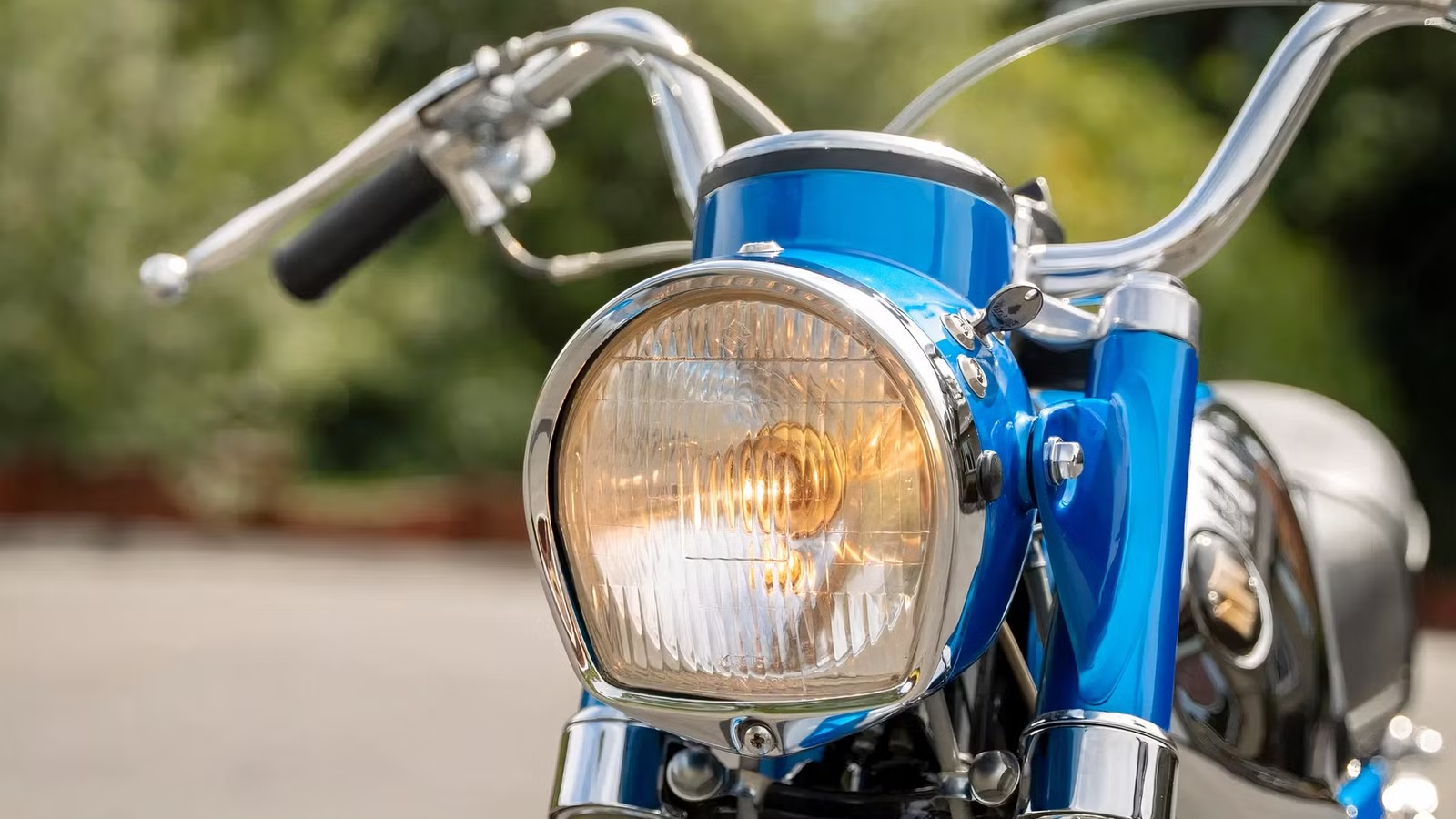
The bike was the 1965 Suzuki X6 Hustler. That name sounds like it should come with a pool cue and a warning from your mother, but the hardware backed it up. This was a 247cc two-stroke twin with six forward gears, 29 hp at 7,500 rpm, and a real-world top speed of up to 90 mph.
That was the embarrassing part for bigger bikes. The X6 Hustler could run through the quarter-mile in 15.1 seconds at 84 mph, which made riders on larger machines start checking their excuses. Factory claims went even quicker, but the verified numbers were plenty good enough to make the point without needing a pub story attached.
The small Suzuki also carried a claimed curb weight of around 316 pounds, which helped explain why it felt so willing. With less mass to drag around and a gearbox that let riders keep the motor right where it wanted to be, the X6 turned modest displacement into solid pace. It didn’t need to outmuscle a 500cc single everywhere. It just needed a stretch of road where revs, ratios, and commitment mattered more than old-school chest-thumping.
At its peak, Suzuki was building nearly 5,000 a month, and total production reached about 35,500 units over a little more than three years. That’s a lot of riders discovering that a 250 could be more entertaining than common sense recommended.
Six Speeds Turned A Small Engine Into A Giant Killer

The six-speed gearbox was the headline feature, and for good reason. Most motorcycles of the era didn’t give riders that many choices, which meant a small engine could easily fall out of its useful powerband after a shift. The X6’s close ratios helped solve that problem by letting the rider keep the engine working near its strongest zone.
That changed the way the bike behaved on real roads. Instead of waiting for a big single’s heavy flywheel effect to drag the bike out of a corner, the Suzuki rider could pick a gear, keep the twin singing, and let the engine stay angry. The rider had to work, but that was half the fun. If you wanted lazy, you bought a sofa. If you wanted to bother larger motorcycles, you bought this.
Party Trick

Suzuki’s Posi-Force oil injection also made the two-stroke experience more livable. Instead of asking riders to pre-mix oil and fuel, the system used a separate oil tank and pump to meter lubrication according to engine speed and throttle opening. Oil went where it needed to go, including the main bearings and big ends, which meant the bike could deliver its smoky little party trick with ease.
The Hustler Helped Japan Rewrite The Performance Rulebook

The X6’s competition record helped cement the point. In 1966, a virtually standard example finished 12th in the Isle of Man Lightweight TT against full-on racing machinery, averaging 82.88 mph. That was a small production-based Suzuki showing it could survive and perform where weak engineering got found out quickly.
The bike also became a weapon in production racing, where 250cc classes were packed with sharp machinery and riders who had no interest in being friendly. The Hustler went straight to the front in that world because it had the one thing every good giant-killer needs: repeatable speed. It had the engine, gearbox, weight, and usability all pulling in the same direction.
Paving The Path

That’s why the X6 Hustler deserves a better spot in motorcycle history than it usually gets. It didn’t have the cultural thunder of the Honda CB750, and it didn’t become the two-stroke hooligan poster child in the way later Yamahas did. What it did, however, was prove the idea early. Instead of copying Britain’s displacement-first rulebook, it wrote a faster one using revs, ratios, and engineering precision.
Sources: Suzuki Cycles, Bikeurious, WikiWand, OldBike Mag.

Related posts


Latest Post


No Comments