
The 200-HP Suzuki Superbike Everyone Forgot Because The Hayabusa Stole Its Thunder
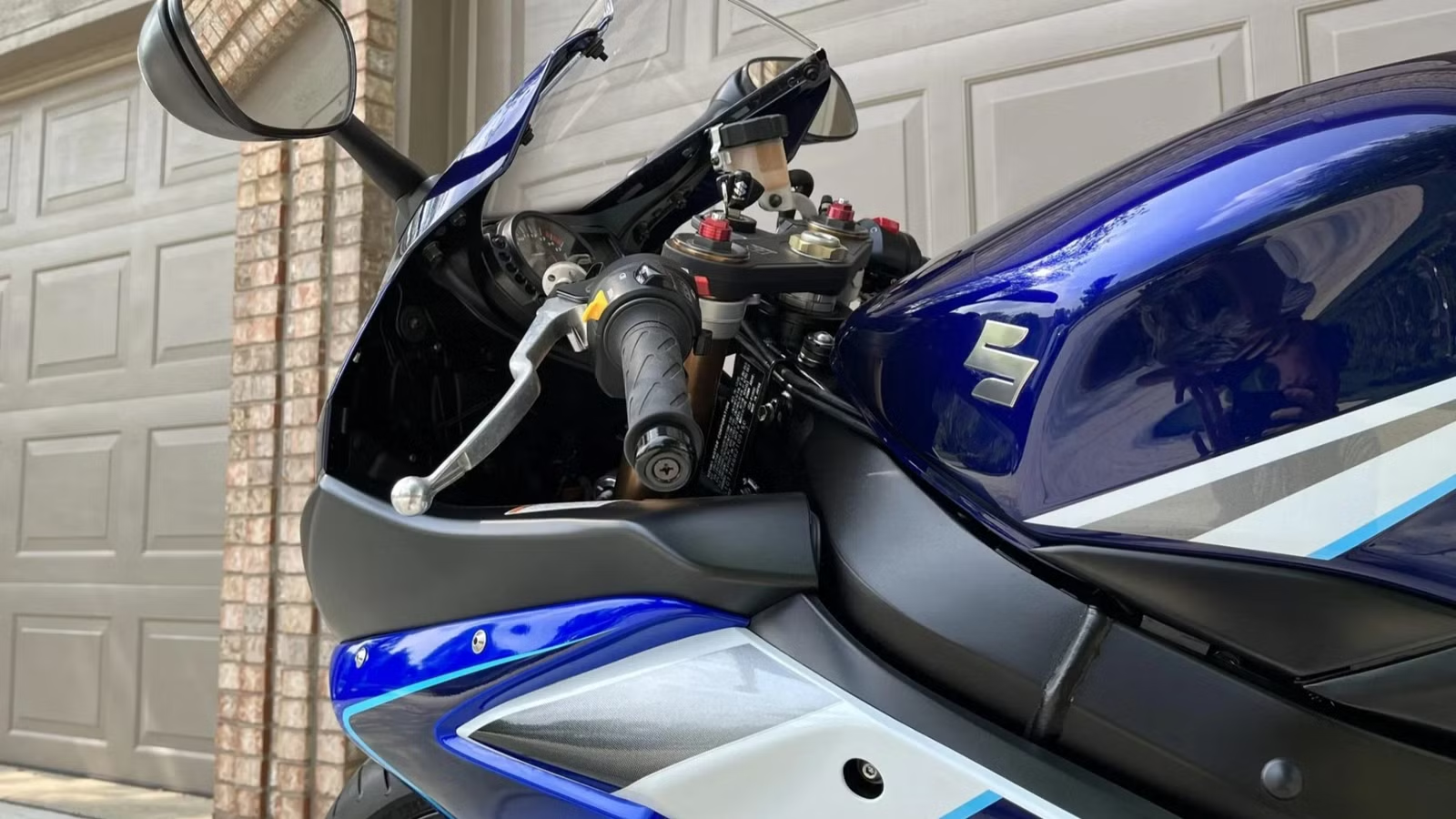
When motorcycle enthusiasts talk about raw speeds and engineering dominance from the early 2000s, one legendary name stands above all. The Suzuki Hayabusa was the hyperbike poster child that shattered top-speed benchmarks, captured pop culture, and earned an immortal spot in motorcycle history. However, lost in the shadow of that drag strip icon was a purist, track-focused motorcycle — a motorcycle built around a razor-sharp chassis and inline four-cylinder liter-class engine. While casual motorcycle fans loved the Hayabusa purely for straight-line speed, track junkies and street racers were worshiping a different lightweight, agile Suzuki that rewrote the rulebook for liter-class performance.
The Ultimate Liter-Class Motorcycle Living In The Hayabusa’s Shadow

The early 2000s represented a golden era of open-class sportsbikes dominated by Japanese bikemakers locked in an all-out arms race. Every bikemaker was pushing to pack high horsepower into lightweight, agile frames. Yet, when casual buyers walked into motorcycle dealerships, they almost immediately gravitated towards the center of attraction — the hyperbike. That bulbous-designed Hayabusa captured global headlines with its drag strip dominance, straight-line top speed, and high-speed touring credentials.
Everyday riders completely overlooked the purist masterpiece sitting on the other side of the showroom floor. While Suzuki’s flagship hyperbike was heavy and designed for top-speed dominance, its track-focused cousin was engineered purely for cornering dynamics, brutal acceleration out of corners, and sublime chassis feedback. It was way lighter, carried a superior power-to-weight ratio, and delivered a raw riding experience that left rival superbike makers hot under the collar. It was the quintessential sleeper superbike — one that could embarrass its hyperbike sibling in the twisties or on the racetrack, yet it never achieved the mainstream acclaim it deserved.
Suzuki GSX-R1000 K5: How The 200 Horsepower Superbike Revolutionized Performance


The Suzuki GSX-R1000 was an icon amongst track fiends partly due to its benchmark 2005-2006 “K5” generation engine. The liquid-cooled 999cc inline-four engine delivered massive torque throughout the rev range, thanks to the use of titanium valves, a high-compression combustion chamber, and a revolutionary Suzuki Dual Throttle Valve (SDTV) twin-injector digital fuel injection. While the stock engine delivered 178 horsepower, the over-engineered K5 platform effortlessly pushed past the 200PS mark in race tune, all while pushing a dry weight of just 365 pounds.
What made the Suzuki GSX-R1000 K5 engine truly legendary wasn’t its horsepower number — it was its overwhelming mid-range torque. While rival liter-class motorcycles like the Yamaha YZF-R1 and Honda CBR1000RR needed sky-high revs to generate serious performance, the GSX-R1000 delivered violent acceleration straight from low revs. Coupled with a revolutionary slipper clutch and a compact engine design that allowed a longer swingarm within a shortened wheelbase, the K5 delivered razor-sharp flickability without compromising on high-speed stability.
Why The Suzuki GSX-R1000 Beat Hyperbikes On Track And Twisties

Straight-line acceleration numbers might win bar-room arguments, but when it comes to track times and real-world canyon carving performance, you need chassis balance, tight suspension tune, and near-perfect weight distribution. This is precisely where the Suzuki GSX-R1000 triumphed over its heavier hyperbike sibling, the Hayabusa. The Hayabusa was a massive long-wheelbase missile designed to do cross-country runs at 180 mph. It was cumbersome and exhausting to ride fast through tight technical turns. In contrast, the GSX-R1000 felt like a 600cc supersport motorcycle fitted with a powerful 1,000cc powerplant.
On technical racetracks like Laguna Seca or the Nürburgring Nordschleife, the GSX-R1000 K5 was the apex predator. The fully adjustable 43mm Kayaba inverted forks paired with Tokico radially mounted brakes gave riders utmost control while trail braking deep into corners. While accelerating on corner exits, the instant torque drive allowed the GSX-R1000 to leave hyperbikes and rival superbikes behind. It won nearly every major magazine superbike shootout and dominated AMA Superbike championship races in the hands of legends like Mat Mladin and Ben Spies.
Is a used Suzuki GSX-R1000 a good buy today?

In current times, the Suzuki GSX-R1000 — especially the celebrated K5 and K6 model years — has earned holy-grail status among track day enthusiasts, collectors, and sportbike purists. Because it came before intrusive electronic rider aids ruined everything, the K5 GSX-R1000 is considered one of the purest analog riding experiences you can get from a liter-class motorcycle.
Finding a clean example of the Suzuki GSX-R1000 from this era can be a challenge given the years gone by and most motorcycles undergoing the stresses of stunt riding, track abuse, and questionable aftermarket modifications. However, if you do manage to find a clean example, it offers unbeatable performance-per-dollar in the used motorcycle market. Parts are abundant and easily available. Maintaining the bulletproof inline-four is a straightforward experience, and in terms of overall performance, it can still hold its own against modern superbikes costing thrice as much. The Hayabusa might have stolen the pop-culture headlines, but real motorcyclists know the true value of the mid-2000s GSX-R1000.

Related posts


Latest Post


No Comments