
The 166-MPH Kawasaki That Came With Luggage Hooks And Passenger Handles
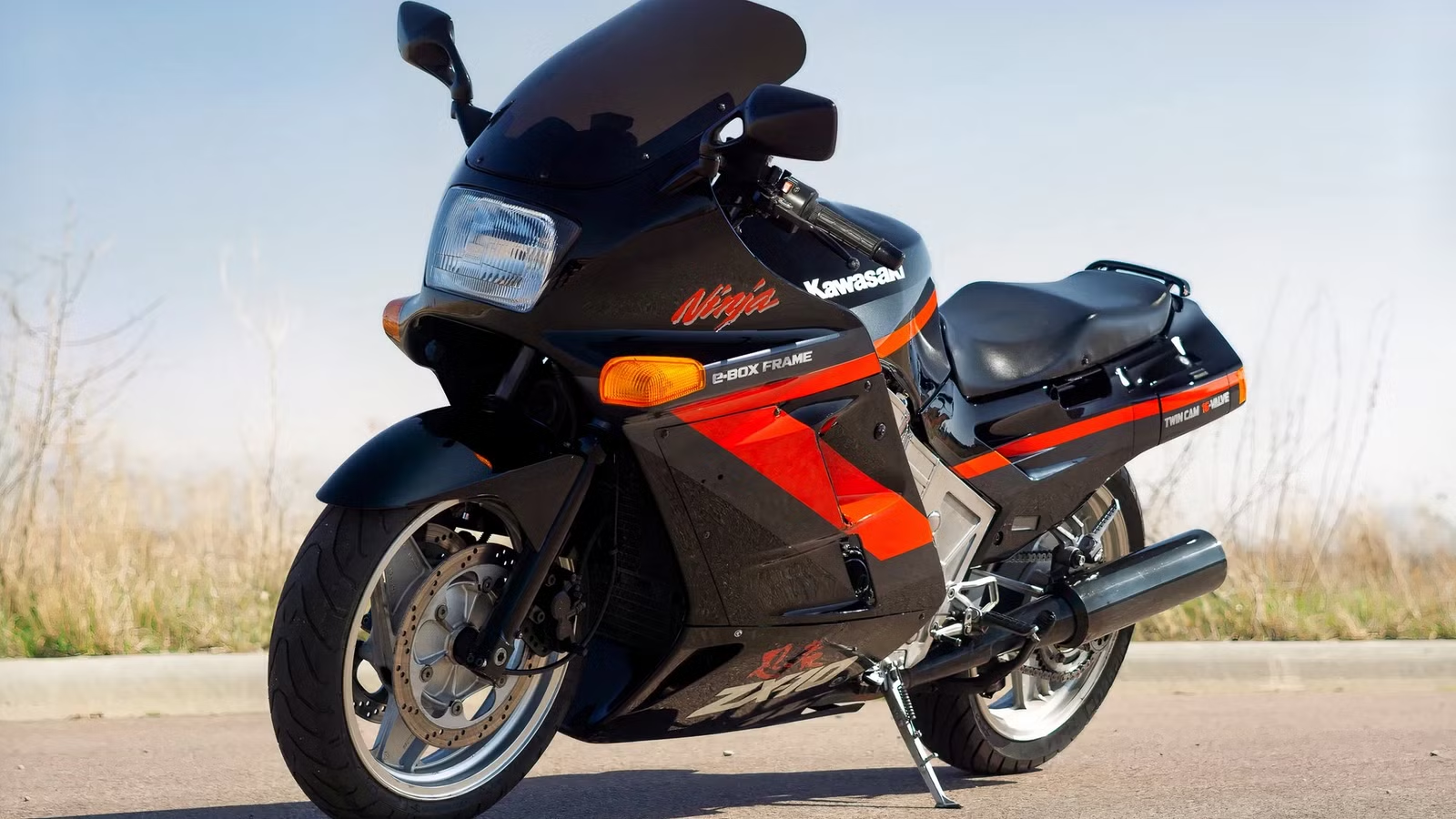
The late 1980s spawned some seriously fast motorcycles, but few were as contradictory as this one. It could push well beyond 165 mph, yet it also gave its rider decent wind protection, a relatively relaxed riding position, and even luggage hooks. And somehow, it never became as famous as the motorcycles that followed.
When Japanese Manufacturers Were Fighting For The Speed Crown

By the mid-1980s, Japan’s motorcycle manufacturers were locked in a straight-line arms race. Yamaha had the FZR1000, Suzuki had the GSX-R1100, and Kawasaki had already made headlines with the GPZ900R.
The GPZ900R had shown how effective a lighter, liquid-cooled four-cylinder motorcycle could be, but Kawasaki’s next flagship, the GPZ1000RX, went in the wrong direction. It was quite powerful, but heavier and less successful on dealership floors than Kawasaki had hoped.
Kawasaki needed to respond with something faster without simply adding more power and weight. The answer would eventually introduce an important technology to the brand and give Kawasaki another serious shot at the crown for outright top-speed.

Superbike Performance Without Sacrificing Comfort

What makes the motorcycle interesting today is that Kawasaki didn’t build it like a stripped-down race replica. It was still designed to go extremely fast, but riders also got substantial bodywork, useful wind protection, a reasonably accommodating riding position, and practical details such as luggage hooks and adjustable passenger grab handles.
Even the suspension told the same story. Period reports described it as relatively soft, which made sense on imperfect roads and longer trips, but also meant it wasn’t trying to imitate a race bike. In other words, Kawasaki had effectively created the formula for an extremely fast sports tourer: serious straight-line performance when you wanted it, but enough comfort to keep riding after the exciting road ended.
Meet The Kawasaki ZX-10 Tomcat: A 166 MPH Sports Tourer

The motorcycle was the Kawasaki ZX-10 Tomcat, introduced in 1988. Powered by a 997cc liquid-cooled inline-four producing a claimed 137 horsepower in unrestricted configuration. Certain markets, like the UK, received a restricted version producing around 125 horsepower, which explains why different output figures are often attached to the Tomcat.
The headline figure, however, was its speed. A top speed run, where it achieved approximately 166.5 mph, was recorded. For a production motorcycle at the end of the 1980s, that was some serious performance. It was quick getting there, too, completing a 10.33-second standing quarter-mile at roughly 132 mph.

A major part of the Tomcat’s development was weight reduction. The ZX-10 introduced Kawasaki’s first aluminum perimeter frame, commonly referred to as the E-box because of its shape when viewed from above. The change helped save roughly 35 pounds compared with the steel-framed GPZ1000RX while improving structural rigidity.
Kawasaki also substantially reworked the engine. The 997cc four used an 11.0:1 compression ratio and unusual high-angle intake ports, while the bodywork was shaped with high-speed stability and aerodynamics firmly in mind. None of that sounds particularly touring-oriented. But that was exactly what made the Tomcat so unusual: beneath the comfortable bodywork was some of Kawasaki’s most ambitious performance engineering of the period.
A High-Speed Motorcycle That Preferred The Highway

The Tomcat’s natural habitat wasn’t necessarily a racetrack. It made much more sense on an open road. The fairing gave the rider plenty of protection from the wind, while the softer suspension and less committed ergonomics made sustained highway riding considerably easier.
There were compromises though. Period tests noted a noticeable flat spot between roughly 3,500 and 4,000 rpm. If the engine was sitting in that range during an overtake, dropping a gear could be necessary to get it pulling properly again.
It was also not lightweight by modern standards and weighed roughly 489 pounds dry. But that mattered less when the road opened up. The combination of a stable chassis, generous bodywork, strong engine, and usable ergonomics made the ZX-10 a genuine high-speed mile-muncher.
Why The Tomcat Never Became A Superbike Icon

For all its performance, the ZX-10 had a surprisingly short life. It was produced from 1988 through 1990, after which Kawasaki introduced the ZZ-R1100, known as the Ninja ZX-11 in the United States. That motorcycle pushed the performance benchmark even further and became far more closely associated with Kawasaki’s pursuit of outright speed.
The Tomcat was also difficult to categorize. It was enormously fast, but it wasn’t a race replica. Its styling and touring ability made it more mature than some of the sharper sports bikes surrounding it. Then came another generation of high-speed motorcycles. The Honda CBR1100XX Super Blackbird and Suzuki Hayabusa turned the pursuit of extreme speed into an entire category of its own, leaving motorcycles such as the Tomcat increasingly overlooked.
The Forgotten Kawasaki That Helped Define The Hyper-Tourer

The Kawasaki ZX-10 Tomcat deserves more credit than it usually receives. It combined a verified 166-plus-mph top speed with the sort of wind protection, ergonomics, and luggage provisions normally associated with tourers. That combination sounds familiar today, but it was far more unusual in the 80s.
The Blackbird and Hayabusa would make high-speed touring famous afterward, and Kawasaki’s own ZX-11 would quickly overshadow the Tomcat. But the basic idea was already there: immense straight-line performance in a motorcycle that could tour easily without making the ride dreadful. And that might be the Tomcat’s greatest achievement. It wasn’t simply fast. It showed just how usable a seriously fast machine could be.

Related posts

Latest Post


No Comments