
Mitsubishi Outlander PHEV | Autocar
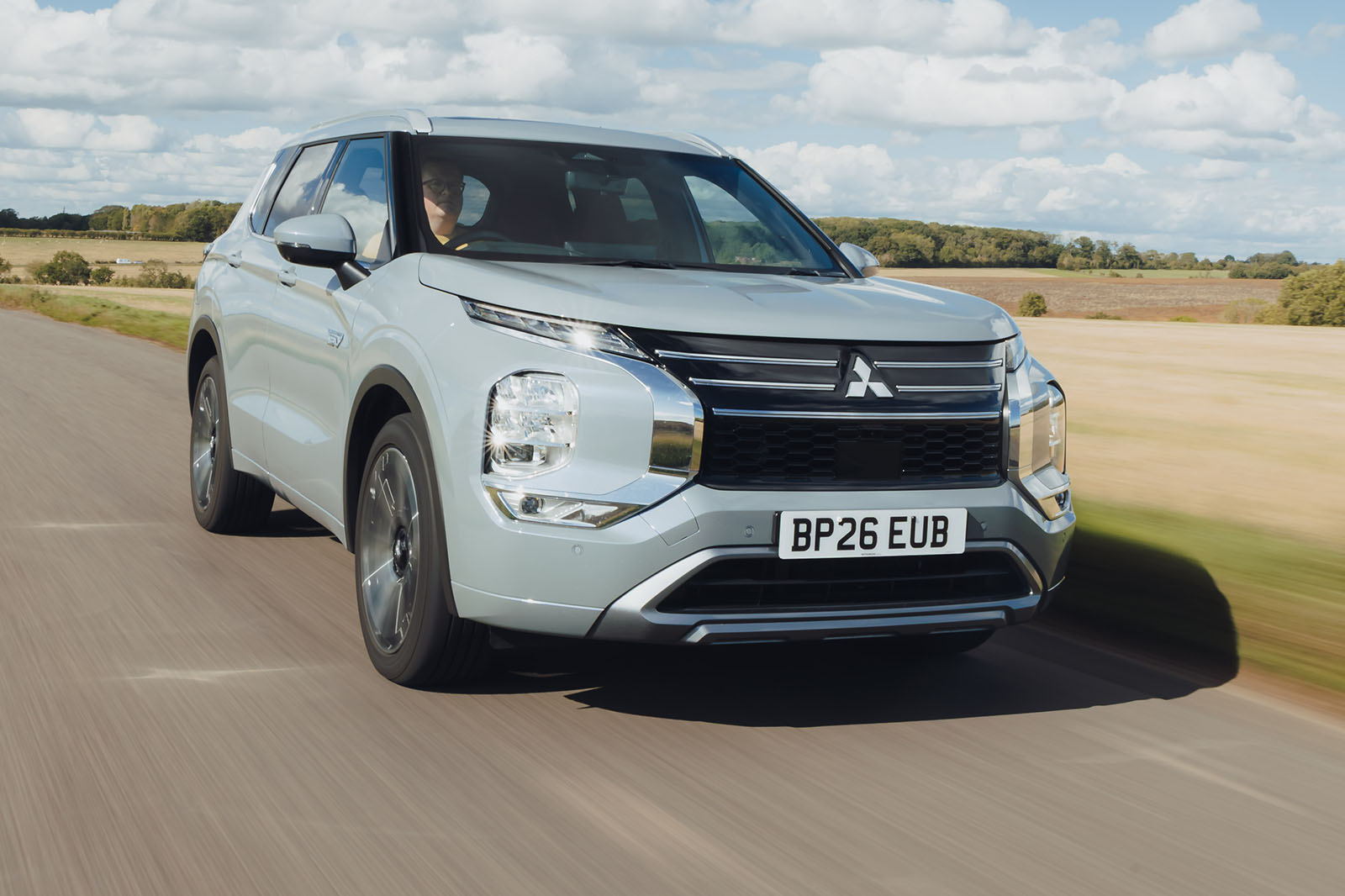
There’s something reassuringly traditional about the interior too. The four-spoke steering wheel, simple angular air vents, copious physical buttons and diamond-stitched leather aren’t especially fashionable, but they will provide sanctuary for those tired of the prevailing minimalist design trend.
Most of the switchgear is adapted from recent Nissans with some small colour and texture changes. That’s mostly a good thing, because it’s well laid out, with satisfying haptics. Generally, though, perceived material quality is something of a mixed bag. The leather on the seats and steering wheel feels thick and real. By contrast, the material on the armrests feels a little thin and loose and the plastic trim pieces in carbonfibre, metal and piano black effects feel and look cheap.

Most testers liked the brown leather of our high-spec Diamond test car, but if you don’t, your only choice is to downgrade to Nativa trim, which gets black artificial leather. Another strange quirk of the trim line-up is that Nativa cars get seven seats while Diamond cars get five, so there’s no way to have the high spec and three rows of seats.
Our test car, then, was a five-seater, which seems to us the more felicitous configuration, because the seven-seater’s third-row seats are very small indeed. The second row is moderately comfortable. Because the sunroof ends just in front of the passengers’ heads, head room is actually quite good, and so is knee room, even if the Kodiaq has more still. However, the battery’s presence means the floor is quite high and there isn’t much toe room under the front seats.

Up front, the chairs have plenty of electrical adjustment, including lumbar support and cushion tilt. Surprisingly, they’re different from the ones in the X-Trail, although not quite as comfortable, because the seat base lacks a bit of padding. Still, long journeys aren’t an issue, there’s a massage function and the steering column has a lot of adjustment too.
While the boot is certainly roomy, it’s smaller than most rivals’. With 472 litres of volume, the Outlander just beats the RAV4 but lags behind the Rafale, Kodiaq and MG S9 by some distance. Remote release handles let you fold the rear seats flat, and there’s a small underfloor cubby for the charging cable. However, the load cover is positioned so that it leaves a gap to the rear seats, and even in the five-seat version there are armrests and cupholders.
For in-car tech, Mitsubishi is leaning again on Nissan, although it seems to get only the leftovers. The digital interface in the Outlander is a lot like the one we saw in the X-Trail when it arrived a few years ago. That means it’s all fairly logical and fit for purpose, but whereas Nissans now have Google Maps, the Outlander still uses an older sat-nav system that isn’t as well connected.
The audio system is by Yamaha, with eight speakers as standard or 12 plus a subwoofer in the Diamond. We found it clear and powerful.

Related posts

Latest Post


No Comments