
Suzuki to take on Twingo in 2027 with sub-£20k city EV
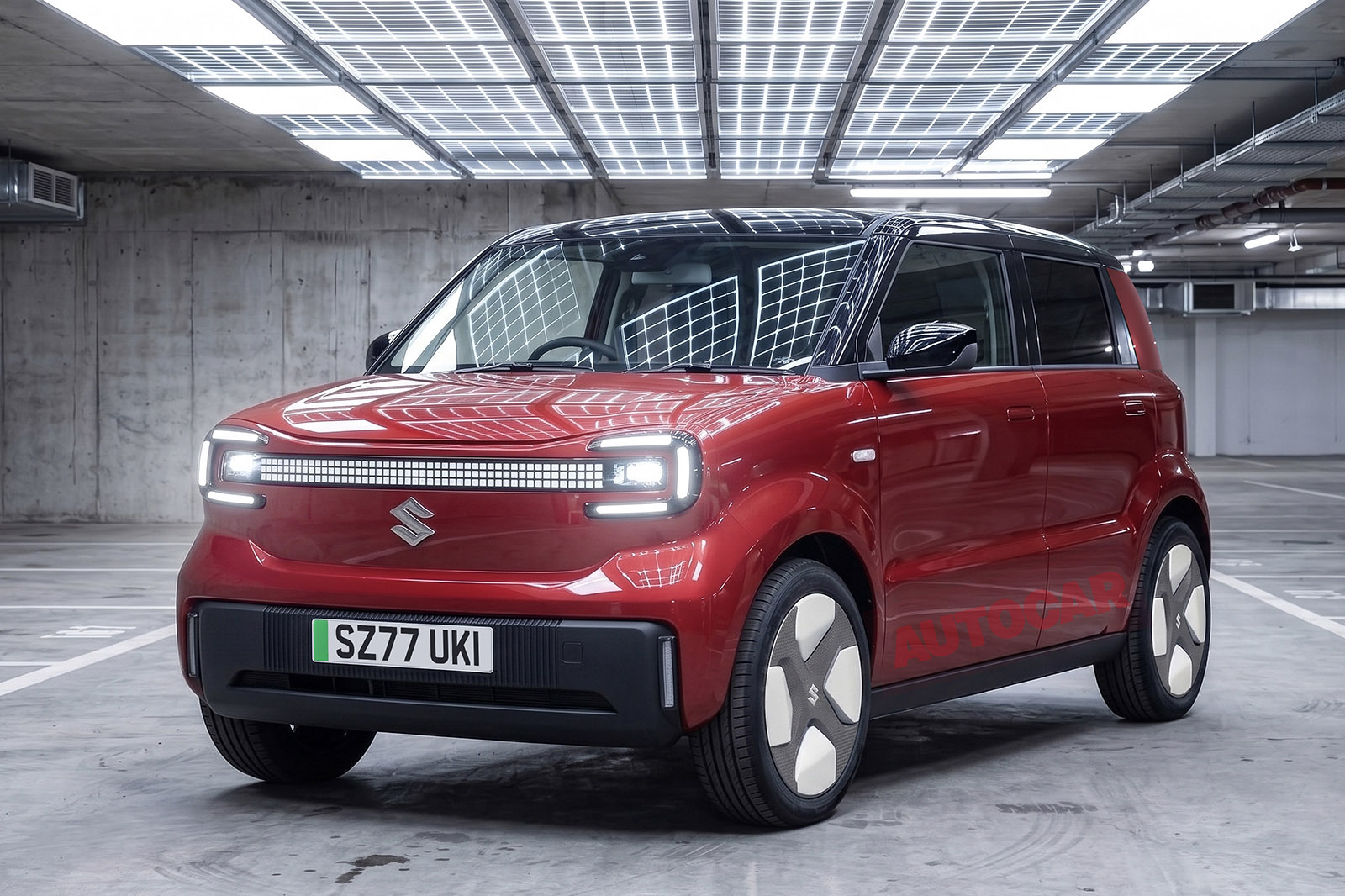
A new sub-£20,000 electric city car in 2027, growing sales of the Swift hatchback and a third EV in 2029 underpin Suzuki’s UK expansion plan after the upheaval of the early years of the zero-emission vehicle (ZEV) mandate.
UK boss David Kateley, who took over in January last year, has refocused the company’s strategy under the mandate’s influence. The firm is pushing sales of the eVitara, Suzuki’s first EV, alongside the buoyant Swift supermini, and focusing on heartland private sales.

“I believe in concentrating on the controllables. The mandate is here and we all want to help the environment. We are embracing it,” said Kateley.
The approach appears to be working. So far this year Suzuki sales have grown at a faster rate than any other established brand – up 43% in the first five months of 2026 – pushing its market share back over 1%.
It’s a remarkable success story after sales slumped in 2025 to just 18,000 units, as the ICE model line-up was trimmed to comply with the ZEV mandate. It’s also a solid indicator that, with the right models, Suzuki has a strong UK future.

At the core of the brand’s UK recovery is the nimble and affordable Swift, which starts from £19,000 and sold 6000 units in the first quarter of the year. “We are so delighted with the Swift’s popularity,” said Kateley. “It shows there is a market for small, rewarding-to-drive ICE cars.”
The Swift’s secret sauce is the three-cylinder 1.2-litre mild hybrid with a WLTP-certified 64.2mpg. Its low CO2 emissions of 99g/km generate all-important ZEV credits under the Vehicle Emissions Trading Scheme.
With the eVitara expected to sell 5000 units in 2026, helped by a manufacturer contribution that matches the Electric Car Grant, and combined with sales of the Vitara and S-Cross, Suzuki is on track to head back to pre-2025 levels with sales of around 23,000 units this year.
A further boost will come in spring 2027 when a production version of the Vision e-Sky urban EV will be launched. It will join a growing segment of affordable electric city cars, like the new Honda Super-N, a similarly boxy kei car.
The production Vision e-Sky will have five doors like the concept and share its tall, boxy proportions. Details of the EV powertrain remain scarce but a battery of around 29kWh capacity for a 130-mile range would be typical for the class.
“The A-segment BEV is vitally important. It’s an entrant in a different segment for us and I’m very excited about its prospects,” said Kateley. Given Suzuki’s traditional appeal among private buyers, the e-Sky should be a keenly priced offering. For reference, Honda’s Super-N entry EV starts at £19,000.
The new city car will also move Suzuki closer to the 2027 mandate mix of two EV sales for three ICE sales, although Kateley diplomatically avoided any comments on the rumoured mandate review being brought forward, and whether it might ease or upset forward planning.
The e-Sky will also pave the way for the 2029 launch of Suzuki’s third EV, which is most likely to be a B-segment SUV to slot between the e-Sky and eVitara. “It most definitely won’t be an electric Swift,” said Kateley firmly.
Suzuki unfazed by Chinese newcomers
Suzuki also faces the challenge of ever-growing competition from Chinese car makers, which have swollen the number of UK automotive brands from 40 to 70 in recent years.

Related posts





Latest Post


No Comments