
Suzuki e Vitara review – first UK drive
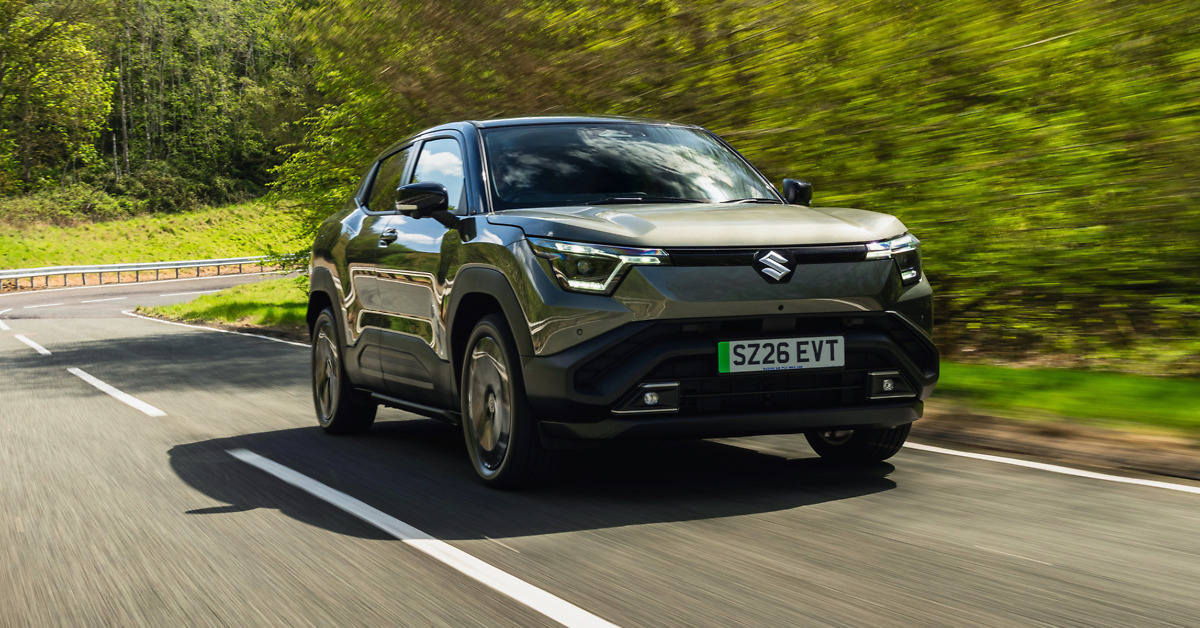
Make and model: Suzuki e Vitara
Description: mid-size electric SUV
Price: from £29,999 to £37,799
Summary: The e Vitara is Suzuki’s first EV SUV attempt. And while it’s an okay start, there’s certainly room for improvement, especially when rivals offer more.

For a broader ownership picture, see our Suzuki e Vitara Expert Rating, which combines media reviews, safety data, reliability, running costs and warranty cover.
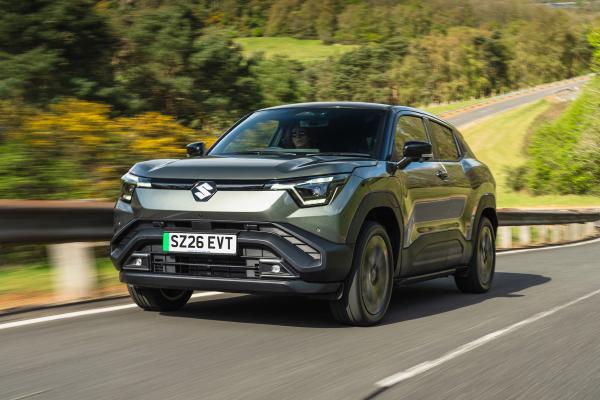
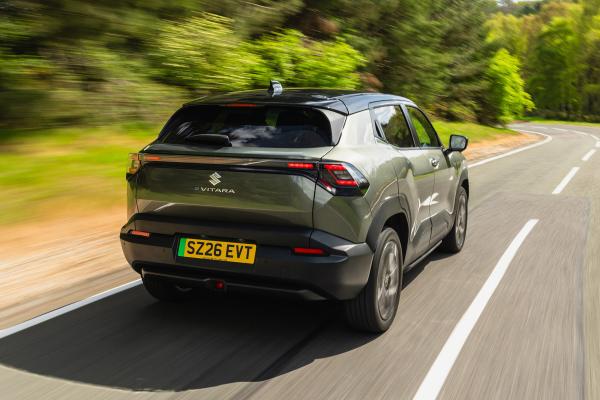
The Suzuki e Vitara marks a major milestone in Suzuki’s history: it’s the brand’s first mainstream electric vehicle (EV) aimed squarely at the hugely competitive compact SUV market.
Suzuki has long been known for practical, no‑nonsense cars with a reputation for reliability, and the e Vitara keeps that ethos alive while adding zero‑emission driving and modern EV tech. What sets it apart from many rivals is its genuine SUV character — there’s even an available four‑wheel‑drive version (which Suzuki calls ALLGRIP‑e), something not every electric crossover can claim.

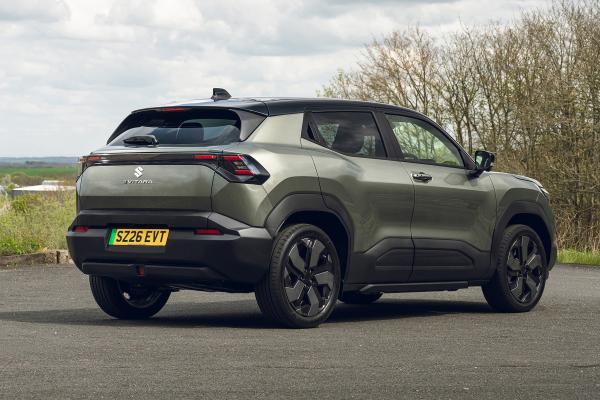
If you think that the little Suzuki looks a bit familiar, that’s because it’s a joint venture with Toyota and the Suzuki e Vitara is a virtual twin of the Toyota Urban Cruiser. However, only the Suzuki gets the option of all-wheel drive.
Price and equipment
The Suzuki e Vitara starts from £30k on the road for the base-spec front-wheel drive model and goes up to around £38k for the top-spec all-wheel drive trim. At time of writing, Suzuki is offering a £3,750 discount on all versions to compensate for the fact that the e Vitara is not eligible for the UK government’s electric car grant.
Lower-level ‘Motion’ models get a reversing camera as standard, while higher-level ‘Ultra’ models are fitted with a 360-degree system. Regardless of which you choose, you’ll still get a fuzzy, low-quality picture.
‘Ultra’ spec also gets a fixed sunroof, a larger battery, 19-inch alloys, and part leather upholstery. That said, the tech list in the entry-level car isn’t to be sniffed at. Here, you’ll get 18-inch alloys, a ten-inch infotainment display, blind spot monitoring, rear cross traffic alert, and ambient lighting.
If you want the four-wheel drive, you’ll need to pay £5k more than for the front-wheel drive models. Although it’s a key USP of the e Vitara, we don’t expect a huge number of customers to really need all-wheel drive and the majority are likely to prefer the greater efficiency of the front-wheel drive models.
Inside the car
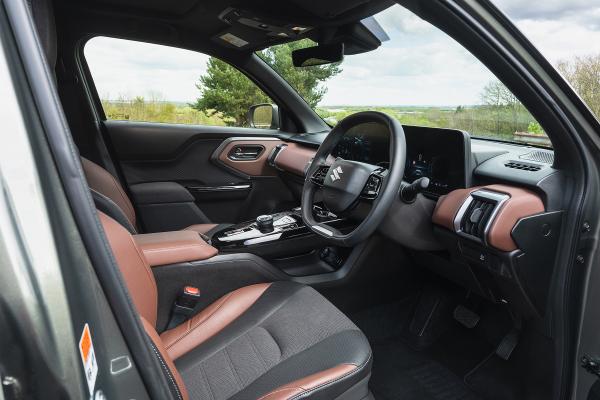
Climbing into the e Vitara, you’re greeted by a cabin that feels distinctly SUV‑like — upright driving position, good outward visibility, and a sensible layout that prioritises practicality over gimmicky design.
The dashboard integrates two sizeable screens (one for the digital driver display, one for infotainment) that merge into a cohesive unit. That said, like previous models, the infotainment screen responds slowly to finger dabs. We were happy to see physical controls for the air conditioning, however.
Similarly, while the materials feel durable, the overall cabin quality falls well behind rivals like the Kia EV3. Hard plastics feature in some areas where more premium EVs might offer softer surfaces, but everything feels solid and well put together — in keeping with Suzuki’s reputation for rugged practicality.
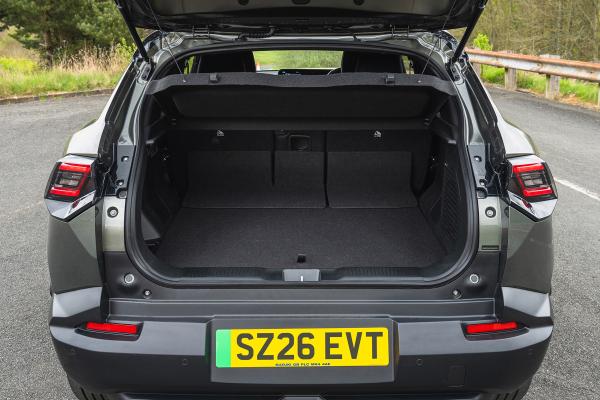
Space for passengers is good. Rear seats slide and recline, providing either more leg room for passengers or extra boot space when needed. The tall greenhouse and large windows help give a sense of roominess.
Speaking of storage, while Suzuki markets the e Vitara as a practical SUV, there’s only 306 litres of boot space with the rear seats forward — and even less (238 litres) if you slide them back for more passenger space.
Cabin comfort on long journeys is decent, and heated seats and a heated steering wheel helped during Scotland’s bitter winter months. The standard heat pump also played a beneficial role by efficiently heating the cabin and mitigating cold‑weather range loss — something many EV buyers will appreciate.
Driving range and charging
The e Vitara offers a choice between two battery capacities: a 49 kWh unit for basic models, and a 61 kWh pack for those wanting more range and performance. Suzuki’s official figures suggest a driving range of 213 to 264 miles, depending on battery and specification — respectable for the class but not leading it.
Real‑world range will vary with driving conditions, weather, and speed, but my press car, fitted with the larger battery, returned just 170 miles and 2.8mi/kWh.
Charging performance is adequate but not spectacular. Using a rapid DC charger, reaching 80 % charge from 10% can take around 45 minutes at a maximum of 70kW. Home charging is more straightforward: an overnight session via my EaseeOne 7.4 kW wallbox fully recharged the battery.
If you venture afar regularly, we’d recommend looking elsewhere.
On the road
Let’s face it. You won’t be inhaling rubber from the e Vitara’s tyres when pulling off. The smaller battery version has 142hp, meaning it does the 0-62mph dash in ten seconds, while the quickest four-wheel-drive variant with 181hp manages it in around eight seconds. The common ground is the two-wheel drive version with a 61kWh battery and 172hp.
Still, the e Vitara’s electric powertrain delivers smooth, responsive acceleration from a standstill, typical of EVs, and eco‑oriented driving modes help maximise efficiency when needed. That said, it doesn’t feel particularly quick or engaging compared with some rival EVs — it’s competent and composed rather than electrifying.
The dual‑motor all-wheel drive models not only give extra traction in poor weather but also a bit more confidence on rougher surfaces and light trails. It’s a rarity for electric SUVs at this price point, even if it’s unlikely to be a best-seller.
Ride quality is generally comfortable, with suspension that absorbs bumps well. However, the extra heft of the batteries does make the e Vitara feel heavier than some petrol equivalents in dynamic driving situations. Road and wind noise are slightly louder at motorway speeds than in a Kia EV3, but overall refinement is acceptable.
Verdict
The Suzuki e Vitara isn’t the flashiest, fastest, or most technologically advanced electric SUV on the market — but that’s not really its intent. What Suzuki has delivered is a well‑rounded, practical electric compact SUV that will appeal to drivers who want sensible pricing, generous equipment as standard, and genuine SUV character with optional all‑wheel drive.
However, its range and charging performance aren’t great, and the interior quality and infotainment are lacking. Still, the overall package feels robust and thoughtfully equipped – and while the Kia EV3 and Ford Puma Gen-E offer a fair bit more, there’s no optional four-wheel drive.
We like:
- Optional four-wheel drive
- More than one battery option
- Various power outputs
- Generous standard tech list
- Decent ride quality
- Affordable in base spec
We don’t like:
- Feels very cheap when compared to rivals
- Not particularly exciting to drive
- DC charging speed is poor
- Boot space is poor
- Real-world range and efficiency aren’t great
- Slow infotainment screen
Similar cars
Alfa Romeo Junior Elettrica | BYD Atto 2 Electric | Citroën ë-C3 Aircross | Dacia Spring | DS 3 E-Tense | Fiat 600e | Ford Puma Gen-E | Honda e:Ny1 | Hyundai Kona Electric | Jeep Avenger Electric | Jaecoo E5 | Kia EV3 | Mazda MX-30 | MG S5 EV | Mini Aceman | Omoda E5 | Peugeot e-2008 | Renault 4 E-Tech | Skoda Elroq | Smart #1 | Toyota Urban Cruiser | Vauxhall Frontera Electric | Vauxhall Mokka Electric
Key specifications
Model tested: Suzuki e Vitara Motion ALLGRIP‑e
Price as tested: £31,249
Powertrain: dual electric motors, all-wheel drive
Gearbox: Single-speed automatic
Power: 174 hp
Torque: 307 Nm
Top speed: 93 mph
0-62 mph: 7.4 seconds
Battery range (combined): 245 miles
CO2 emissions: 0 g/km
Euro NCAP safety rating: Four stars (September 2025)
TCE Expert rating: B, 70% (June 2026)

Related posts




Latest Post


No Comments