
The Pontiac V8 That Was Too Powerful for Any Car Pontiac Made
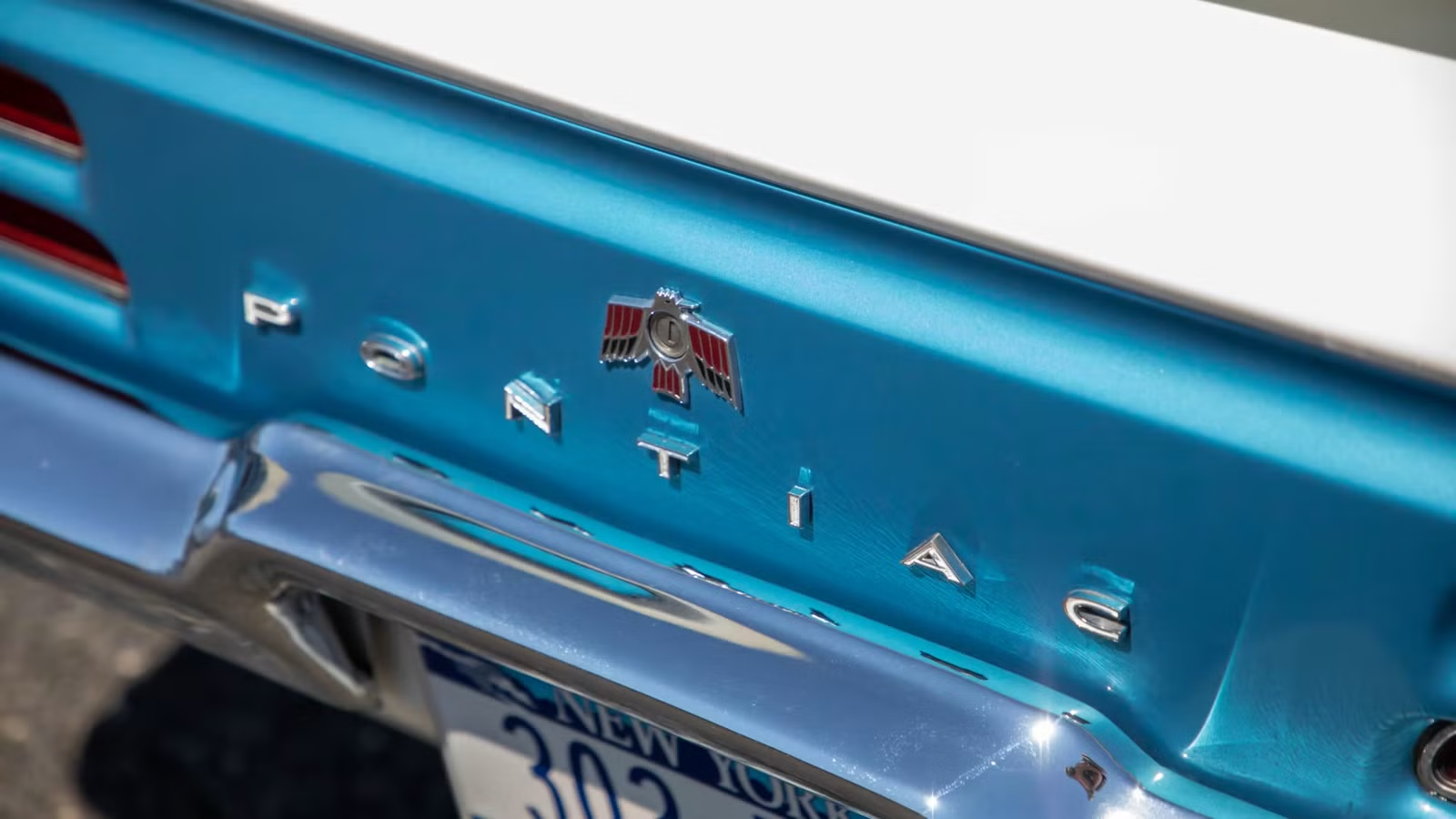
Detroit in the late 1960s ran on a simple formula: more displacement meant more power, and more power meant more sales. Pontiac had mastered that formula better than anyone, turning the GTO into a cultural institution on the back of a large-bore, torque-heavy V8 that rewarded its owners exactly where they lived, between traffic lights and at the drag strip. Then Pontiac’s engineers did something that broke the formula entirely. They built an engine designed not for torque, not for displacement, and not for the street at all. They built an engine designed to beat Ford on a road course, and what they produced was arguably the most technically advanced American V8 of its era. It never made it into a single production car.
When Ford Built Something Pontiac Could Not Ignore

The starting point is 1967 and a problem Ford had already solved. NASCAR had banned the 427 single-overhead-cam engine from competition, leaving Ford’s engineers needing a way to extract big-block airflow from a pushrod motor. Their answer was radical: design the intake ports first, then route the pushrods straight through them inside streamlined tubes. The result was a head with enormous, round intake ports that flowed air at a level the competition could not match at high rpm. Ford called it the tunnel port. It dominated NASCAR until the Boss 429 arrived to replace it.
George DeLorean was a Ford engineer who understood exactly what those heads were doing and why. When he brought the concept to his brother John DeLorean, then at Pontiac, the engineering case was straightforward: tunnel-port heads could unlock airflow numbers that no conventional OHV head could approach, and Pontiac was falling behind in the horsepower war. The corporate response from GM headquarters was swift and negative. Copying Ford’s architecture, they argued, was not something General Motors did. The program was very nearly killed in the room. It was not.
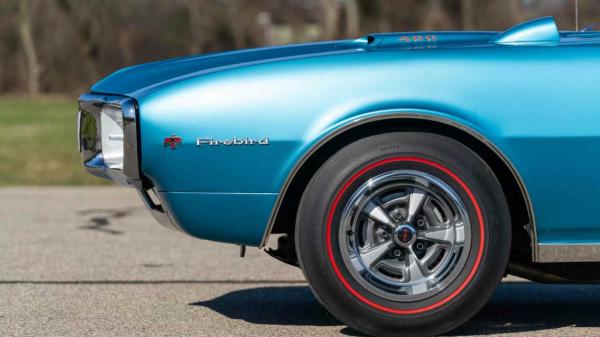

Pontiac’s Forgotten OHC Six-Cylinder Was Decades Ahead Of Its Time
This forgotten engine bridged American muscle and European sophistication, introducing innovations still used in modern cars today.
An Engine Engineered to Be Useless Below 6,000 RPM

What the Pontiac engineers built around that concept was an engine with a fundamental tension at its core. The tunnel-port head’s enormous intake ports, with intake port volumes nearly twice the size of a standard Pontiac D-port head, could flow extraordinary volumes of air. But port volume and port velocity are not the same thing. At low rpm, air moving through a large port moves slowly. Slow-moving air does not atomize fuel efficiently, does not fill the cylinder completely, and does not make torque. The engine that emerged from the Ram Air V program was, by every engineering assessment of the era, a machine that would have been difficult and uncooperative below 5,000 rpm. Above that number, the architecture suggested something else entirely.
This was not a flaw in the engineering; it was the point. Trans-Am racing did not reward low-RPM pulling power. It rewarded sustained high-RPM output around a road course, the kind of performance that a large-displacement torque engine could not deliver, however much torque it made off the line. The Ram Air V was a motorcycle engine wearing a V8’s clothes: all-or-nothing, built to live above the powerband, and designed for a context where anything below 5,000 RPM was irrelevant. The question of whether it could survive on a dealer lot was never seriously answered, because it never got close to one.
The Pontiac Ram Air V Was the Most Powerful V8 the Brand Never Put in a Car

|
Model |
Engine |
Power |
Torque |
0-60 mph |
Top Speed |
|---|---|---|---|---|---|
|
1969 Pontiac Trans Am (Ram Air III) |
6.6-liter OHV V8, 4-bbl |
335 hp (factory) |
430 lb-ft |
6.5 sec |
132 mph |
|
1969 Pontiac Trans Am (Ram Air IV) |
6.6-liter OHV V8, 4-bbl |
345 hp (factory) |
430 lb-ft |
6.1 sec |
135 mph |
|
1969 Ford Mustang Boss 302 |
4.9-liter OHV V8, 4-bbl |
290 hp (factory) |
290 lb-ft |
6.5 sec |
124 mph |
|
1969 Chevrolet Camaro Z/28 (DZ 302) |
4.9-liter OHV V8, 4-bbl |
290 hp (factory) |
290 lb-ft |
6.7 sec |
124 mph |
The Ram Air V was not a single engine. Pontiac engineered it in four displacements, each aimed at a different competition category. The 303 cubic-inch version used a short-deck block with a 4.125-inch bore and a 2.84-inch stroke, de-stroked specifically to meet the SCCA Trans-Am series’ 5.0-liter displacement limit. The 366 cubic-inch version was built for NASCAR Grand American competition. The 400 cubic-inch version was intended for production GTOs and Firebirds, representing the engine’s one serious attempt at a street future. The 428 cubic-inch version was engineered for NHRA drag racing.
The Ram Air V 303 does not appear in the performance table above because no verified 0-60 or top speed figure exists for the engine in a completed road car tested by a credible publication. What the table does show is the Trans-Am competitive landscape the 303 was built to dominate. The Boss 302 and DZ 302 were its direct targets, both constrained to the same 5.0-liter displacement ceiling and both considerably less sophisticated in their head architecture.
The Ram Air V’s tunnel-port heads flowed air at a level neither the Boss nor the DZ could approach. On paper it was a generation ahead. In a street car, the engineering consensus was that it would have been close to unmanageable.
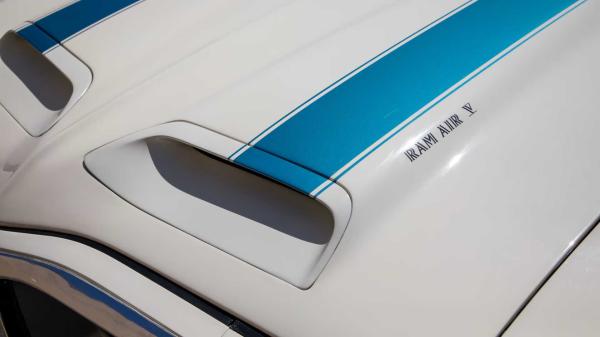
Pontiac’s Rarest Ever Trans Am Could Have Ended The Corvette—Here’s Why It Didn’t
Chevy is lucky this monster Pontiac never came out of its cave.
The Tunnel-Port Head That Made and Broke the Ram Air V

All four Ram Air V versions shared the tunnel-port architecture: pushrods running through the intake ports in streamlined tubes, four-bolt main bearing caps, forged crankshafts and connecting rods, a strengthened block casting with reinforced lifter bores, hollow-stem tulip-head valves, and Holley four-barrel carburetors. No official power figures were ever announced for any Ram Air V variant. The 303’s output went unmeasured in any published test.
What is documented is that the 400 CID version, in the context of a 1969 Trans Am build, was reported at 475 hp, a figure that traces to build documentation rather than a factory press release and one no independent publication ever verified on a dyno. The 303, designed to rev to 8,000 RPM on a road course, almost certainly produced more power per cubic inch than any other American V8 of 1969. What it produced below 5,000 rpm was a different question, and one nobody at the time had much interest in answering.
Approximately 25 of the 303 cubic-inch engines were assembled before the SCCA changed its rules for 1970 and rendered the entire program pointless at a stroke. The 400 CID version survived slightly longer: preliminary approval had been granted for a production-run option, but the specialized connecting rods had been outsourced to a vendor who went bankrupt before the parts were machined. Estimates of 400 CID production range from 80 to 200 units, with the surviving assemblies sold as crated parts through Pontiac dealerships. The 366 and 428 versions numbered perhaps a dozen examples combined.
Four Reasons the Program Never Reached a Dealer Lot

No single event killed the Ram Air V. Four pressures converged simultaneously and the program collapsed under their combined weight. The SCCA rule change for 1970 removed the competitive justification for the 303 entirely: with larger engines now permitted, a de-stroked 5.0-liter small-block was no longer the weapon it had been designed to be. The rod vendor bankruptcy stalled the 400 CID’s path to production at the moment it was closest to the door. GM corporate, never enthusiastic about an engine whose origins traced to Ford’s tunnel-port architecture, provided no institutional support for the program’s survival. And the wider market was already turning: insurance rates on muscle cars were rising sharply, emissions regulations were arriving on the horizon, and the performance car’s window of maximum cultural moment was closing. Pontiac’s engineers had spent several years building an engine for a world that was ending before the engine could reach it.
John DeLorean’s departure from Pontiac in 1969 removed the most powerful internal advocate the program had. That matters as context, but it is not the only cause. The program was already dying from multiple directions before DeLorean left. His departure meant there was nobody left with both the authority and the motivation to fight for it. In a room full of problems, the Ram Air V was one more problem, and the easier decision was to let it go.
What Surviving Cars and Parts Fetch Today

The Ram Air V exists in the collector market in two distinct forms: as an engine installed into a Trans Am through the over-the-counter parts network after the program was wound down, and as loose assemblies that found their way into various Pontiac platforms through the same route. The two are valued very differently.
The documented Trans Am with a Ram Air V engine is among the rarest collector cars in the American muscle car canon. The 1969 Trans Am with the 303/391 cubic-inch Ram Air V sold at auction for $143,000, a figure flagged as notable given the car’s modified displacement. For comparison, a Ram Air III Trans Am fetched $194,205 in February 2025, and the market peaked at $440,000 for a Ram Air IV car sold in January 2023. The Ram Air V engine’s presence in a car adds provenance value, but the documentation burden is severe: with so few complete engines built, any claim requires paper that most surviving examples cannot provide.
Parts tell a different story. Ram Air V cylinder heads and short-deck blocks surface occasionally in Pontiac circles at prices that reflect their scarcity rather than any functioning market. DCI Motorsports has cast reproduction Ram Air V heads for the aftermarket, giving builders access to the tunnel-port architecture without the need to locate an original. For the community of Pontiac enthusiasts still chasing this engine, the reproduction route is the realistic one. The originals are gone, and the few that remain are attached to cars whose owners have no reason to sell.
The Engine That Defined What Pontiac Could Have Been

The Ram Air V sits in a specific category of automotive history: the thing that was genuinely better than what replaced it, arriving too late to matter. The 455 HO and the Super Duty 455 that followed were commercially rational decisions, displacement-dependent torque engines that suited the market Pontiac still had. They were not the Ram Air V. They did not rev to 8,000 RPM or flow air at levels that embarrassed the competition’s best work. They were answers to questions the buying public was actually asking in 1970 and beyond.
What the Ram Air V answered was a different question: what would a Pontiac V8 look like if the engineers were allowed to build the best possible engine without compromise? The answer was an engine that engineers knew would not idle comfortably, would not respond to gentle inputs, and would not survive in a market that had moved on from the very thing it was designed to do. The DCI reproduction heads mean the architecture survives. The handful of original assemblies still in private hands mean the history is not entirely lost. But the Ram Air V’s story is ultimately one of an engine that arrived at the exact moment the door closed, and that is precisely why it has never quite left the conversation.
Sources: Hagerty, Classic.com, Mecum.

Related posts





Latest Post


No Comments